Is Your Pet Too Old For Anesthesia?
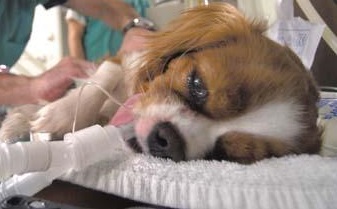 Almost one in three times I recommend a dental cleaning on a senior age pet 8 years or older, this is the first question I am posed. Owners will still occasionally ask the question about age-related anesthetic safety for other procedures that require anesthesia, such as soft tissue and orthopedic surgeries, but most commonly, pet owner fear of anesthesia is most associated with dental and other elective procedures.
Where did this fear of anesthesia come from? We generally do not have the same fear when anesthesia is recommended for ourselves. Fear of anesthesia is generally not a concern for human patients when, for example, a colonoscopy is recommended.
Truth be told, anesthesia of veterinary past carried more risk than it does today. Veterinary hospitals outside of a veterinary university setting could not purchase the newer, safer anesthesia and induction agents, nor could they purchase the top of the line anesthesia stability monitors; and still keep the cost of procedures affordable to the owners. As a result, while anesthesia in general practice was far from being outright dangerous, it was not as safe in comparison to human medicine, and certainly not as safe as it is today. As a result, not only were many pet owners aware of this fact, veterinarians were generally wary of recommending anesthesia unless quality of life was categorically on the line. Anesthesia was not likely going to be recommended for a routine dental cleaning for stage 1 periodontal disease. Of course, this would lead at some point to such an advanced level of dental disease that not only would anesthesia be necessary to deal with the teeth, but oral surgery would necessary to extract teeth and debride dental abscesses…which, incidentally, would lead to longer anesthesia.
I do not know exactly when the change in veterinary anesthesia safety took place, but it was well underway when I was a new veterinary graduate in 2002. As the cost of safer, modern anesthetics and monitoring equipment became more affordable, more practices were increasingly getting equipped with these modalities. As a doctor, I did not have the same anesthesia concerns as my older colleagues. Confident in not just the anesthetics and monitoring equipment, there was no time in my career that I have had qualms about recommending anesthesia for elective procedures in senior pets (of course with the exception of obvious mitigating circumstances like cardiac or liver/kidney problems, etc.). Of course, old notions die fast. Thus, a generation of veterinarians and pet owners remained, and some to degree, even remain today, that held the same outdated fear of anesthesia in senior pets.
In the current veterinary hospital climate with anesthesia safety now rivaling that of human anesthesia, the overall risk of death from anesthesia is comparatively low, even in senior pets, provided proper precautions are taken, such as pre-anesthetic blood screening, thorough physical examination, and other proactive pre-anesthesia preventative diagnostic measures. The greater danger is failing to follow through on a necessary procedure out of fear of anesthesia.
I will leave you with a brief true story. A client of my hospital, a registered nurse interestingly enough, is terrified of anesthesia for her pets. Thus, she declined my repeated yearly recommendations for much needed dentistry for her Italian Greyhound. He reached a point by the age of 13, that the smell from his mouth was so offensive that it was difficult to get within 3 feet of him without smelling, and I could not examine his mouth because of how painful it was for him, for me to even touch his face. The dog’s quality of life was poor because of this, but it was not until the dog came in with a severely swollen muzzle, refusing to eat and losing weight, that the owner was faced with anesthesia with the patient now systemically compromised from severe infection and malnutrition – not to mention thousands of dollars’ worth of oral surgery to repair the oral cavity (I had to reconstruct the patient’s upper jaw because of all the bone loss from years of decay).
Following debridement and surgery, I knew the dog would be too painful to eat post-operatively for at least one week, so I had to place a feeding tube to provide the dog nutrition while he healed. The owner learned a very difficult lesson from this experience, and her dog paid a serious price because of her irrational fear of anesthesia. Even at 13, systemically compromised, and under anesthesia for 90 minutes; he came through seamlessly from an anesthesia stability perspective.
Anesthesia is certainly nothing to take likely, but it should also not be feared when necessary. With current anesthetic and anesthesia monitoring technology making the safety of anesthesia compare with that of human medical anesthesia, the far greater danger is to allow mild conditions to progress to outright debilitating and dangerous ones out of fear of an important medical means to an end.
Dr. Roger Welton is a practicing veterinarian and well regarded media personality throughout a number of subjects and platforms. In addition to being passionate about integrative veterinary medicine for which he is a nationally renowned expert, Dr. Welton was also an accomplished college lacrosse player and remains to this day very involved in the sport. He is president of Maybeck Animal Hospital , runs the successful veterinary/animal health blogs Web-DVM and Dr. Roger’s Holistic Veterinary Care, and fulfills his passion for lacrosse through his lacrosse and sport blog, The Creator’s Game.

Help for nervous/anxious dogs
There seems to be a growing number of excessively nervous, often skittish dogs. This can range from anxieties, such as noise or storm anxiety, anxiousness about being separated from pet parents,...

Bird flu is infecting cats and cases are rising – What you need to know!
H5N1 Avian Influenza is causing far more trouble than just just high egg prices. The bird flu has successfully jumped species now able to infect cats and people. Although the ability to infect...
Having planned, consistent, shared activities with him enhances your dog’s bond with you
No person aside from your parents will love you more than your dog. No matter what, your dog will always go bonkers the moment you come home. That love will never be in question, as you are...

Read Dr. Roger’s Latest Book!
 Be Healthy & Fit With Celebrity Trainer Steve Jordan
- The New Measure of a Life Well Lived: Why Health Span Matters More Than Longevity
- The Wealth Spark: Igniting Your Path To Abundance and Success
- Bright Line Eating with New York Times best selling author Dr. Susan Peirce Thompson
- Maximizing Your Workout Time: Efficiency Tips from Westwood Private Fitness
- How to Transform Your Dad Bod: Insights from the Fit Father Project – New Podcast Episode Out Now!