A Spay Is A Major Abdominal Surgery…Please Consider It As Such
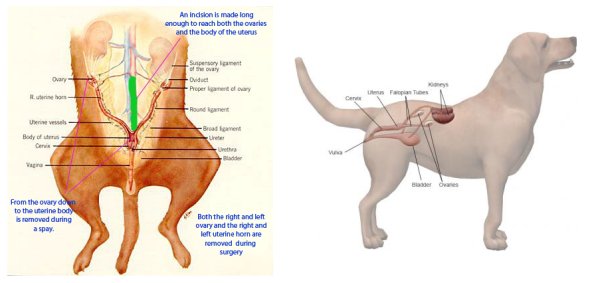 I think the veterinary medical field has to do away with the simple term “spay” and call the procedure by its actual name, ovariohysterectomy. Ovariohysterectomy more effectively gets across that what we commonly refer to as a spay, which is the surgical removal of the female reproductive tract thatt requires an incision and closure of the abdominal cavity and the tying off and transection of major blood vessels.
Perhaps if we called the procedure by its technical name and not its lay-term, pet owners may take it more seriously. Perhaps they will not call around to obtain the best bargain basement pricing for such a major surgery. Perhaps they will take the time to look into why there are such differences and disparities in the pricing of the procedure.
Perhaps during the recovery, they would be more likely to keep collars on to prevent the pet from licking an incisional closure that stands between intestines staying inside the abdomen where they belong instead of popping out and dragging on the floor. Perhaps they would reasonably reign in activity and confine the patient to prevent internal bleeding and incision dehiscence.
To many of you, these aspirations that I yearn to achieve through calling the procedure by its true name may seem like common sense, yet my clinic takes at least 10 calls a day with people asking the price of a spay then the hang up never to call back (presumably because they found some place that does it cheaper). Time and again, owners remove the pets’ e-collar or let them play Frisbee or swim way too soon post-operatively and are surprised when bad things happen.
I remember like it was yesterday when on the soft tissue surgery rotation in my 4th year of veterinary school at the University of Illinois College of Veterinary Medicine teaching hospital when our head surgeon, Dr. Cathy Greenfield, gave my student surgical group a pep talk as we were about to spend the day performing spays on dogs from the local shelter. She stated that spays were major abdominal surgeries and complications happen. As a board certified surgeon who performs only the most complicated surgical procedures on a referral basis, she shared with us that some of the most difficult surgeries she had performed in her career were complicated spays.
She parted by saying, “While we routinely do spays, there is nothing routine about them.”
Those words are as profoundly wise today as they were when I was a student 16 years ago.
Dr. Roger Welton is the President of Maybeck Animal Hospital in West Melbourne, FL, Chief Editor of the Veterinary Advice and Information Website, Web-DVM, and founder/CEO of Dr. Roger’s Holistic Veterinary Care.

Keep your pets safe this holiday season!
The holiday season is right around the corner starting with Halloween (yes, in my home, we consider Halloween a holiday!). It is both a joyous and busy time and it can be easy to overlook certain...

Help for nervous/anxious dogs
There seems to be a growing number of excessively nervous, often skittish dogs. This can range from anxieties, such as noise or storm anxiety, anxiousness about being separated from pet parents,...
Bird flu is infecting cats and cases are rising – What you need to know!
H5N1 Avian Influenza is causing far more trouble than just just high egg prices. The bird flu has successfully jumped species now able to infect cats and people. Although the ability to infect...

Read Dr. Roger’s Latest Book!

 Be Healthy & Fit With Celebrity Trainer Steve Jordan
- The New Measure of a Life Well Lived: Why Health Span Matters More Than Longevity
- The Wealth Spark: Igniting Your Path To Abundance and Success
- Bright Line Eating with New York Times best selling author Dr. Susan Peirce Thompson
- Maximizing Your Workout Time: Efficiency Tips from Westwood Private Fitness
- How to Transform Your Dad Bod: Insights from the Fit Father Project – New Podcast Episode Out Now!