A Touching Thank You Card From A Dog Parent I Have Never Met

I was amazed recently to have received a thank you card in the mail from a listener of my podcast. I received it at my clinic one morning, and the message it contained moved me beyond words. The image above is the cover of the card with a picture of the little dog my podcast had somehow helped. It was a beautiful custom made card with a message both from “Rusty” and from his Mom. They read as follows:
Thank you for saving my life!
It is one year ago this month that my Mom heard your May 1, 2014 podcast, changed my diet from chicken to lamb, and changed my life. We found a high end human grade food I just love and it made all of the difference in the world.
I am now a very happy, extremely healthy, little Shih Tzu that’s living the good life thanks to your caring and dedication.
Rusty
From Rusty’s Mom in her own hand writing:
If it wasn’t for your podcast this beautiful little dog would most likely not be alive today. I thank you every day I look at his happy little face. Rusty has been healthy – really healthy all year on a human grade diet and we watch him enjoy snacks and treats for the first time. He’s a very special guy – smart, sassy, loving, and full of life. He brings joy to everyone he meets. I can’t thank you and Dr. Karen enough.
Maxine
I have on many occasions in my career been moved by playing a role in saving a pet’s life as his/her primary veterinary health provider for it is not only my job by my sworn oath as I received my Doctor of Veterinary Medicine degree. This is a first in my 15 plus years of practice that anyone has told me that my media work played a prominent role in helping to save the life of a furry family member. I am grateful to Maxine for sharing Rusty’s story with me and sending that beautiful card…I will keep it forever.
Rusty is absolutely beautiful and looks like a lovingly cared for little prince.
Dr. Roger Welton is a practicing veterinarian and well regarded media personality throughout a number of subjects and platforms. In addition to being passionate about integrative veterinary medicine for which he is a nationally renowned expert, Dr. Welton was also an accomplished college lacrosse player and remains to this day very involved in the sport. He is president of Maybeck Animal Hospital , runs the successful veterinary/animal health blogs Web-DVM and Dr. Roger’s Holistic Veterinary Care, and fulfills his passion for lacrosse through his lacrosse and sport blog, The Creator’s Game.
Keeping Your Pets Safe During A Solar Eclipse
 I have gotten a lot of inquiries from clients about the solar eclipse as it generally relates to the safety of their pets (dogs and cats), so I deemed it a worthy topic to share among my blog readership to provide clarification of the risks. While there is no real data or anecdotal evidence to examine to provide information (the last solar eclipse visible from the US was in 1979 and the last one one to be visible as it stretched from coast to coast was in 1916), it is unlikely that the eclipse will have the potential for any more harm to dogs and cats than a typical sunny day would.
Dogs and cats generally have an aversion to bright light emitted by the sun as they peer more directly toward it. The discomfort it causes them as they squint is sufficient to override any curiosity they may have to look directly into the sun. They will not be cognoscente that an amazing astronomical event is about to take place and will likely be no more inclined to stare at the sun than they normally would.
On the other hand, you never know. Pets are known on occasion to do things that we simply would simply not expect them to do. Thus, it may be wise to keep your pets in doors during the peak times of the solar eclipse in your geographic area as you might do for a weather related event or during fireworks. Confinement would not just prevent the unlikely possibility of a pet staring into the sun, but may help weather sensitive pets to cope with any psychological effects from the solar eclipse that may induce stress, fear or panic.
The light will be significantly lessened in a faster manner than the gradual, natural approach of night time, and the temperature will subsequently more suddenly drop. While I cannot tell you with any degree of accuracy whether or not a weather sensitive pet may be affected by the solar eclipse, it is reasonable to assume that there could be some effect and if there was, being outside in public may not be the best situation for such a pet.
Overall, I have far greater concern for children than I do pets with the upcoming eclipse. I bid you all a happy and safe solar eclipse with your whole family enjoying it with the proper safety precautions in place.
Dr. Roger Welton is a practicing veterinarian and well regarded media personality throughout a number of subjects and platforms. In addition to being passionate about integrative veterinary medicine for which he is a nationally renowned expert, Dr. Welton was also an accomplished college lacrosse player and remains to this day very involved in the sport. He is president of Maybeck Animal Hospital , runs the successful veterinary/animal health blogs Web-DVM and Dr. Roger’s Holistic Veterinary Care, and fulfills his passion for lacrosse through his lacrosse and sport blog, The Creator’s Game.
Cat Is Old, Not Eating, Losing Weight, And According To His Blood Work…Is Fine?
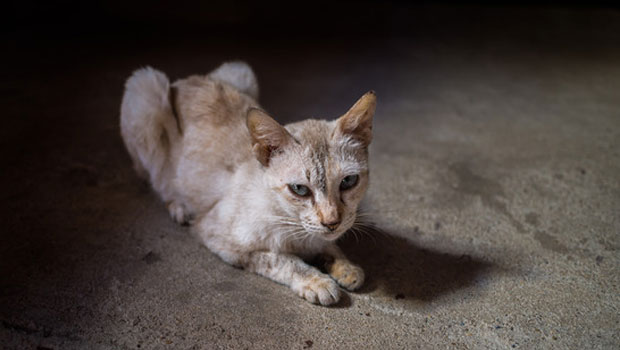 This is probably one of the most frustrating presentations in veterinary medicine. A senior aged cat presents not eating, often for days, he/she is clearly dropping weight, but other than weight loss, a drop in body condition score, and dental disease, there is not much else to comment on following physical examination. Never fear, for was can run blood work which will tell us exactly what is wrong with the kitty, right? Wrong!
Just last week alone, I had 5 such a cases, all not eating felines over the age of 15. While blood work often does offer us a confirmed diagnosis, blood work on all 3 out of 5 came back perfectly normal. Thus, the only possible clinical scenario that I can present to the clients of the 3 based directly on the evidence at hand is that the patients may not be eating due to the dental disease. However, the dental disease generally does not occur overnight, but instead was a slow and steady process. Could the dental disease have finally reached a tipping point of pain that led to the feline patient to finally be unable to bear it and stop eating? This is plausible, but with exception of outright tooth root abscesses, not likely.
Thus, the owner at this point has taken the initiative to bring his/her cat in, invest a few hundred dollars, yet is still left with a lot of questions as to what ails his/her cat. As frustrating as this circumstance is for cat owners, I assure you, it is equally if not more frustrating for the attending veterinarian. As naturally empathetic people, veterinarians abhor client financial and emotional investment without being able to reward that investment with answers. So in these cases, what comes next?
Based on years of experience in dealing with this presentation, my tentative conclusion is generally that the cat has cancer that is just not affecting the organs and blood counts to the extent that they are visible in blood work. The most common cancer in cats is lymphoma, which is most commonly found in the GI tract. The most common forms of lymphoma are usually quite treatable with a generally well tolerated combination of a steroid and oral chemotherapeutic called chlorambucil administered once every 3 weeks after a 3-7 day loading phase of treatment. This protocol is known to produce remission rates in upwards of 18-24 months, translating to 5-10 years in consideration of the life span of a cat. This is great news, right? Maybe.
In order to commit to a protocol such as this, it is first necessary to get a diagnosis. This is where the challenge really lies, as diagnosis usually requires abdominal exploratory surgery with several biopsies takes of various segments of the GI tract, as well as sometimes additional biopsies of the pancreas, liver and spleen. The biggest challenge is not the surgery itself, but convincing the owners of an elderly cat to not only make the financial commitment to the surgery, but also justifying this level of aggressive diagnostic work up in a cat of an advanced age.
I do not disparage an owner’s trepidation in pursuing such a course. That is a personal choice they must make based on their financial ability to support such an investment, as well as their own ethical boundaries and personal philosophies in the care of animals; in this case to potentially buy 18-24 months of life and time with their family pet, which, by the way, is far from a guarantee. I do not envy the decision they must make.
There is, however, a plan B. While I cannot commit the patient to a course of chemotherapy without a confirmed diagnosis, I can start just the steroid aspect of it which would be prednisone alone. This would be referred to as empirical treatment, where we are treating based more on hypothesis and educated guess based on limited diagnostic evidence. If we are right in our suspicion, a lymphoma steroid protocol would provide a 2-4 month remission and provide quality of life during this period and in some cases longer. This approach is a bit of a shot in the dark, but in consideration of the alternative and requiring little in financial investment (prednisone is cheap), there is little to lose.
Still, an owner is at best faced with a matter of a few months of remission trying the empirical approach versus possibly two years with exploratory surgery and biopsy. These are not easy choices for most.
Dr. Roger Welton is a practicing veterinarian and well regarded media personality throughout a number of subjects and platforms. In addition to being passionate about integrative veterinary medicine for which he is a nationally renowned expert, Dr. Welton was also an accomplished college lacrosse player and remains to this day very involved in the sport. He is president of Maybeck Animal Hospital , runs the successful veterinary/animal health blogs Web-DVM and Dr. Roger’s Holistic Veterinary Care, and fulfills his passion for lacrosse through his lacrosse and sport blog, The Creator’s Game.
Beware Of Counterfeit Veterinary Pet Medications Sold Online
 48-year-old California resident Paul S. Rodriguez Jr , the CEO of California-based company Action Packing and Design, pleaded guilty to intentionally trafficking in counterfeit labels and packaging for anti-parasite products and veterinary medicines between July 2015 and December 2016.
His operation produced counterfeit artwork for flea/tick control products Frontline and Frontline Plus sold by Merial, an animal health company located in Duluth, Georgia, as well as other Merial veterinary products. The Department of Justice also notes that Rodriguez trafficked in counterfeit trademarked Rimadyl labels, a veterinary pain/anti-inflammatory medication marketed by Zoetis, a veterinary pharmacy based in Florham Park, New Jersey.
While it is definitely a positive development that this individual is being prosecuted and this company is likely to face heavy fines or even closure in light of this scandal, this is unfortunately likely just the tip of the iceberg of fraud in the multi-billion dollar a year pet medication industry. In addition to counterfeit product, a significant amount of pet medications sold online also come from overseas where quality control and handling of pet medications (temperature, packaging standards, etc.) do not match that of the United States Department of Agriculture or the US Food and Drug Administration. Such lack of quality and handling standards could render products either ineffective, harmful, or both.
For these reasons, most veterinary pharmaceutical companies as a general policy sell only to veterinarians and not pet medication retailers, who instead have to purchase their products through what is known as “sideways sale.” This is when veterinarians of questionable ethics purchase large quantities of pet medications them sell them via back channels to retailers. When the domestic supply runs dry, retailers will resort to purchasing from veterinarians overseas or get duped into purchasing counterfeit product.
I have learned through veterinary pharmaceutical reps that the guilty parties are usually large animals veterinarians looking to make extra money on the sideways sale of small animal pet medications. With what is called track and trace technology, the majority of veterinary pharmaceuticals that do not sell direct to retailers actively trace online product back to the offending veterinarian and cancel their accounts for the reasons outlined above.
Does this mean people should avoid purchasing pet medications online? No, but you should do so with caution, especially with preventives like heartworm prevention that could lead to serious life threatening illness if the dog is receiving bogus product. I would recommend even greater caution in purchasing products that your pet’s life may depend on, such as veterinary heart disease medications.
One strategy upon receipt of the pet medication products purchased online would be to check the product’s lot number and call the company to make certain the product came from them and also confirm that it did not come from overseas. The easiest strategy, however, is to order from your veterinarian’s own online pharmacy if he/she has one.
Many veterinary clinics now have pet medication online store fronts where pet medications can be purchased with the same convenience and free shipping of any other veterinary online retailer with product that ships directly from a US based distributor. Without the need to cover the costs of shipping and stocking products in the clinic’s brick and mortar pharmacy, the veterinarian can offer products sold online at prices comparable to the most affordable online pet medication retailers, complete with the full guarantee of product integrity from the manufacturers.
My clinic, Maybeck Animal Hospital in West Melbourne, FL, has an online pharmacy for our client’s convenience. To see what it looks like, feel free to visit my clinic’s site at the address below, scroll to the bottom of the page, and click on the “Maybeck Animal Hospital Online Pharmacy” icon:
My clients love it because using our pharmacy is also more efficient. Rather than get a paper fax with prescription requests that then need to be signed by the doctor and faxed back to the pharmacy, RX requests from our clinic’s pharmacy instead come in electronically. All a veterinary technician needs to do is get a quick verbal approval from the doctor and click a tab to approve and initiate shipping.
Dr. Roger Welton is a practicing veterinarian and well regarded media personality throughout a number of subjects and platforms. In addition to being passionate about integrative veterinary medicine for which he is a nationally renowned expert, Dr. Welton was also an accomplished college lacrosse player and remains to this day very involved in the sport. He is president of Maybeck Animal Hospital , runs the successful veterinary/animal health blogs Web-DVM and Dr. Roger’s Holistic Veterinary Care, and fulfills his passion for lacrosse through his lacrosse and sport blog, The Creator’s Game.
Dogs And Their Enlarge Prostates
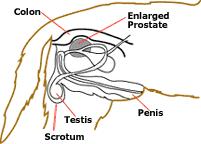 We’ve all seen the ads on TV. The older gentleman who repeatedly goes to the bathroom and has trouble urinating. The calming voiceover assures us this is all too common, and there is help for grampa. This disorder in men is caused by a prostate gland that becomes enlarged, and obstructs the urethra (the tube he urinates out of). It’s called BPH – Benign Prostatic Hypertrophy.
Dogs can get this too! We don’t see it all that often anymore, because most dogs are neutered. (It’s even more rare in cats). But, the pathology is similar. Over time (years – this is an old dog disease) the constant testosterone causes the prostate gland to enlarge. The syndrome is called BPH – Benign Prostatic Hypertrophy. Yes, it’s benign in terms of it not being cancer, but that does not mean it causes no problems! It is not at all painful. However, the location of the prostate is what makes this whole process problematic.
The urethra tunnels through the prostate on its way to the outside world. As the prostate enlarges it constricts the urethra, making it more difficult to urinate. We’ll often see dogs posturing to urinate and not much coming out, or it’s a dribble.
If you see these symptoms in your older, not-neutered male dog, then BPH may be a culprit. However, other diseases can exhibit these same symptoms, particularly bladder stones that have lodged in the urethra. An x-ray can help distinguish the two.
In dogs, this disease has an easy fix – and I mean “fix!” Neutering is the treatment of choice. No pills, no creams, no side effects! If you remove the source of the testosterone (ahem, the testicles) then the prostate shrinks back to its original size! It is not instantaneous, but happens over a couple weeks. (They just don’t seem to offer this option to humans…)
True story – I saw an old boxer dude who was having trouble urinating. It was so severe his bladder never emptied, and the urine was backing up into his kidneys, causing kidney failure! Putting him under anesthesia was not something we were excited about, but there were no other realistic treatment options. We were able to pass a catheter to empty the bladder (relief!) and neutered him. Soon, he was peeing on fire hydrants again with the best of ’em. Even better, the kidney levels on his blood test returned to normal! He ended up living another 2 years.
So next time you see the commercial on TV, think about the one disease that dogs have a more effective treatment than people!
Web-DVM guest blogger Dr. Karen Louis is a practicing small animal veterinarian. See more of her articles at her blog at VetChick.com
Treatment options for hyperthyroidism cats
 If your vet just told you your cat has an overactive thyroid, you’re probably a bit relieved that it is a treatable disease! Treatment options vary, and there’s bound to be one that works for you and your cat!
Methimazole / Tapazole
This is the original treatment. It comes in pill form (small pills too!), and if your cat eats them in pill pockets or canned food, then you’re good to go! If your cat is not falling for that trick (puh-lease!) many compounding pharmacies can make a flavored liquid (tuna, chicken, etc). Still not happening? These same miracle workers also can concoct a transdermal medication. This is a cream you rub into the skin on your cat’s ear, and it gets absorbed into the bloodstream. Pretty amazing! Regardless of how you get the medication into (or onto) your cat, it can have side effects, like vomiting or decreased appetite. There are also potential side effects of white blood cells that your veterinarian will want to check for. This medication lowers the thyroid level, and will need to be given for life. It tends to be relatively affordable, thankfully. Your veterinarian will need to recheck your cat’s blood usually about 4 weeks after starting, and then every 6 months…or more often if there are abnormalities or dosage changes.
Radioactive I-131
Yes, we want to radiate your cat! This is actually a really cool treatment that offers a permanent fix (in 97% of cats). It does involve your cat spending several days in a hospital, so that’s a bummer. But if you have a cat who is just impossible to medicate, or is not very old, this is a great option. It typically runs a little over $1,000 and involves your cat being gone for 5-10 days. A radioactive Iodine is given that the thyroid gland immediately sucks up. All the hyperactive cells in the thyroid gland can’t get enough Iodine, because they are trying to produce as much thyroid hormone as possible (Iodine is a requirement to make thyroid). So the I-131 is a Trojan horse of sorts. It goes into the overactive cells that eagerly take it in… and kills them. The non-hyperactive cells are left alone. The reason your cat has to be in the hospital is because they can’t send home a radioactive cat, and it takes several days for the half-life of the I-131 to work its way out.
Prescription diet
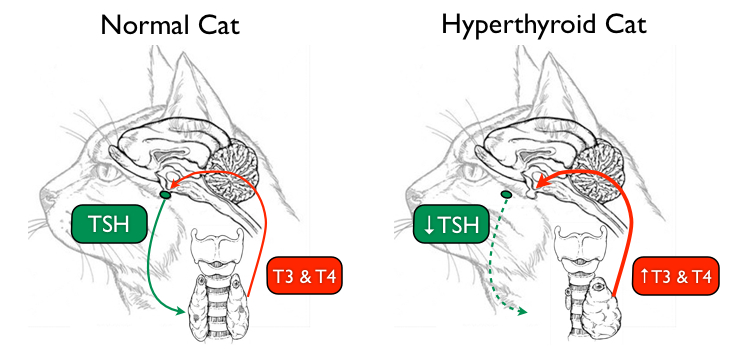
Hill’s came out with a game-changing diet a couple years ago called y/d. All you have to do is feed your cat this food. The catch? It must be ONLY that food. It is devoid of Iodine, which is a key ingredient in making thyroid hormone. Without Iodine, the body cannot make extra thyroid hormone. However, there is iodine in pretty much every food. So if your cat gets even one bite of anything else, the food will not work. For single cat households, this is a great option. With multiple cats it can be tricky. I do have owners who leave the y/d for all the cats to eat, and feed the other, non-hyperthyroid cats a sneaky meal of canned food every day so they can maintain their thyroid levels. This works when all the cats in the house or older, but does not work for kittens. The food would need to be fed for life to remain effective.
Surgery
Another permanent fix is to surgically remove the over-active thyroid gland. This is a rather straightforward surgery, but there are some potential life-threatening complications if not performed correctly. If your vet does not do this surgery often, then visit a spet to have it done. If your veterinarian enjoys doing this procedure often, then let her! Prior to I-131, surgery was the only permanent solution. It has fallen out of favor lately, due to the I-131 option. However, with thyroidectomy surgery, your cat is only in the hospital for one day, not weeks like the radioactive treatment.
Web-DVM guest blogger Dr. Karen Louis is a practicing small animal veterinarian. See more of her articles at her blog at VetChick.com
Hyperthyroidism cats – old, skinny, and hungry
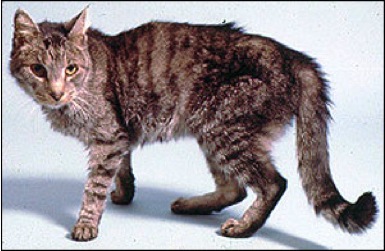 “My cat seems to be losing weight no matter how much I feed him.”
“My cat can’t seem to get enough to eat or drink!”
“Why is my cat losing weight? I keep feeding her more but it doesn’t help – she still yowls a lot.”
These are how many of my appointments with hyperthyroid cats start. But they always end with a pet owner relieved to learn that a wide variety of treatment options are out there. It’s a straightforward, treatable disease, especially when detected early. Here’s what you need to know.
The thyroid gland controls the body’s metabolism. Whenever I put on a few pounds, I often wish I could stimulate my thyroid for a while to burn the extra fat, but alas, we cannot. An over-active thyroid gland (hyPERthyroid) causes the body’s metabolism to elevate, while an under-active thyroid gland (hyPOthyroid) causes the metabolism to lower, leading to lethargy and weight gain.
Cats typically do not develop hyPOthyroidism…as much as the owners of fat cats wish they could blame that! HyPERthyroidism, however, is quite common in cats. The excess thyroid hormone causes the body to burn calories very quickly. No matter how much these cats eat, they continue to lose weight. They seemed amped up on caffeine. Some owners even notice their hearts racing. Other systems are affected as well, though. That’s why simply raising a thyroid level is not a good weight loss plan.
Symptoms of hyperthyroidism can include increased appetite, weight loss, increased thirst, decreased desire to sleep, and increased vocalization. Many cats develop a poor, greasy, flakey haircoat as well.
The blood pressure rises, sometimes to dangerous levels. These cats are often restless because of it. Many people don’t see this symptom until it becomes severe enough that the cat becomes suddenly blind. This (thankfully) only happens in a small number of hyperthyroid cats – often before they are diagnosed and treated. The very high blood pressure (hypertension) causes the retina, the thin layer of cells on the back of the eye, to detach. The retina is responsible for processing light and sending the signal to the brain, which interprets it into what the cat sees. When the brain is not getting a signal, it figures there must not be enough light, so it tells the pupils to open up (dilate) as wide as they can. These cats often present with “his eyes look funny” as the complaint. Those poor pupils are as wide as they can be, but the cat still isn’t seeing anything. Not all hyperthyroid cats develop hypertension severe enough to cause retinal detachment. Hopefully we catch it and treat it before the irreversible damage is done.
Another organ affected by the high blood pressure that comes for the overactive thyroid is the kidneys. Old cats typically don’t have award-winning kidney function anyways, but the increased blood pressure can make them look better than they actually are. With the blood pressure being high, all this blood is flowing through the kidneys, who are thinking “this is great!” Kidneys that are beginning to fail can “fake it” with the increased blood pressure. When your veterinarian runs blood tests, the kidney levels may look slightly elevated, or even normal. However, once we get the thyroid level, and therefore the blood pressure, under control, the kidneys’ true colors emerge. Your veterinarian may say the the kidney levels are elevate, and the kidney function is insufficient (hate to use the word “failure” until it’s severe). Did treating the thyroid and lowering the blood pressure cause the kidney disease? No, it just pulled back the curtain that the kidneys were hiding behind, so now we can see what they really are doing. The loss of function was there before, we just couldn’t see it. Even though the high blood pressure makes the kidney levels appear better than they should be on blood tests, the kidneys are working harder, and will not function as well in the long run. Avoid the temptation to keep the blood pressure high just to make the kidneys “look” good.
Yet another organ system affected by hyperthyroidism is the heart. This should come as no surprise, given the high blood pressure aspect of the disease. In addition, cats develop a specific type of heart disease called HCM: Hypertrophic CardioMyopathy. In this disease, the walls of the heart thicken, or hypertrophy, just like any other muscle grows when an increased work load is placed on it. This growth in the heart is very bad, because the walls of the ventricles grow inward. Picture a glass jar that is empty, and how much water you can put in it. Now picture the jar, but add to the wall thickness on the inside. What happens? Not nearly as much water fits into the jar! That is what happens with these cats’ hearts. The walls become thick, and not very much blood can fit into the chambers. This is obviously a bad thing when the heart cannot pump the volume of blood it used to.
To boot, a complicating factor that can stem from this is the formation of blood clots. One scenario that we see most often is called a “saddle thrombus.” Yes, a blood clot can go anywhere is wants to, but a common route is to start in the heart and travel down the aorta, the main blood vessel going down the body. When the aorta reaches the legs, it splits into two arteries, one for each leg. The clot can’t make the split, so is lodged in the “Y”, blocking circulation to the back legs. This is incredibly painful, as you can imagine. We used to euthanize these poor cats, because treatment options didn’t really exist. Fortunately, clot-busting treatments are becoming more and more available, thanks to human medicine.
So while having an overactive thyroid may sound quite appealing from a weight-loss perspective, it’s actually much more involved. The good news is there are a wide variety of treatment options out there! My next article will spell out the options.
Related: Treatment Options For Hyperthyroidism Cats
Web-DVM guest blogger Dr. Karen Louis is a practicing small animal veterinarian. See more of her articles at her blog at VetChick.com
Should you give your dog Vitamin C?
 Dogs are like people in a lot of ways. They are part of our family. Many diseases that people get, dogs can get. We even treat dogs with many “human” medications!
So it’s easy to see how the line can be blurred on where the dog-human similarities end. One big difference is in the area of vitamin supplements.
People take Vitamin C supplements commonly. Feel a cold coming on? Sat next to a person who was sneezing? Flu season is here? Time to grab the vitamin C! Since it helps our immune system, then shouldn’t we give it to our dogs?
The short answer is NO! Here’s why.
When it comes to being able to synthesize our own vitamin C, people suck. We just can’t do it. Our bodies can do a lot of things, and synthesize a lot of different vitamins and nutrients. Unfortunately, we missed the boat on manufacturing Vitamin C. Apes, who are closely related to human beings, also lack this skill.
Most other animal can manufacture their own Vitamin C, so supplementing is not necessary. Dogs, cats, horses, all can make their own vitamin C, and can make as much as their bodies need.
(BUT, there is another pet that cannot make Vitamin C and must have it supplemented. Know what it is? Tell ya later…)
So if a dog’s body is fully able to meet all of its needs for Vitamin C, there is no need to supplement it. OK, but it is a water soluble vitamin, and extra gets eliminated in the urine, so can it really harm your dog?
It can! Particularly if your dog is a growing puppy!
Excess Vitamin C causes blood levels of Calcium to rise. This causes an increase in a hormone called calcitonin. It basically detects the abnormally high levels of Calcium in the blood and tries to come to the rescue. This results in two very bad things in a growing puppy. It inhibits the growth and maturation of cartilage. Cartilage is very important for joint health, so affecting the development of cartilage in a puppy can lead to a lifetime of arthritis and joint problems.
The increase in Calcium, and resulting action of calcitonin, also affects the body’s ability to remodel and reshape bones as they grow. This is particularly important in large breed puppies, whose bones are growing and remodeling at a very rapid rate. It’s been demonstrated in studies that puppies with excess calcium in their bloodstream are highly likely to have profoundly abnormal joints when they grow up.
So why would you give your dog something that A) he does not need and B) can cause him harm??
Take the Vitamin C for yourself. Don’t give it to your dog!
(BTW – the pet that cannot make its own Vitamin C – guinea pigs!)
Web-DVM guest blogger Dr. Karen Louis is a practicing small animal veterinarian. See more of her articles at her blog at VetChick.com
Why I’ll Never Put My Obese Dog On A Diet
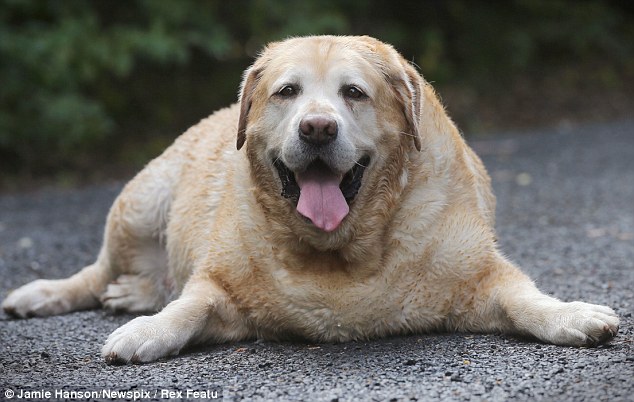 With the majority of pets in this country being overweight or obese, there’s a good chance your dog is one of them. Your veterinarian may have suggested you put your overweight dog on a diet, and even gave you specific ideas on how to get the weight off your dog. She may say things like “he’ll feel better.” It sounds horrible (diets always are), and both you and your dog are just fine the way he is! Here’s four reasons to ignore your veterinarian’s advice. (Before you get mad, read to the end).
1 – Obese dogs that barely move are easy to care for
He never wants to move. Sometimes he doesn’t even greet you at the door. Sure, he’ll waddle outside to do his business, but that’s about it. No walks. No playing with toys. No throwing the ball. You have a decoration in your house that you feed (and feed, and feed) that requires little to no effort. Does it get any better than that?
I used to have a dog like this. And, gullible me, put her on a weight loss program that was very successful! She lost 20% of her body weight, and what do I have now? A dog that greets me enthusiastically at the door. I have a dog who runs through the house wanting to play. She asks to go for walks. She brings me toys and wants me to pull them. This is exhausting. Sure was easier when she didn’t want to move. Still kicking myself for this one. Now I have a lively dog that wants me to get off the couch and enjoy life. The nerve!
2 – Obese dogs have shorter lives
Let’s face it, even if the dog doesn’t move much, you still have to pet it, feed it, possibly medicate it for its obesity-related health problems. That still takes time, and you’re busy! If he dies sooner, then it’s that much sooner you can get a young, skinny model. It’s been proven obesity takes years, not months, years off dogs’ lives. With the number of homeless animals out there, having your dog die young means you can save another homeless pet. Score one for compassion, right?!?!
3 – Obese dogs are good for the economy
Overfeeding your dog requires a lot of food! Dog food, people food, any food! Also, don’t forget the entire cabinet of treats you have! All that costs money, and our economy thanks you! Besides, many obese dogs have health problems, with arthritis being the most common one. Is your dog on pain meds? (I would hope you are giving them if your dog needs them). Does she get skin infections in her fat folds that need to be treated? Finally, when your obese dog passes away, cremation companies will profit! Cremation is charged by weight, so the more pounds, the more those companies can charge. Way to help America prosper!
4 – Obese dogs want to eat and eat, and depriving them of that is mean
Cue the Sarah McLachlan song! Your dog’s ancestors, the wolf, might run around and have to catch their own prey. They might even play and engage in social activities. Savages! You want your refined, evolved dog to have the best life, and that means never getting out of his bed. If you offer him food and he eats it, then clearly he has been starving! When he looks at you with the mournful eyes, it isn’t because he has instincts telling him to move, to get out in the world, to chase a squirrel. No, those eyes want to get every french fry possible. Playing is over-rated. Every other species does it, but dogs have always been a niche of their own anyway, right? Food is love, and you want your dog to feel loved.
So…
clearly your veterinarian does not have anyone’s best interest in mind when she offers ways to help your dog lose weight. She doesn’t know your dog! He was not descended from the wolf, but from the sloth! He has no desire to do “normal” dog activities, because he’s much more refined than that. Playing? Jumping in the car to go for a ride? Chasing the neighbor’s cat? So stereotypical! As long as you keep all the weight on him, you’ll never know the energetic dog lurking underneath. So feed him and feed him, and manage his health problems as they pop up. And when your obese dog passes away at a young age, please adopt!
But, wait! What if you love your dog and you want her to live a long time? To enjoy life?
Oh. You’re that owner (thankfully!)
You remember when she would be happy to see you come home from work, tail wagging, butt wiggling, and you miss that.
Maybe your doctor told you to get out and walk a little bit too, and to find a buddy.
Or you worry how she’ll get around the next time it snows.
Come to think of it, that playful, happy dog you enjoyed before she gained all the weight was kinda fun. The vet said weight loss would extend her life, and she would feel better.
Maybe you should give it a shot after all, for your dog’s sake.
Web-DVM guest blogger Dr. Karen Louis is a practicing small animal veterinarian. See more of her articles at her blog at VetChick.com
Tips for Making a Fearful Rescue Dog Feel Right at Home

Tips for Making a Fearful Rescue Dog Feel Right at Home
If you’ve chosen to rescue a dog, congratulations – you’ve made an excellent decision that you will feel good about for the rest of your life. Helping shelter the most vulnerable animals among us is a truly higher calling. Of course, adopting a rescue comes with its own set of challenges, as the dogs are oftentimes coming from less-than-optimal situations. Here are some tips for making a fearful rescue dog feel right at home.
Focus on dog-proofing a particular area
A rescue dog will likely feel safer with a comfortable, but defined space. Too much freedom is confusing – especially in a totally new environment. It’s best to designate a small, but roomy space for your new dog and keep them there until they are fully acclimated. Slowly introduce them to the rest of your home. You’ll need to dog-proof1 the area before they arrive.
“This may mean taping loose electrical cords to baseboards; storing household chemicals on high shelves; removing plants, rugs, and breakables; setting up the crate, and installing baby gates,” says2 Petfinder.com.
Keeping them somewhat confined – at first – will help you set ground rules, train them, and make sure they don’t have any bathroom/marking issues.
Set and stick to a schedule for most everything
Dogs – especially rescue pups – find comfort in structure. Everything you do – from daily walks, to feeding, to bathroom breaks – should follow a fairly strict schedule. This dependable routine will bring stability to their lives, which may have been pretty chaotic up to this point.
“Try to walk him and feed him at the same times each day, and signal the walking and feeding times with the same keywords every time. For instance, right before you feed him, you might say, ‘Dinner time!’ A reliable routine is an important tool in successfully integrating your new dog into your family and helping him feel secure,” says AdoptaPet.com3.
Be overly patient
This goes for any pet, but it goes double for rescue dogs. Rescue dogs were either given away, found as strays, or taken from an abusive situation. All of these situations are stressful. Now, they’ye being introduced to a new environment and have no idea what to expect. Even if they are mostly house trained, they may make mistakes. They may be wary of touch and affection at first. They may not want to eat or drink. The main point is that you must be very patient.
“Recognize when your new rescue dog dog is afraid. Fear is a powerful emotion that throws training and commands out of the window. Comforting the dog when he is afraid does not reinforce the fear as some believe. Speak in a soft voice, and stroke him gently until he calms down,” says DogTime.com4.
Start training immediately (and get some help!)
Not all of us are Cesar Millan. It’s hard to train a dog – especially one that may be older and who may have been given mixed signals for years. If you don’t feel confident training your new dog yourself – get some help!
“Even though it may take a little while for your shelter dog to get used to his new home, that doesn’t mean you should put off starting an obedience program. On the contrary, regular training sessions can help get him into a routine,” says TheSpruce.com5.
You shouldn’t treat your new rescue dog with kids gloves – proper training and structure is actually good for them – but you should practice an abundance of patience. With time, your dog will become accustomed to its new life and the time you spent in the early days, being patient, will help strengthen your bond.
- https://www.rover.com/dog-proofing-your-home/
- https://www.petfinder.com/dogs/bringing-a-dog-home/tips-for-first-30-days-dog/
- http://www.adoptapet.com/blog/10-tips-for-welcoming-home-your-newly-adopted-dog/#.WUwJJ2jys2x
- http://dogtime.com/advocacy/35621-tips-decompressing-new-rescue-dog
- https://www.thespruce.com/train-a-shelter-or-rescue-dog-1118219
- Photo Credit: com
Jessica is the creator of OurBestFriends.pet. Jessica lives in Dallas, Texas with her loving family (which includes 2 dachshunds and a black lab). She is a certified dog lover, and believes dogs are just about the greatest creatures on earth.

Keep your pets safe this holiday season!
The holiday season is right around the corner starting with Halloween (yes, in my home, we consider Halloween a holiday!). It is both a joyous and busy time and it can be easy to overlook certain...

Help for nervous/anxious dogs
There seems to be a growing number of excessively nervous, often skittish dogs. This can range from anxieties, such as noise or storm anxiety, anxiousness about being separated from pet parents,...
Bird flu is infecting cats and cases are rising – What you need to know!
H5N1 Avian Influenza is causing far more trouble than just just high egg prices. The bird flu has successfully jumped species now able to infect cats and people. Although the ability to infect...
Read Dr. Roger’s Latest Book!
 Be Healthy & Fit With Celebrity Trainer Steve Jordan
- The New Measure of a Life Well Lived: Why Health Span Matters More Than Longevity
- The Wealth Spark: Igniting Your Path To Abundance and Success
- Bright Line Eating with New York Times best selling author Dr. Susan Peirce Thompson
- Maximizing Your Workout Time: Efficiency Tips from Westwood Private Fitness
- How to Transform Your Dad Bod: Insights from the Fit Father Project – New Podcast Episode Out Now!