Six ways to help your senior cat at home
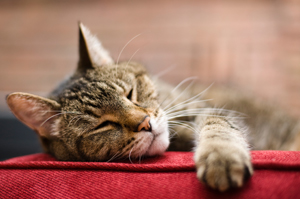 We know that cats are the masters of hiding pain. Once you learn the subtle signs (here’s my article on how to decode these signs of pain) your next thought is – what can I do to help?
A trip to the vet is always a great idea! Finding out if there is a major systemic disease, and treating it, can do the most to help your cat feel better. But what if your cat is otherwise healthy, but has arthritis, or stiff joints? What if your cat has major illness along with some soreness? Yes, your veterinarian can prescribe pain-relieving medications, but I’ve learned it’s the every day things that have the greatest impact on how these cats feel at home.
Here are six modifications you can do at home that will make a huge difference in your cat’s quality of life.
Cushioning
Your cats favorite spot might have been great when he was young, but older arthritic cats require more cushioning. Think about how as a kid you went to sleepovers and camp-outs and slept on the floor just fine. No way would you do that as you get older! As cats age, they need thicker padding for bedding. Often cats lose weight as they become geriatric, and bony prominences can hurt when on a thin blanket. Careful – don’t make it too thick! It then can become too tall for a cat to comfortably climb. So consider both ends of the problem when looking for bedding. A half inch can make a world of difference!
Litter box
Speaking of difficulty climbing tall things, how tall are the edges of your litter box? Senior cats need a low ledge to easily enter and exit the litter box. Yes, litter might travel out of the box. Sweeping it up is minor. Let your cat have easy access to the box, and he’s less likely to find other places to eliminate!
Also, consider the location of the litter box. Your cat shouldn’t have to walk down an entire flight of stairs every time she has to go. If you had to walk down a long flight of stairs, then scale a wall as tall as your head just to pee, you’d be looking for an easier place to go as well! Keep the litter box on the main floor, and in easy reach of the area your cat spends most of his time.
Favorite perches – reachable again! OK, I just said the litter box needs a low ledge so your cat can step in and out with less pain. The opposite is true for food and water bowls. If a cat has shoulder, elbow, or neck pain, imagine how painful crouching down to lick a plate or drink some water can be! Slightly elevating the food and water bowl to a more ergonomic position can let your cat eat and drink more comfortably. It make take some trial and error to find out which height is most comfortable for your cat. He shouldn’t have to lift his head up to access food and water, just be able to maintain a more normal standing posture. Finally, have the food and water in a location that is easily accessible, yet obviously not too close to the litter box.Food and water dishes
Is your cat not perching to guard her domain like she used to? Not jumping to get to her usual spots? It probably hurts, or is difficult to jump, but she sure would love to be up there! Instead of one big jump, add some in between levels, allowing her to jump a short distance each time. I have owners who even have bought or made pet staircases leading up to window sills, beds, or couches. And remember, going up is not always the challenge – jumping down can be as well. Jumping down puts a lot of pressure on the front limbs, and also requires significant flexibility along the spinal vertebrae. So consider both directions when placing the additional levels or steps.
Additionally, make sure the perch is stable and not wobbly at all. Any movement makes a cat have to tense up to regain balance. Related to this, a good non-slick surface in the area your cat wants to jump may give him more confidence in trying to make these smaller jumps you’ve just offered. Rubber-backed rugs, or even yoga mats, work well here.
Scratching posts
Most cats are vertical scratchers, and crave a scratching post that is tall enough for them to stretch out and really scratch it good! Some cats are horizontal scratchers, meaning they want a flat surface, yet long enough to stretch. As cats age and develop arthritis, it may become painful for them to stand on their hind legs and scratch vertically. If your cat is no longer using her post, try a horizontal one. She might love it! She might roll her eyes and wonder what got into you. She is a cat after all.
Consistency
There are many conditions that can cause a cat to lose her vision as she ages. Hyperthyroidism and kidney failure can both cause hypertension (high blood pressure). Cats with hypertension will often become acutely blind, as the retina (the part of the eye that processes light) will detach and no longer function. Many people cannot tell their cat is visually impaired until they do something like move the furniture. Cats can memorize the house and fake it pretty well, but with a new layout, they start bumping into things. Cats hate not knowing where they are, so many will just avoid walking around altogether. For this reason, keeping furniture and rugs consistent in the house will help your older cat know where she is and not feel confused. Furthermore, geriatric cats often develop dementia (here’s my article on feline dementia), similar to Alzheimers disease in people. Having a known floorplan and no surprises can make these cats feel much less anxious, and give them more confidence to move about the house.
Many of these small things will bring about huge improvement in your cat’s quality of life. And the good news – nothing here is expensive! So go ahead and try implementing some or all of these changes. You have nothing to lose, and your cat will love you even more!
Web-DVM guest blogger Dr. Karen Louis is a practicing small animal veterinarian. See more of her articles at her blog at VetChick.com
3 Ways People Harm Wildlife While Trying To Help
 You let your dog out in the yard, and he seems overly interested in one particular spot. You find a nest of baby bunnies. They have been licked, but otherwise seem OK. What do you do?
A – Take them inside and contact a wildlife rescuer. Now that your dog has touched them, they have his scent, and the mother will abandon them.
B – Take them inside and raise them yourself. How hard can it be? You’d always wanted a pet rabbit.
C – Leave them in the nest, and keep your dog on a leash for the next few days until they are old enough to leave the nest on their own.
Rumors and old wive’s tales tell us that option A is the best, but it’s actually the worst! (Well, OK, option B is probably the worst.) It is a complete myth that a mother of any wild animal will abandon its young because something touched it. But you watched for hours and didn’t see mom, so they have to be abandoned, right?
Mom is there! She is just smart and not revealing herself. You are a threat, and she’s playing it safe. Guess how often a mother rabbit needs to nurse her young. Every 3 hours? 8 hours? How about every 24 hours! Yep, mom doesn’t spend much time in the nest, as it draws attention to the nest and also her babies. So no, you won’t see mom come back, but she will!
Besides kidnapping babies, what other things do well-meaning people do that harms wildlife? Feeding!
Moldy bread can actually be toxic to wildlife, especially birds. Certain kinds of molds can contain toxins that can harm the liver and digestive tracts of birds and other wildlife. If you don’t want to feed it to your pet, don’t give it to wildlife!
OK, so how about just stale bread? No mold, just too dry to put in the kid’s lunchbox. This is harmful as well. How? Wild animals need food for fuel. Everything they eat needs to provide nutrients like fat and protein, as well as vitamins and minerals. Because wild animals have to hunt or forage for food, every morsel counts. So, many people think they are helping out the animals by providing “free” food. Problem is, these items are often white bread or crackers, which have no nutritional value for the animal. After filling up on bread, these animals then will forage or hunt less, because they feel full. By not eating the food they were designed to eat, they will develop deficiencies in nutrients if fed by humans long term.
So next time you’re at the park and the not-so-wild goose approaches you, resist. Take a cute picture.
Next time you find a baby bird, look for its nest.
Next time you find baby bunnies that are not bleeding and obviously injured, leave them be.
You’ll help wildlife so much more by letting them be wild!
Web-DVM guest blogger Dr. Karen Louis is a practicing small animal veterinarian. See more of her articles at her blog at VetChick.com
Snow Reveal – What Snow Can Tell Us About The Health Of Your Dog
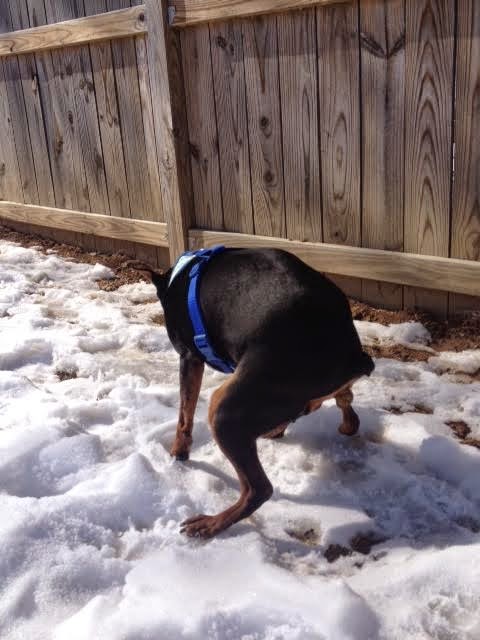 It seems when it comes to dogs and snow, they either love it and can’t get enough, or hate it and want inside the second they are done pottying. I don’t know any dogs who aren’t quite sure how they feel about it.
We veterinarians, however, have discovered over the years that snow can be a useful diagnostic tool. Whether your dog loves or hates snow, it might help reveal problems you otherwise wouldn’t know were there.
No, there’s no test at the lab involving snow. We don’t bring it into the clinic (usually).
Here’s three surprising things you can learn about your dog after a snowfall.
1 – Bloody or discolored urine
Normally, when your dog pees in grass or on a tree, you really don’t see it. Sure, the fire hydrant looks wet, but if there’s a bit of blood in there, you couldn’t tell. Enter the white snow – a blank canvas on which your dog can eliminate without suspicion. I can’t tell you how many dogs we see with bladder stones or severe bladder infections that had lurked under the radar for an unknown length of time, then show up after the first snow! Against the white snow, any discoloration in urine becomes obvious. Not every dog shows symptoms of bladder stones or infections (accidents in the house, having to urinate frequently) and I cannot explain why. I guess they are crazy tough, and brilliant at hiding disease. Still she’ll feel SO much better once you get the problem treated!
Blood is the most common color problem we see in urine, but severe liver disease can cause urine to turn orange, which will definitely catch an owner’s eye. If you notice a very odd color to your dog’s urine, call your veterinarian right away! If you have yellow snow, good news! Just don’t use it for snow ice cream.
2 – Neurological problems
If your dog has any disease of the spinal cord or intervertebral discs, symptoms can be striking, but not always! Some dogs have subtle symptoms, like not picking up one foot all the way, and kinda flinging it forward. You may not notice this until he tries to walk in 3 inches of snow. If you notice the snowy paw prints are not all uniform, but there’s some scuffing of snow, it’s worth getting your dog checked by your veterinarian. We often cannot diagnose the exact cause (we usually need an MRI for that) but we can often get started, determine where the problem is, and even offer treatment to help.
3 – Arthritis
This is the first one you thought of, isn’t it! Rightfully so. Older dogs with joint pain often do not move their legs through a full range of motion. They can fake it pretty good on a regular surface, but add a couple inches of snow, and now we have to pick up our legs more. That different motion can aggravate some joints and muscles that haven’t moved like that in a while! If your dog who normally loves snow seems less excited to go outside and move, there’s probably a reason. Talk to your veterinarian and get started on pain medication. There are many effective and safe medications out there to help these old guys. Here’s my article on snow aggravating arthritis in older dogs.
Think your dog isn’t hurting because he’s not making noise? He never will – that is a total myth. Here’s my article on how to tell if a dog is in pain – and whining is NOT listed as a sign. That would make our jobs far too easy, so we have to look at more subtle signs.
So next snowfall, take two seconds and check for these things. Hopefully your dog shows none of these symptoms, and is romping and making doggy snow angels. If you see these symptoms, you know what to do!
Web-DVM guest blogger Dr. Karen Louis is a practicing small animal veterinarian. See more of her articles at her blog at VetChick.com
[Veterinary] Cannabis, Hemp, & Medical Marijuana Laws
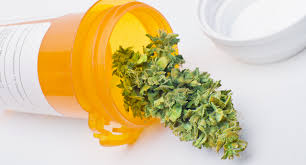 You might have found a site online that states the miraculous wonders of CBD or hemp oil. Yes, there is a lot of promise in these medications for the treatment of seizures, pain, and other diseases. A lot is still not known! (Here’s my article explaining what these are, and what we do and do not know).
You’ve heard mixed reviews on if different extracts are legal, illegal…reeeaally illegal. What gives?
The laws are constantly changing, and vary state by state. It’s always best to check on the most up-to-date rulings with your state before attempting to purchase any cannabis-related products. You’re too cute for jail.
On the federal level, Marijuana is illegal. It is considered a Schedule 1 controlled substance (in the same family as heroin and LSD, for reference). What about the derivatives or extracts of it? They were “under the radar” until just recently!
On Dec 14, 2016, the DEA (Drug Enforcement Agency) declared Marijuana extracts to be a schedule 1 drug, which translates to them basically being illegal. Here’s the announcement, which stated:
“…an extract containing one or more cannabinoids that has been derived from any plant of the genus Cannabis…Extracts of marihuana will continue to be treated as Schedule I controlled substances.” (And I have no clue why they spell it like that, just roll with it.)
A question was raised about CBD. Here’s the DEA’s response:
“For practical purposes, all extracts that contain CBD will also contain at least small amounts of other cannabinoids. However, if it were possible to produce from the cannabis plant an extract that contained only CBD and no other cannabinoids, such an extract would fall within the new drug code 7350. In view of this comment, the regulatory text …has been modified slightly to make clear that it includes cannabis extracts that contain only one cannabinoid.”
OK, so federally speaking, marijuana or any extracts, including CBD, are not legal to possess. Yet most states now have their own laws making various quantities and forms of cannabis-related products legal!
Which law do you follow? How can following one law break another? The answer came in 2013, when the US Department of Justice did not change the law, but did tweak how it would be enforced. They basically said they’d still pursue the “big fish” type of dealers, but consumers who possess small amounts of cannabis-type products are to be policed by the state. Most states did not legalize sale of marijuana, just possession, with quantity limits for personal use. The federal DOJ basically told the states they need to create and enforce laws to accommodate each state’s legalization of certain forms of the drug, and the DOJ will go after the state if they fail at this mission. Basically, the federal government said “you opened this can of worms, so you can keep the worms in line.”
So with the feds announcing their “blind eye” to the use of state-legalized marijuana and hemp products, what you can and cannot use depends on where you live. So, I checked out the National Conference of State Legislatures. They have a nice chart of which state allows what, with links to the exact bill or amendment! Here’s the page with the chart listing medical marijuana laws by state.
And here’s a chart listing laws by state as they apply to low-THC or CBD.
My favorite chart listing hemp and marijuana laws by state is here. It’s a site called pro-con, which I don’t know a lot about. I do like how easy to read the chart is, and the vast amount of information in a condensed area. Always double check with your state’s most recent laws before attempting any purchase, as laws change, and we do not know how often websites are updated.
So what if we look at these cannabis-related products not as illicit drugs the DEA cares about, but from a medication standpoint? I checked with the FDA (Food and Drug Administration) and see where they stand in this mess. In their statement, they state in #13 that products containing cannabidiol (CBD) may not be marketed or sold as dietary supplements, and foods containing cannabidiol may not be sold at all interstate (but this is OK if you keep it in the state?). This does not apply to the CBD-rich hemp oil, apparently. And yes, these are rules for human products. And the FDA is watching! Here’s a warning letter they sent to an online CBD oil seller earlier this month.
Now it’s time to ruin your day and say all this talk about laws and policing applies to use of cannabis products in people!
Nothing has been mentioned specifically about pets. Yes, the laws about possession will affect you (you would have to have it in your possession to give it to a pet), but nothing about prescriptions, medical conditions, or other regulations. For this reason, many veterinarians are reluctant to prescribe these substances, as there is no law to protect them from losing their license or even going to jail.
The one entity that does address pets is the FDA! Item 19 in their statement reads :
“We want to stress that FDA has not approved marijuana for any use in animals, and the agency cannot ensure the safety or effectiveness of these products.
For these reasons, FDA cautions pet-owners against the use of such products.”
CBD’s seem innocuous – what’s the law on those?
Again, this goes back to the individual states, but here are some generalizations. Many states allow CBD’s that are low THC, the definition of which is <0.3% THC. These are often the products of a plant called “Industrial Hemp.” The plant is naturally very very low in THC, and laws regarding its cultivation vary by state, as the DEA still considers it “marihuana.” Formerly, any CBD with <0.3% THC was assumed to be legal even on the federal level, but the recent update from the DEA squashed that theory and made even CBD’s illegal.
So, it’s back to the states we go!
A note about importing hemp products
A court case back in 2003 brought about an interesting turn of events. The decision on Hemp Industries Association, et al, v. Drug Enforcement Administration, 333 F.3d 1082 (9th Cir. 2003) determined the DEA was overstepping its bounds by banning the import of hemp products containing little to no THC. So, this ruling actually made it legal to import CBD’s and Hemp oil. Ironically, growing hemp was banned until the passage of the 2014 farm bill, which allowed for certain species to be grown under specific circumstances. Growing marijuana – still very banned!
How about some published papers on applications with pets?
When trying to find published papers on cannabinoids and pets, it’s a bit of a challenge. Here’s an article from the AHVMA – the American Holistic Veterinary Medical Association. The title is “Consumers Perceptions of Hemp Products for Animals. It’s a great summary on the use of hemp products in this country, and also details survey results of what pet owners are doing with hemp products: where they are buying them, what they are buying, and the results the are perceiving. This is not a study about the effects of these medications on any disease, just what owners think it does. It’s a very interesting read, but the survey focuses on what the owners think, based on a survey the organization took. The survey targeted pet owners who visited a site that sold hemp, so obviously the population was a bit skewed. And just because other people are doing it does not make it right or wrong -it’s just what people are doing. It tells us nothing about the drug. Like your mom always said: “If everybody else jumps off a cliff, does that mean you should to?”
Finally, here’s a great review by Colorado veterinarian and doctor of osteopathic medicine, Dr. Narda Robinson. She teaches integrative medicine to veterinarians, and says that while cannabis products hold amazing potential, we need the research to know how to use them safely.
Author’s note: I think cannabis-derived medications have great potential, but we need to make educated decisions. Until the laws catch up to the need, and the science, many veterinarians will be hesitant to recommend, much less prescribe, these products. They cannot risk harming a pet, losing their license, or worse. My hope is that, eventually, more research is published, laws are changed, and we can safely help pets who may truly benefit from these medications. Sadly, that time is yet to come.
And with cannabis products, like anything else in life – if someone is selling it, and it sounds too good to be true….you know the rest.
Web-DVM guest blogger Dr. Karen Louis is a practicing small animal veterinarian. See more of her articles at her blog at VetChick.com
Is There A Use For Medical Marijuana For Pets?
 As medical marijuana becomes legal and accessible to more people in more states, pet owners are looking for ways they can use this new family of medications to help their pets. In humans, marijuana and hemp products, and their extracts, are being touted to treat a wide variety of syndromes and diseases. I know individuals who suffered from seizures, or chronic pain, and their lives have dramatically changed for the better, thanks to cannabis-made medications. Fortunately, there are well-designed studies to back up many of these claims…in people.
When it comes to pets, we aren’t so lucky. Can we extrapolate human data to apply it to dogs and cats? We do with many other drugs quite often, but we must be cautious. Does the law allow for pets to use medical marijuana? The laws are rather silent on pets, making it more risky. Here’s a breakdown.
A quick internet search for legitimate information on cannabis products for pets yields primarily companies selling these products. Obviously, they will tell you their particular product or brand is superior to the others, and their product will treat, manage, or even cure a long list of diseases. We need to wade through the advertising and self-promotion and get down to facts.
CBD, THC, cannabinoids…the basics
Marijuana and hemp are plants in the genus Cannabis. Many different species and strains of these plants exist, and almost 500 different compounds have been isolated from these plants, all with potential medicinal uses. Of these, over 80 are classified as cannabinoids. Different plants contain varying levels of cannabinoids and other compounds.
Every chemical has its own unique properties, and much more research will be needed for us to understand the full potential of this array of potential medications. For our purposes, there are two main cannabinoids that you’ll see mentioned the most: CBD and THC. CBD (cannabidiol) is the “medicine-y” cannabinoid. It’s extracted from a hemp plant, but lacks the psycho-active effects most people think of when they think of marijuana. The molecule responsible for that “high” one can get from marijuana is the other cannabinoid called THC (TetraHydroCannabinol). Think of CBD as the president of the science club, and THC as the party girl, if that helps.
The marijuana plant contains more THC, the chemical responsible for the “high”, while the hemp plant is more fibrous, and contains very little THC. Instead, hemp’s main compound is CBD. What makes us call one plant hemp and the other marijuana if they are both in the same family? Basically, more THC earns it the name “marijuana” while less THC (<0.3% depending on who you read) makes the plant hemp, or even “industrial hemp.”
There are also synthetic cannabinoids out there. The laws are more lax on these, making them “less illegal”, as most of the rules the DEA makes are about the compounds extracted from Cannabis plants (see below). Two of them are actually FDA approved (for human use!) Marinol is prescribed to help AIDS patients not lose their appetites and maintain body weight. Cesamet is prescribed to patients undergoing chemotherapy to help reduce the nausea and vomiting which can happen too commonly. It’s also being used (again, in people) to treat chronic pain and even Irritable Bowel Disease!
While these synthetic cannabinoids sound like a great thing, patients taking them report they don’t seem as effective. Apparently, the synthetics contain one and only one compound, while the extracts contain mainly that compound, but have other cannabinoids along for the ride that seem to have an additive effect. So, bottom line, the products from plants, as of now, seem to work better.
Giving cannabinoids to pets
I know very few veterinarians who recommend these products, for a variety of reasons. Little to no data exists on what dose is safe and/or effective. Little is known about drug interactions. Next to nothing is known about long-term use, simply because the state laws allowing us to conduct large scale clinical trials with it are relatively new. There is absolutely no regulation of production of these products, so we have no way of knowing if what is claimed on the bottle is what actually is in the bottle. Finally, the constant changing of the legal status of these products makes many veterinarians want to keep their noses clean and avoid the whole legal mess until the federal and state laws can come to some agreement.
Here’s a taste of what we do know.
CBD has great promise in the treatment of seizures, but appears to be poorly absorbed into dogs’ bodies when given orally. As far back as 1988, we knew cannabinoids had great potential as a treatment for seizures. Six dogs were given the CBD through an IV, then orally to compare. The IV doses were absorbed into the blood stream and eliminated via the liver. The medication hung around a while too, with a half-life of 9 hours! The oral dosing was not at all absorbed (none detected in the bloodstream) in half the dogs, and the other three that did absorb it had negligible levels. This study was only of six dogs, so we cannot draw any major conclusions from it. Yet, it does not seem promising for CBD’s as an oral option, unless presented in a different version or compound than the one used. Obviously, much more research needs to be done. (Pharmacokinetics of cannabidiol in dogs. Drug Metab Dispos. 1988 May-Jun;16(3):469-72.)
CBD might inhibit the cytochrome P450 enzyme. Here’s the research on it. Not a bad paper, but everything was done in vitro, (where most research starts) and nothing performed in an animal. Chemicals can behave differently than cells in a liver. And what is cytochrome P450 and why do we care? Oh, you care! This is a very important enzyme in the liver that is responsible for metabolizing (breaking down) medications or toxins. If this enzyme is inhibited and your pet is on other medications, it could, theoretically, cause the circulating dose of those other medications to increase, which is not always a good thing.
Dogs may have up to ten times more CB receptors than humans. In order for any chemical to interact with a living organism, there have to be receptors on the cells somewhere in the body. Imagine a catcher’s mitt that has a unique shape that only a certain size and shape of ball can fit into. That is what the cells in our brains, liver, and even skin have. For example, glucose receptors seek out glucose and bind to it. The CB receptors are like catchers mitts sitting on the cells and waiting for a cannabinoid molecule to be caught. When it is, the cell absorbs the molecule, chemical reactions happen, all kinds of magic. Bottom line – the more receptors an animal, or even an organ, has, the more sensitive that animal, or organ, is to that chemical. With dogs having 10 time more receptors for cannabinoids than people, they could potentially be 10 times more sensitive! This must be taken into account for both dosing, and thinking of side effects. (Houghston, SW Vet Symposium 2016)
So, take the first paper into account, where the CBD’s did not seem to enter the bloodstream of dogs when given orally. Now we know dogs have 10 times more CB receptors than people. How the heck do we decide on a dose?
That is precisely the problem.
CBD has been shown to reduce seizures in rats. We’ve also learned, anecdotally, that cannabinoids help epileptic humans as well. We suspect it works by inhibiting the CB receptor, and/or reducing calcium fluxes in neurons. (Izzo AA. Non-psychotropic Plant Cannabinoids: New Therapeutic Opportunities from an Ancient Herb. Cell Press, Elsevier; 2009:515–527.)
CBD may be a potent neuroprotector. Once nerve cells die, they are gone forever. This is why brain damage of any kind, in any species, is such a big bad deal. Izzo et al suggests CBD’s may prevent brain cell death in certain situations, and can even reverse brain damage resulting from lack of oxygen… in rats.
Lesser-known cannabinoids (CBC and CBG) have demonstrated great antimicrobial activity. With all the antibiotic resistant bacteria we have in the world, a new medication that can possibly kill “super-bugs” would be wonderful!
There are many other great studies out there on rodents, giving us hope for future applications. However, it’s a start, and much more needs to be done.
So what is legal, and what isn’t?
And why is this so complicated?
Web-DVM guest blogger Dr. Karen Louis is a practicing small animal veterinarian. See more of her articles at her blog at VetChick.com
The Day The Owner Of My Deceased Patient Consoled Me
 Death and loss of life is a regular part of being a veterinarian, yet it never ceases to hurt when we lose patients. However, no one lives forever and inevitably we are faced with disease circumstances for which there is no cure.
It hurts even more when we deduce from the diagnostic evidence at hand that there is reason to be hopeful but the case plays out nonetheless in a far less hopeful direction. Beyond that, it is more difficult when it is a cherished patient I have had the pleasure of knowing for most of his life, owned by a cherished client.
In 2006, a beautiful, helpless black kitten was found in a dumpster by one of my technicians. We were all taken by his remarkable affection despite having likely known nothing but hardship in his first 8 weeks of life. As we nursed him back to health, the techs affectionately named him McLuvin (from the movie Superbad that was popular at the time).
In a short period of time, word about McLuvin reached a dear client who adopted him, later to change his name to Captain Jack. Throughout his life, Captain Jack remained the lover he was as a kitten and it was always my pleasure to see him for over a decade for his well visits. Last week, Captain Jack came in for unexplained weight loss. Physical examination revealed a mid-abdominal, large, freely movable mass. Between how it felt and its location on a follow up x-ray, it appeared the mass emanated from his spleen.
The most common cancer of the spleen in cats is lymphoma, a systemic cancer that is very treatable in an inexpensive and minimally invasive manner following surgical resection of the spleen and attaining a diagnosis. That was the plan going in.
Upon surgically exploring the abdomen, I quickly realized that the large mass was not from the spleen at all, but was a pendulous mass that was projecting from one of his liver lobes. I proceeded to remove the mass via liver lobectomy and closed and recovered my patient without incident.
Everything seemed fine until the next morning when Captain Jack became hypothermic and poorly responsive for reasons we could not quite figure out. But after warming him and administering fluids, Captain Jack rallied, started eating, was purring and playful within a day and went home. I was excited for the biopsy report to come back Monday to see what further measures I could enact to further along his quality of life and longevity.
I returned Monday with the notification that Captain Jack passed away at home over the weekend. It was crushing for me to hear and I called the owner who I hold in very high regard to offer my condolences and give her the biopsy report if she still wanted to know what the nature of the mass was. I reported that it was a cholecellular carcinoma, a rare and aggressive cancer for which further treatment would not have been able to realistically stop or even slow significantly. Captain Jack never really had a chance at all.
The owner took the news well and she must have noted the sad tone of my voice when she said, “Please don’t feel bad, you did everything you could. You fought for him and I thank you for that.” From her perspective as a human nurse, she added, “Sometimes things just get beyond our control.”
Usually playing the role of consoler, this may have been the first time I had an owner console me over the loss of her pet. I really appreciated that and it set the tone for me to shake it off, go about my day, and fight for more pets to the best of my ability.
Dr. Roger Welton is a practicing veterinarian and well regarded media personality through a number of subjects and platforms. In addition to being passionate about integrative veterinary medicine for which he is a nationally renowned expert, Dr. Welton was also an accomplished college lacrosse player and remains to this day very involved in the sport. He is president of Maybeck Animal Hospital , runs the successful veterinary/animal health blogs Web-DVM and Dr. Roger’s Holistic Veterinary Care, and fulfills his passion for lacrosse through his lacrosse and sport blog, The Creator’s Game.
Top Pet New Year Resolutions 2017
 It is time for my yearly pet New Year resolutions that I suggest to all pet owners for the coming year!
Walk Your Dog For 20 Minutes Every Evening
Exercise outside in the back yard is great and any dog is lucky to live in a home with a yard where he is free to run and play. But…nothing compares to the walk on the leash outside of the confines of the home that give the dog a sense of freedom and excitement the back yard just does not provide.
The mental and physical benefits of a nice walk cannot be over stated as a routine that provides new sights, smells, and enhances the canine bond with his owner. The adrenaline rush and excitement of the walk is especially beneficial for senior aged dogs to get arthritic joints moving, maintain muscle tone, and stimulate the brain to slow the progression of senility (doggie dementia).
And guess what? It’s good for you too! My 8 year old son and 6 year old daughter are even excited to get in on our almost 11 year old Lab’s nightly after dinner “Energy Walk.” My son even readily abandons his Xbox that he got for Christmas rather than miss the opportunity to stroll around the neighborhood with Bernie, gaze at the stars, and take in the sounds and scents of the evening.
Purchase Pet Insurance
The cost of veterinary care rises on average by 4%-6% per year. This does not occur because veterinarians are greedy, but because the costs of running a veterinary hospital go up by 4% – 6% per year. These costs include reference lab fee increase, regulatory and licensure fee increases,property tax increases, tangible tax increases, inventory cost increases…I could go on here, but you get the point. With this increase in health costs exceeding the rate of inflation by 1.5 to double, do the math and one can see that at some point, the cost of quality veterinary health care can become unsustainable for many pet owners.
It is best to purchase pet insurance BEFORE your pet has experienced any significant health concerns that would be deemed pre-existing conditions that would be excluded from coverage. It is also best to avoid pet insurance companies that are owned by human insurance companies. I have seen many reputable pet insurance companies go to hell in a hand basket after having been bought up by human insurance companies. Obamacare does not apply to pet insurance, so they are free to weasel their way out of paying out claims to their heart’s content.
Stop Falling For Gimmicky Pet Foods And Stick With Trusted, Reputable Brands
Every time I turn my head, there is a new pet food on the market capitalizing on the grain free, corn is the devil, and byproduct ingredients are hair and hooves craze. Some call themselves “holistic” diets, although no standard, classification, or pet food watch dog agency has a criteria or designation for such a claim.
I am amazed by the amounts of money pet owners will spend on unproven diets that are usually not nutritionally well balanced, do not have AAFCO (American Association of Feed Control Officials) certification, and have nothing impressive about them other than a great marketing department.
At the risk of attracting rants from conspiracy theorist trolls that are convinced veterinarians base their opinions on a pet food industry that gives us huge kickbacks and sends us on lavish vacations, I will advise you to stick with the most trusted diets. Why do we trust certain diets? Because of their commitment to species appropriate, breed appropriate nutritional balance, research and development, and quality control.
Royal Canin and Hills year in and year out fulfill all of these criteria and are usually a great deal less costly than whatever new pet food du jour is the flavor of the moment.
Happy New Year everyone! Make 2017 a great one!
Dr. Roger Welton is a practicing veterinarian and well regarded media personality through a number of subjects and platforms. In addition to being passionate about integrative veterinary medicine for which he is a nationally renowned expert, Dr. Welton was also an accomplished college lacrosse player and remains to this day very involved in the sport. He is president of Maybeck Animal Hospital , runs the successful veterinary/animal health blogs Web-DVM and Dr. Roger’s Holistic Veterinary Care, and fulfills his passion for lacrosse through his lacrosse and sport blog, The Creator’s Game.
Hypertension, aka, High Blood Pressure: A Silent Killer Of Cats
 Hypertension, aka high blood pressure, in cats is a very serious and common health concern. Like in people, it often goes undetected and untreated until serious health complications arise. Hypertension can be a secondary consequence of underlying disease, the most common of which is heart disease, hyperthyroidism, diabetes, and chronic kidney disease, all of which are potential killers in their own right. However, hypertension often is a primary disease in and of itself in cats that can lead to either sudden or gradual deterioration of health.
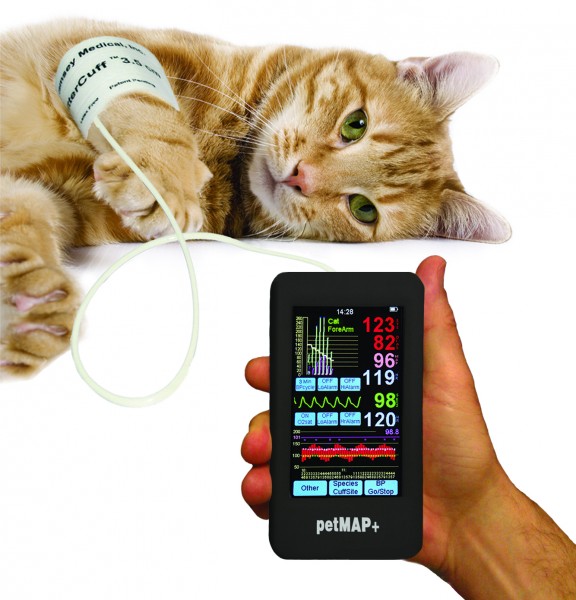
For this reason, in my practice, for cats of all ages that come in for sick visits and any cats 8 years or older that come in for well visits, we routinely measure blood pressure. This usually done without being too much of a nuisance to the feline patient and fairly quickly using a device called the PET MAP.
Whenever hypertension is discovered in a feline patient, I generally recommend routine bloodwork to check if there is any underlying disease that is predisposing the patient to hypertension. If disease is discovered, then I treat the primary disease while monitoring the blood pressure to see any further management of hypertension is necessary.
In cases where no underlying disease is found, I will usually try the patient for one month on a low sodium diet. If the blood pressure remains high, then I initiate treatment with a safe and inexpensive calcium channel blocker called amlodipine orally once daily.
The adverse health effects of hypertension in cats cannot be over stated. First and foremost, hypertension leaves the feline body very prone to clots. If these clots form in major structures such as the lungs, they can be deadly. A common occurrence of clot formation in cats is an often fatal condition known as Saddle Thrombus, where a clot lodges at the split of the arteries that supply blood to the rear limbs that cuts off blood supply to both rear legs.
While chronic kidney disease commonly leads to hypertension in cats, primary hypertension commonly leads to chronic kidney disease. Hypertension also stresses the cardiovascular system and can lead to chronic disease of the heart muscle and/or heart valves.
Yearly well visits where blood pressure is a routine part of the physical examination is a great way to detect hypertension early where it can be managed before it causes irreparable damage to the body, while possibly helping us to detect other serious chronic disease. As previously stated, I advise blood pressure as a routine component of the yearly well visit for call cats 8 years or older.
Dr. Roger Welton is a practicing veterinarian and well regarded media personality through a number of subjects and platforms. In addition to being passionate about integrative veterinary medicine for which he is a nationally renowned expert, Dr. Welton was also an accomplished college lacrosse player and remains to this day very involved in the sport. He is president of Maybeck Animal Hospital , runs the successful veterinary/animal health blogs Web-DVM and Dr. Roger’s Holistic Veterinary Care, and fulfills his passion for lacrosse through his lacrosse and sport blog, The Creator’s Game.
Why Is Corn So Bad As An Ingredient In Pet Food?
 Grains in general have gotten bad wrap in the past several years among some pet enthusiasts, groomers, and breeders. In particular, corn as an ingredient in pet food had gotten a particularly poor reputation, a narrative that is pushed most vociferously via the internet.
Case in point, at the site dogbreedinfo.com, this is what they have to say about corn:
A dog’s body cannot process corn properly. It is difficult for them to digest it. Corn is a cheap filler, a starchy energy which serves little to no nutritional value. A lot of it comes out in their waste.
They go on to state:
Corn has been linked to many dog ailments such as allergies, joint swelling, bloat and there have been some cases of aflatoxin contamination associated with corn in dog food. The corn that is used in dog food is sometimes contaminated with mycotoxins (toxins from mold or fungi). Corn metabolizes in dogs similar to the way sugar metabolizes in humans. It’s like feeding a child foods high in corn syrup. The dog is not going to be as healthy and may experience energy rushes, crashes, hyperactivity and a hard time concentrating. Studies have also shown that high doses of corn can inhibit serotonin in the brain. Serotonin is an important chemical that reduces stress and anxiety.
With no “About Us” page nor even information on who is writing their articles, no one knows if there is any truth to these “facts” about corn or anything else they write about for that matter. Also, I noticed that whenever the author states “studies have shown…,” on a number of topics, he or she never actually cites even one single study.
What I can confidently tell you is that everything quoted here is categorically false. Corn is not linked to any of the disease listed and aflatoxin contamination is exceedingly rare…there may be a recall once every few years at most and in 15 years of practice, I have never seen a case of toxicity I can trace to contaminated dog food. Ironically, many more dogs and cats get sick from raw meat bacterial toxicity than from mold contamination in dogs food, a mode of feeding that many of the anti-corn crowd fully subscribe to.
Regarding its nutritional benefit, it is true that corn in its native state is not well digested by dogs and cats because their digestive systems do not penetrate the outer shell of the corn well…which is why corn is deshelled prior its inclusion in pet food making it quite digestible.
To state that corn is nothing but a starchy energy source with no nutritional value is also false. It is actually a significant source of protein (16 g per serving), polyunsaturated fat (3.6 g per serving), and Vitamin B6 (50% of daily value per serving). It is also a great supplier of invaluable dietary carbohydrates and the ever important electrolyte, potassium. This all comes straight from the FDA nutrition label from an ear of corn.
Another common narrative is that corn (and other grains) are chiefly responsible for food allergies. A recent study from the Journal of the American Veterinary Medical Association (JAVMA) on 278 cases of food allergies in dogs determined that beef (95 cases) followed by Dairy (55 cases) were the biggest culprits. Of the grains, wheat was the highest at 42 cases, and corn was responsible for a mere 7 cases. This study falls in line with most food allergy studies that have historically determined corn to represent less than 0.1% of food allergy cases in veterinary medicine.
So where did all of the corn bad press come from? I honestly don’t know, but apparently fake news is not just a problem in our political system. Here is what corn does provide, however:
- An inexpensive source of source of important [aforementioned] nutrients that keeps the costs of pet food lower.
- An invaluable pet food ingredient that is highly unlikely to cause food allergy or inflammatory bowel disease.
That stated, I support those that choose to feed their pets paleo style and refrain from feeding grains. Realistically, grain allergies are much lower than animal protein based food items like beef, dairy and fish; but there is much to be said for feeding fresh food. However, it can be difficult to feed a pet freshly prepared ingredients in a nutritionally balanced fashion, whereas a good quality pet food has exactly what they need from a nutrient perspective…and corn is NOT the devil.
Dr. Roger Welton is a practicing veterinarian and well regarded media personality through a number of subjects and platforms. In addition to being passionate about integrative veterinary medicine for which he is a nationally renowned expert, Dr. Welton was also an accomplished college lacrosse player and remains to this day very involved in the sport. He is president of Maybeck Animal Hospital , runs the successful veterinary/animal health blogs Web-DVM and Dr. Roger’s Holistic Veterinary Care, and fulfills his passion for lacrosse through his lacrosse and sport blog, The Creator’s Game.
Beware of Holistic Veterinarians That Do Not Use Diagnostics
 I had a disappointing experience with local holistic practitioner some years ago who practiced only traditional Chinese Veterinary Medicine who – thank goodness as far as I am concerned – has been retired for a few years. I am both supportive of, and am fully on board with, the benefits of Chinese herbal medicine and acupuncture…but not the way this guy did it.
My first experience with this doctor that I affectionately named Dr. Yin Yang was when a cat came in for chronic weight loss and ill thrift. The cat had been under treatment for what this doctor coined “Yin and Yang kidney disease” with a mix of herbal therapy and acupuncture for 18 months (this is where my nickname for this doctor came from). The cat continued to lose weight and it was becoming increasingly difficult for the owner to get him to eat despite ongoing treatment.
Upon review of the case, I learned that Dr. Yin Yang had never run one single diagnostic, but had based his diagnosis on inspecting the tongue and eyes. It is true that a certified and practiced traditional Chinese veterinary medical practitioners can tell a great deal from physical inspection of these anatomical structures, but there is no substitute for seeing quantitative blood chemistry, complete blood count, and urinalysis data at a minimum to assess the patient’s health.
I quickly figured out with just a few diagnostics that the patient had in fact healthy kidneys, but was suffering from slowly progressing gastrointestinal lymphoma. The owner opted out of pursuing chemotherapy, so I started the cat on an anti-cancer dosing of daily prednisone. The treatment restored that patient’s quality of life, she regained weight, and in order to prop her body to withstand the prednisone and fight the cancer, I put her on an anti-cancer nutritional and supplemental regimen as well. She lived another 18 months for the most part with excellent quality of life.
Just because a veterinarian and/or client may be holistically oriented does not mean that we should forgo invaluable diagnostics such as x-ray and ultrasound imaging, bloodwork, and urinalysis that provide essential health information about the patient. An impressive certified traditional Chinese veterinary medicine practitioner I recently interviewed on my podcast (episode player above) practices acupuncture and herbal medicine exclusively, discussed the importance of including routine diagnostics in her practice.
Traditional Chinese veterinary medicine, chiropractic, rehabilitation, and other alternative medical practices have tremendous value in veterinary health care. However, this approach must be augmented with the use of any and all modern diagnostics that we have at our disposal to properly assess the patient.
Dr. Roger Welton is a practicing veterinarian and well regarded media personality through a number of subjects and platforms. In addition to being passionate about integrative veterinary medicine for which he is a nationally renowned expert, Dr. Welton was also an accomplished college lacrosse player and remains to this day very involved in the sport. He is president of Maybeck Animal Hospital , runs the successful veterinary/animal health blogs Web-DVM and Dr. Roger’s Holistic Veterinary Care, and fulfills his passion for lacrosse through his lacrosse and sport blog, The Creator’s Game.

Keep your pets safe this holiday season!
The holiday season is right around the corner starting with Halloween (yes, in my home, we consider Halloween a holiday!). It is both a joyous and busy time and it can be easy to overlook certain...

Help for nervous/anxious dogs
There seems to be a growing number of excessively nervous, often skittish dogs. This can range from anxieties, such as noise or storm anxiety, anxiousness about being separated from pet parents,...
Bird flu is infecting cats and cases are rising – What you need to know!
H5N1 Avian Influenza is causing far more trouble than just just high egg prices. The bird flu has successfully jumped species now able to infect cats and people. Although the ability to infect...

Read Dr. Roger’s Latest Book!

 Be Healthy & Fit With Celebrity Trainer Steve Jordan
- The New Measure of a Life Well Lived: Why Health Span Matters More Than Longevity
- The Wealth Spark: Igniting Your Path To Abundance and Success
- Bright Line Eating with New York Times best selling author Dr. Susan Peirce Thompson
- Maximizing Your Workout Time: Efficiency Tips from Westwood Private Fitness
- How to Transform Your Dad Bod: Insights from the Fit Father Project – New Podcast Episode Out Now!