Make the Most Out of Your Heartworm Prevention Products
 Like most pet owners, you probably give your dog a preventative for heartworm every month. Many cats who go outside, live in the south, or both, receive monthly preventatives as well.
It is very important to prevent heartworm, that’s for sure! It can be fatal in dogs if not treated. Treating is expensive and downright sucks for your dog. In cats it’s always fatal. Period. We can’t even try to treat it in cats!
Yet, today’s heartworm preventatives actually do so much more than prevent heartworm! It’s worth your time to learn what each brand covers, and talk to your vet about which is best for your pet. Every pet is different, and with so many great products out there, we can tailor the medication to the pet!
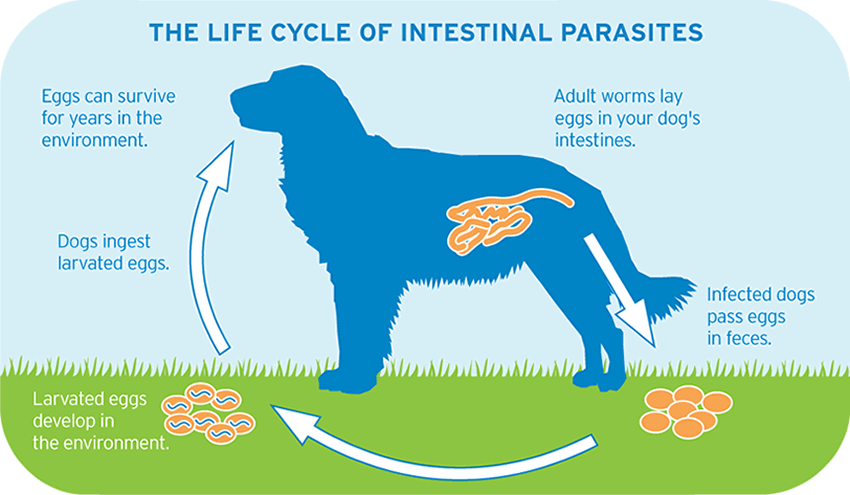
First, let’s meet the main characters in this little production, then we’ll discuss which preventatives prevent what. Here are the four intestinal parasites that can be treated by various products. There are a couple different species of each, so I am generalizing to keep it somewhat simple.
Roundworms – Nearly every puppy and kitten is born with roundworms. They are very common, and the nature of the life cycle is to migrate to a uterus and wait for puppies to appear! Both dogs and cats can get roundworms from infected soil – not fresh feces. It takes about 30 days for the eggs in feces to grow into the larval form that can infect people, dogs, and cats. Typically, these are found in soil, as the feces have eroded and are long gone by then.
Hookworms – Puppies are commonly infected with hookworms as well (thanks mom!). The unique thing about these larvae is that they can penetrate skin. Walking in grass, or even laying with the belly contacting the ground, are all opportunities for hookworm larvae to infect an animal. Pets can also get hookworms from eating infected rodents or birds. Good news – hookworm eggs in soil are not very hardy, and cannot survive freezing temperatures like roundworms can.
Whipworms – Probably the most frustrating parasite in this group, whipworms rarely show up in a fecal test. The worm only releases eggs once every 2 weeks or so, so the odds of getting a fecal with eggs in it is slim……unless the pet has a LOT of worms! Also frustrating – once these eggs are in the soil, nothing kills these suckers. Heat? Love it! Freezing? Bring it on! I tell owners once they’ve had a pet with whipworms in their yard, assume there are whipworm eggs in the yard for life.
Tapeworms – The only parasite that owners can identify in feces (or on their pet) only rarely shows up in a fecal test! Why? Tapeworms release segments (those white rice-like things) and not microscopic eggs like everybody else does. When we do a fecal test, we are looking for microscopic eggs – tapeworm fail! Most dogs and cats contract tapeworms from fleas – swallowing them, specifically. If you don’t have fleas, the tapeworm risk is minimal. However, there are a couple species of tapeworm that dogs and cats can contract from eating dead mice, rats, rabbits, etc. If your pet is a frequent hunter, preventing tapeworms is something to consider.
In my next article, I will review the products!
Web-DVM guest blogger Dr. Karen Louis is a practicing small animal veterinarian. See more of her articles at her blog at VetChick.com
Everything You Need to Know About Fish Oils for Dogs and Cats
The more our field learns about fish oil and omega fatty acids, the more we veterinarians have been recommending them. There’s a good chance your pet, or a pet you know, has been recommended to be on fish oil. It’s great for problem skin (big time!), arthritis, kidney disease, heart disease, and even can help fight dementia!
Have you ever then gone to a store and looked at the fish oil section? It’s a bit daunting. Which form? How much? For a while, we vets really didn’t know what to tell people, as there was no agreed-upon consensus. But, we’re getting there.
Here’s what makes it complicated – all fish oil is not the same! And if you’re thinking coconut oil will be better, step away from the coconut oil! If your veterinarian recommended fish oil or flax oil, that’s what they mean. (Coconut oil is entirely different and by no means equivalent!) We mainly want Omega-3 fatty acids, which also go by the name DHA and EPA. (Here’s my more in depth article about omega fatty acids – they are NOT in coconut oil!). When you pick up the bottle of fish oil, it will advertise on the front something like 1,000mg. Great! Grab it and go, right? Not so fast.
There are three kinds of omega fatty acids that can show up on a fish oil label. Omega 9 only sometimes shows up. We really don’t care about it, so I mention it just so it is not a distraction. Omega 6 is almost always on there. Thing is Omega 6 fatty acids can be found in a lot of other foods, so we really do not need to worry about supplementing it. Remember, we want Omega 3. Well, the bummer is, that 1,000mg fish oil capsule probably has 200mg or so of Omega 3. If your vet said to give your dog 1,000 mg of Omega 3 fatty acids, that would be FIVE of those capsules! Keep shopping!
If your vet carries a product they like, or if they know of a brand, ask them! Thankfully, many companies have come out with fish oil supplements that are primarily omega 3, so they are easier to find. Here’s one of my favorites, called Welactin, and no, I didn’t get paid to say this!
Here’s two examples of fish oil products. One is a human product, like many “human” products on store shelves (they are meant for people, after all!). The other is a veterinary product.
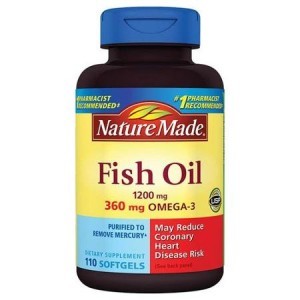
Typical human fish oil product.
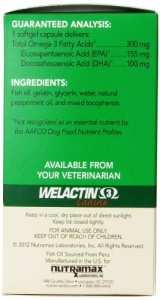
Welactin, a veterinary product consisting only of Omega 3 fatty acids.
The product below is all omega 3 fatty acids. You aren’t giving your pet a lot of extra oil he doesn’t need. The product above is for people, and out of 1200mg in that capsule, only 360 are omega 3! That might be fine for people, but it’s not what we’re shooting for in our pets!
Again, ask your vet for what brand they carry. A lot of vets may not stock a product, just because there are so many out there, but most vets these days have online pharmacies with many options as well.
I have talked about capsules here, but many people prefer the oil version on top of the pet’s food. It often comes with a little measuring scoop, is less messy than it sounds, and is an easy way to dose your pet accurately. Let’s face it, fish oil is kind of nasty. Most pets like gross things, so it tends to go over well! Another option, especially for cats and smaller dogs, is a “twist-tab”. It’s a little capsule containing fish oil that you twist (or cut) the end off of, and pour the oil onto the food. It may take some experimenting to find the version both you and your pet agree on.
Below is a chart on how I dose omega 3 fatty acids in my patients. If your vet suggested a different number, go with it! Again, there is no strong consensus yet, and there’s a wide range of safety on these supplements. My doses are actually on the medium/lower end, so there’s plenty of room to go higher if it’s needed!
BUT, always check with your vet before starting any supplements! With fish oil, pets with certain uncommon blood disorders may actually worsen from taking this, so don’t just go popping pills without a quick phone call!
Web-DVM guest blogger Dr. Karen Louis is a practicing small animal veterinarian. See more of her articles at her blog at VetChick.com
Alternatives to tooth brushing
 In a perfect world, your pet saunters up to you, carrying his toothbrush in his mouth, requesting you brush his teeth while he calmly cooperates. Birds are chirping. The sun is shining.
We all know we don’t live in a perfect world. Some pets, no matter how slowly you try to ease them in, will not tolerate tooth brushing. At least not more than once. While tooth brushing is the best, many other options exist that can help keep your pet’s teeth healthy!
Stroll down the pet aisle of any store these days, and you’ll find an assortment of products all claiming to freshen breath, clean teeth, etc. Is there a way to know which ones actually work? For once, there is! (Maybe this world just got a little closer to perfect after all!)
In terms of product labeling, there is minimal enforcement in terms of truth. If every product claims to be miraculous, which ones are most likely to actually help? There is a simple seal you can look for on the package to separate the effective from the…..not….so….effective, to put it nicely.
The VOHC seal is our best bet in picking out a dental health product. The Veterinary Oral Health Council is a group of ten very experienced and dedicated individuals. The majority of them are veterinarians who went on to complete a residency after vet school. After their dental residency, (vet school wasn’t enough torture?) they had to pass another exam and become board certified dental spets. These veterinary spets have a series of required testing for any product to earn the VOHC seal of approval. Two separate trials must be performed, and the requirements for the design of these trials is rather strict. They want to make sure the products do what they say!
Furthermore, the seal doesn’t just say “approved,” but it also specifies the nature of the product. Is this dental chew removing plaque or tartar? Big difference between those two! (Here’s my article about the difference between them).
It used to be that most VOHC accepted products were pretty much available from veterinarians only, and that was a bit of a buzz-kill. Good news – nowadays many accepted products can be purchased off store shelves almost anywhere! Here’s the list of current VOHC products. Note they list dog products first, and cat products below.
This list should let pet owners breathe a little easier. On this list are everything from chews and treats to sprays and gels. Surely you’ll find a product you and your pet can agree on.
One of my personal favorites is the prescription diet t/d, made by Hill’s Science Diet. No, they didn’t pay me to say this (although I wouldn’t turn down an offer!) but I truly love this diet. Well, I love this diet for my pets.
I do not use it as my pets’ entire food, but as treats, and I suggest this technique to many of my clients. I decrease their regular food by a calculated amount, and replace it with the t/d food throughout the day, or on top of their food at meals. I like this food/treat because it is a very large kibble. Inside it is a matrix that does not break down when chewed, like most kibble. Instead, it stays firm and “scrubs” the teeth while they chew, making it great for the back “chewing” teeth! But, full disclosure, the teeth in front (the fang teeth and others they really do not chew with) don’t see much action. Therefore, they will not get the cleaning benefit like the back teeth will.
Unfortunately, this food is considered “prescription” so your vet must be in agreement on feeding it to your pet. Yes, it comes in cat, as well as regular and small-breed dog.
The VOHC lists a few good products that are readily available for anyone, without a prescription. Greenies have been reformulated to dissolve in digestive tracts and not cause blockages. (Here’s my urban legend article on that). Milk Bone brushing chews are easily found in large box stores and slightly less costly than other options (none are cheap). And with the internet, pretty much anything can be delivered to your house.
What if your pet loves a dental chew that doesn’t have the VOHC accepted seal? Is it bad? Not necessarily. Some products might be good, but choose not to go through the rigorous trials. If you have a product you’ve been using and liking, and your veterinarian says your pet’s teeth are in great shape, why change it? One sticking point – if your pet is overweight from eating a large amount of dental treats and chews, we may need a new strategy.
Web-DVM guest blogger Dr. Karen Louis is a practicing small animal veterinarian. See more of her articles at her blog at VetChick.com
How to brush your pet’s teeth – it’s not the big deal you think it is!
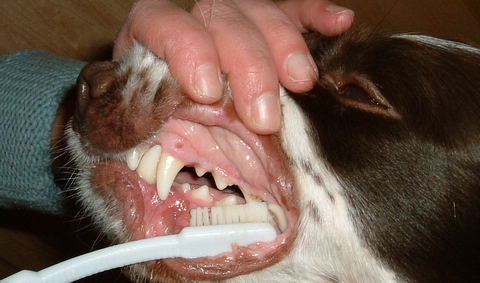 So your vet has been telling you to start brushing your dog or cat’s teeth. Or maybe you just read a fantastic article about it and are inspired. Sounds a little daunting – where to start?
Most action happens on the outside part of the teeth, where the cheek or lips touch. Often you don’t even need to open your pet’s mouth! Simply put a small amount of pet specific toothpaste (I like CET – most vets carry it) and stick it under the cheek/lip. Brush brush brush. Seriously, take 5 seconds on that side. You may need to reapply a small amount of toothpaste, then go to the other side. Brush brush brush. Go to the canine teeth (the fang teeth) and the incisors (those little teeth in the front). Brush brush brush. Notice we have not had to pry our pet’s mouth open! And we’ve spent about 20 seconds on this.
For toothbrushes, we have options. Some people love those little finger brushes. I am not one of them. I prefer getting a kids toothbrush (make sure it’s SOFT bristles!) from the store. Personally, the handle gives me more control, and I’m not putting my finger in my pet’s mouth. If you have skinny fingers, then finger brushes might work for you. If you have thick fingers, or just like the physics better, use a regular toothbrush. I have some owners whose pets did not tolerate either, and they simply put toothpaste on a gauze square. Wipe wipe wipe. Same action. As long as it gets done, I don’t care how!
You do need to introduce the concept to your pet slowly. Choose your instrument of choice and pick a toothpaste flavor (yes they come in flavors like chicken, tuna, etc). Start by putting a tiny amount of toothpaste on the brush, let your pet lick it off, and you’re done. After doing this once a day for a few days, move to putting it on a tooth, maybe doing a brush or two, and stopping. Give treats afterwards to keep it fun! Gradually work up to brushing one side, then the other.
I’d suggest doing it the same time every day, to make it a habit for you both. What worked for me – I kept my dachshund’s toothbrush and toothpaste by my vitamins. I’d take my vitamin every night, and brush his teeth before bed. He got used to it, and some nights that I forgot both, I had a dog in the kitchen waiting for his teeth to be brushed while I’m in bed (talk about feeling like a horrible owner!).
Some pets will tolerate tooth brushing better than others. If you’ve tried, gone slowly, and your pet will not tolerate it, there are other options. Tooth brushing is the gold standard, but let’s face it, we won’t live in a perfect world.
Here’s my article on other dental health products – and how to pick the ones most likely to help.
Web-DVM guest blogger Dr. Karen Louis is a practicing small animal veterinarian. See more of her articles at her blog at VetChick.com
One Big, Ugly, Deadly Reason To Spay Your Dog
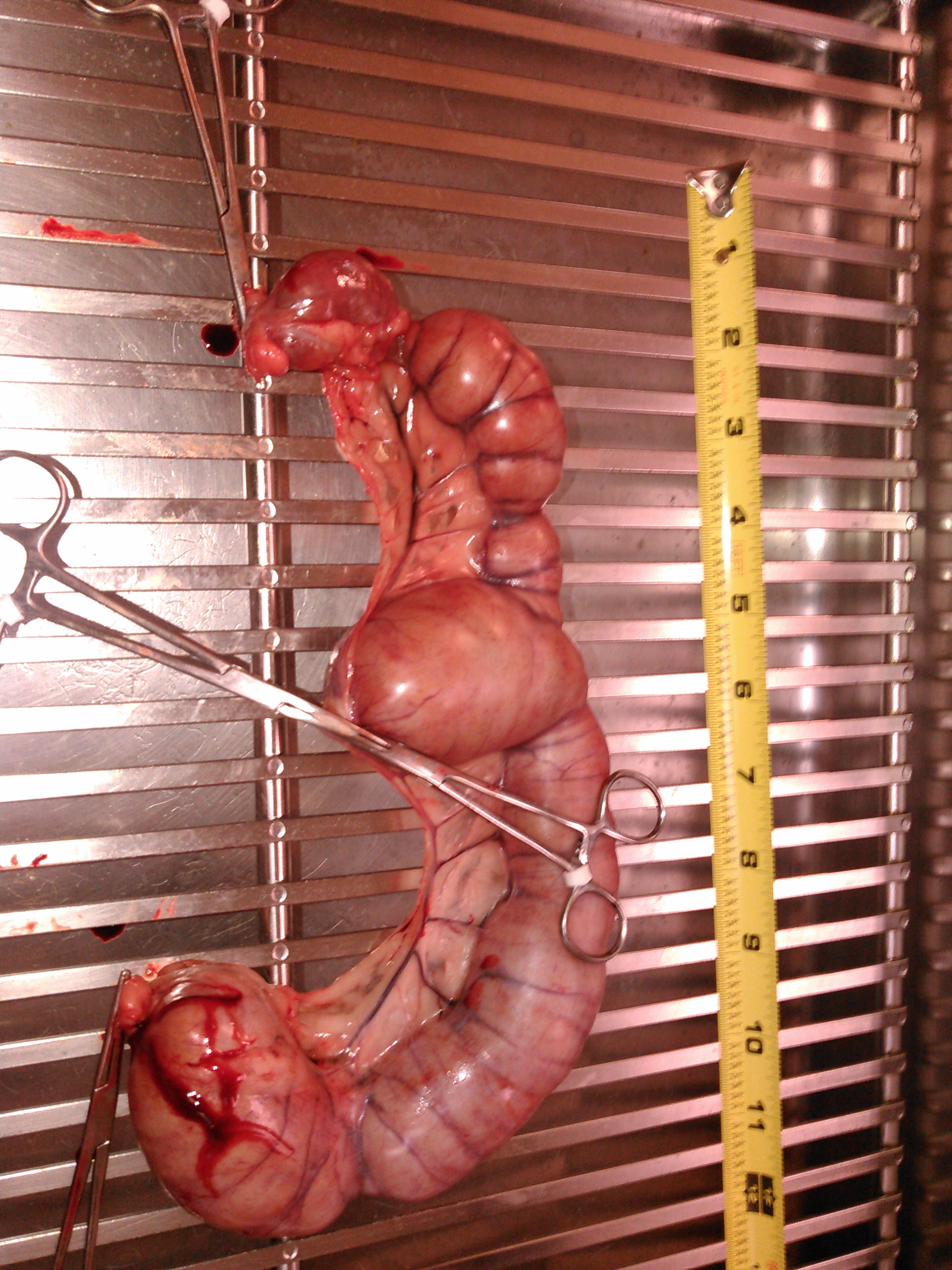 Pictured left is the reproductive tract of a 4 year old, 11 pound, female Chihuahua that I removed this morning in an emergency hysterectomy surgery. Having completed her seasonal estrus cycle (commonly called heat cycle) 3 weeks prior, yesterday, the dog suddenly became depressed, refused food, and was severely lethargic. When I palpated her abdomen, I knew instantly what was wrong with her, having clearly felt severely distended loops of uterus within her abdomen…abdominal x-rays would prove my physical examination findings.
This patient had a deadly condition called pyometra, an infection that can develop in un-spayed females within the uterus as the result of abnormal changes in the lining of the uterus in response to hormonal fluctuations brought about by heat cycles. This case was a particularly dangerous variety of pyometra called closed cervix pyometra, so named because the cervix is closed and does not allow the infectious exudate (commonly called pus) to drain. The resultant pus accumulates, makes the dog severely ill, pressure builds inside the uterus, and eventually causes the uterus to burst inside the abdomen, killing the dog within minutes to hours.
Judging by the severity of the uterine distention (the tape measurer in the picture provides perspective as to how large this uterus was in the context of such a tiny little dog), this uterus was only hours away from bursting. The owners did not bring her in a moment too soon.
Thankfully, I was able to perform the hysterectomy without any spillage of pus, bleeding was kept to a minimum, and the dog will likely make a complete recovery. I shared this with my readers so they could help me educate pet owners on the importance of spaying their dogs before something this dangerous may occur.
Dr. Roger Welton is the President of Maybeck Animal Hospital in West Melbourne, FL, Chief Editor of the Veterinary Advice and Information Website, Web-DVM, and founder/CEO of Dr. Roger’s Holistic Veterinary Care.
Dental Disease Is The Most Common Chronic Disease In Cats And Cats – Yet Is The Most Commonly Overlooked!
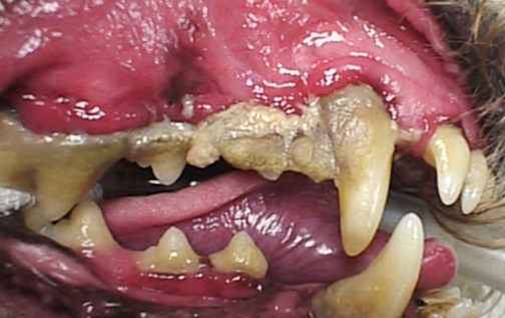 Dental disease affects more pets than any other diseases (although obesity is moving in for a close second). Dental disease is rarely fatal, but it can cause complications with other systems, as well as cause discomfort and downright pain in the mouth. It often lurks under the radar (especially in cats – how many cats dig having their mouth looked at?) until it becomes so severe, drastic measures are needed.
If your pet gets a thorough physical exam once or twice a year, then your veterinarian is looking at the mouth, and can keep you updated on the level of dental disease she sees. If your pet hasn’t seen a vet in years, it’s quite common for us to find some rather serious dental disease that catches many owners by surprise. Often these pets need multiple tooth extractions, as the mouth has become so infected, the bone holding the teeth in place has literally rotted away. These dental cleanings are major oral surgery! Your pet must be under general anesthesia while the teeth are cleaned, the infected teeth pulled, and dental x-rays taken to make sure extractions are complete, as well as help make sure the teeth that seem good actually are healthy enough to stay in the mouth. If you’re thinking this sounds expensive, you’re right. I’ve had some of these severely diseased mouths take 3+ hours of surgery time and cost well over $1,000. Some are so severe, we can only do half the mouth at a time, as the pet is under anesthesia so long, we have to recover them and schedule the other half in a few weeks.
So no, that is not fun. You’d like to be a rock-star pet owner and do anything you can to keep your pet’s teeth and gums healthy. Thankfully, there are several options for at-home dental care. Full disclosure – no matter how highly a product is rated, or how diligently you use it, many animals may still require dental cleanings under anesthesia. The realistic goal is to lengthen the time between cleanings, and reduce the number of extractions needed at each procedure.
Breed and genetics play a huge role in dental health! Generally speaking, the larger the dog, the healthier the teeth. The labs, German shepherds, and pit bulls tend to have good oral health. Are their owners brushing their teeth every day? Most aren’t. These dogs have three factors in their favor:
- Mouth anatomy allows for better air flow and rinsing. Think about that pitty smiling at you (if you can get him to stop kissing you long enough) – you can see every tooth and even the insides of his cheeks! Now think about the pug that is smiling at you. You might see a couple teeth, but not much. Small breed dogs have more button-type mouths. They are very closed, and that dark damp cave is a great place for infection to thrive. The cheeks and lips hold food and bacteria smack against those teeth.
- Larger dogs tend to be more interested in chewing. Some small breed dogs will chew with the best of ’em, but I have many small breed patients who could take or leave a chew toy.
- The biggest factor is genetics. The kid in your grade school class who got cavities all the time might not have been living on candy and soda – she might have just inherited many factors that predispose to dental disease. Same with small breed dogs. They tend to have much more aggressive bacteria in their mouths that erode at bone and inflame gums. I’ve seen chihuahua and yorkie patients who need a dental at 2 years old. Those adult teeth haven’t been in long, but they have painful, bleeding gums and breath that could stop a train. Their owners didn’t do anything wrong! All the tooth brushing in the world can’t fight genetics. Even with aggressive home care, some of these dogs who were dealt a bad DNA hand often require multiple extractions at a young age.
But you want to do all you can for your pet.
Far and away, the best tool to prevent dental disease is tooth brushing. It has to happen every. Single. Day. That tooth brushing done at the groomer every month or so is completely ineffective. Save your money.
Why is brushing every day so important?
Think about when you wake up in the morning, and you feel that film on your teeth. You can scrape it off, it’s gross, maybe a little sticky, depending on what you’ve been eating. That is plaque. When you brush your teeth, the plaque is easily removed. If you don’t brush your teeth over the next few days, that plaque combines with bacteria and minerals, hardening to form tartar, also known as calculus (no, not the math class). Once tartar has formed, it is like concrete. It’s very difficult to remove, and cannot be removed with brushing. The only way to remove it is with an electric metal scaler at the vet’s office, under anesthesia. This plaque-to-tartar transformation takes place over the course of about two days.
Think of pet dental disease kinda like a cell phone plan. The plaque is the “pay as you go” plan. Every day it’s a little bit, but by staying on top of your bill (or brushing and removing plaque) it rarely adds up. Tartar is the “2-year contract” plan. Once you’ve got it, it’s yours to keep. Yes, you can get rid of it, but it’s expensive and requires a bit of work. Not that I am promoting cell phone plans – just trying to give a non-gross analogy.
Brushing every day removes the plaque before it turns into tartar. If you brush once a month, tartar has formed, and you aren’t removing it. You need to remove the plaque. Daily. Sure if you skip a day now and then, it’s not the end of the world (it takes 2-3 days to turn into tartar, so you have a little wiggle room). But shoot for every day. This is particularly important in small breed dogs who are so prone to rapidly progressing dental disease.
When is tooth brushing not a good idea? When the dental disease has progressed to the point of bleeding, painful gums or even, heaven forbid, loose teeth. Unfortunately, this is often when some owners become aware of the disease and say “I’ll start brushing his teeth now!” Please don’t. All it does at this point is irritate the gums, send more bacteria into your pet’s bloodstream, and, let’s face it, it just hurts! Remember, tooth brushing is all about removing plaque, which is basically invisible. If you’re seeing nasty green stuff, we’ve gone well beyond removing plaque!
Tooth brushing is best started at a young age. Or, if that ship sailed, after you’ve had a dental cleaning on your pet, and you have a clean slate. Remember, the point of tooth brushing is removing the sticky soft plaque BEFORE it turns into tartar! It’s more of a preventative than a treatment. And tooth brushing need not be a big ordeal every day! We don’t need to pry our cat’s mouth open and scrub the insides of those molars. (Or if you try, put it on Youtube – I’m sure your cat out-witting you will be hilarious to watch.)
If you’re willing to give tooth brushing a try, next week I’ll go over how to ease into it without adversely affecting your relationship with your pet.
Web-DVM guest blogger Dr. Karen Louis is a practicing small animal veterinarian. See more of her articles at her blog at VetChick.com
Can I skip vaccinations on my indoor only cat?
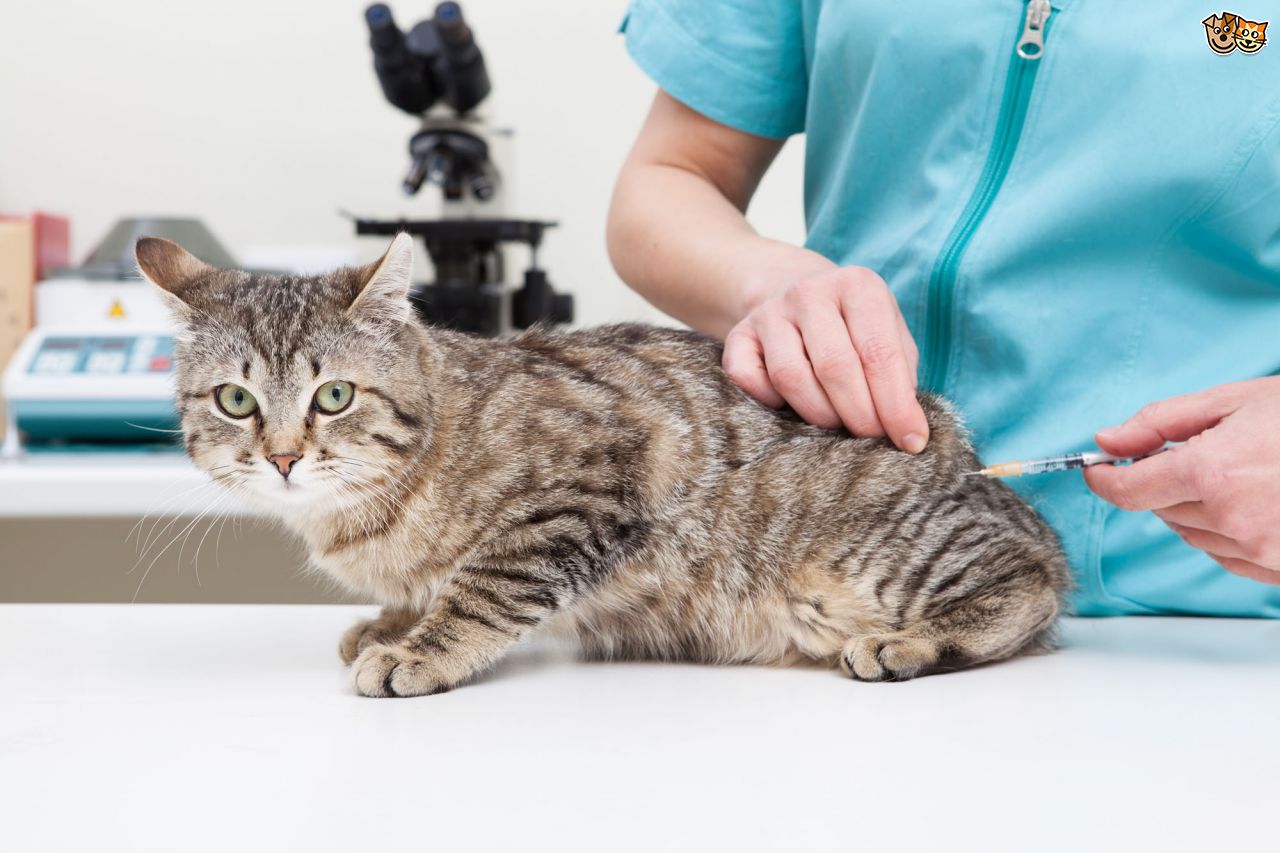 I have many owners whose cats never set foot outside. They are not “flight risks” and have no interest in going outside. Ever. These owners often choose not to continue vaccinating their adult cats. Some vets insist on it, every year. What to do?
There are two main vaccines that are generally recommended for all cats by the AAFP (American Association of Feline Practitioners), a national organization of veterinarians with a particular interest in feline medicine. These shots are the FVRCP (AKA “feline distemper”) and rabies. I strongly recommend the kitten series and young adult (of both vaccines) for all cats, to establish immunity when we’re still deciding if they will be “door dashers” or not. But what about your middle-aged couch potato?
If you do not encounter cats in your daily life, new cats are not coming into your home, and your cats are not leaving, they are in a relatively “closed system.” The chances of your cat actually encountering a virus are slim to none, so we make this decision on a case by case basis. That said, if you are a vet tech, interact with stray cats often, or work or volunteer in a shelter (then you’re awesome), keeping your cat protected against FVRCP is still recommended. Even if your cats do not set foot outside, you can bring viruses home on your skin, shoes, and clothing. The FVRCP is available in a 3-year vaccine, so ask your vet for that version if your cat does have some risk.
What about rabies? You’re right, your indoor only cat who runs AWAY from the door when it’s opened has virtually no chance of getting rabies. Why vaccinate? It’s required by law, so I have to tell you to follow the law. However, I usually recommend 3 year vaccines as opposed to 1 year, to keep it reasonable. Also, it only takes one person to accuse your cat of biting them to make your life really un-fun. Even if your cat does not really bite them, a simple accusation can mean fines and even worse, depending on the mood of your animal control officer and the ordinances of your locale. I often tell my clients the rabies vaccine has little to do with your cat actually getting rabies – it’s more for the paper trail!
So no, you are not a terrible person if you don’t want to vaccinate your indoor-only cat regularly. Many veterinarians these days are willing to discuss the risks to your individual cat, and you both can make the best decision. If you choose not to vaccinate your adult cat, it is still very important that he or she be seen by a veterinarian at least once a year for a physical exam and general check-up. For senior animals, twice yearly exams, perhaps even with blood testing, are recommended. So no, the trip to the vet is not about the shots, but keeping your cat healthy!
Web-DVM guest blogger Dr. Karen Louis is a practicing small animal veterinarian. See more of her articles at her blog at VetChick.com
New, BETTER guidelines for rabies exposure in pets

Finally, we have a great example of policy catching up to science!
Every year or so, a group of experts in the field convenes and updates the Compendium of Animal Rabies Prevention and Control. They are the ones making recommendations on what action is required in terms of vaccination against rabies, as well as suspected exposures. Their main job is keeping the American public safe from a virus that is (thankfully) rare, but fatal.
The guidelines used to be the following:
If a dog or cat has a tangle with a questionable raccoon, skunk, groundhog, bat, or any other animal which might be a rabies suspect, certain steps had to be followed. If the pet was current on his or her rabies shot, then it would be given a booster shot and monitored at home for 45 days. After that, they would be examined by a veterinarian who would sign the form saying they are a nice dog or cat and don’t have rabies (assuming they didn’t).
If your pet was ONE day overdue for his rabies shot, they were treated as animals who were never vaccinated. You were given two choices: euthanasia (so a sample of brain tissue can be tested for rabies), OR 6 month quarantine in an approved facility (costing thousands of dollars). Both of these truly suck.
The new guidelines are so much better!
If your dog or cat had a rabies vaccine in the past, but are overdue, they can now be treated as the pets who are current on vaccinations. That means they’ll get a booster shot and sent home for 45 days of monitoring. They can live! Why the dramatic policy change? We’ve long suspected that rabies vaccinations (most pet vaccinations, actually) last much longer than the one or three years they are labeled for. Seriously, did we think something magic happened at midnight of the 366th day after they got the one-year rabies shot? Scientists have now shown that the duration of immunity for rabies vaccination extends far beyond the three years we once thought.
So does that mean you give your pet one rabies shot and they are set for life? Not necessarily. Remember, rabies vaccinations are required by law, and your municipality has its own ruled regarding animals rabies vaccinations and licensing. Still if life gets a little crazy and your pet’s rabies vaccine due date slips by, life won’t be as bad as it could have been!
And, to be thorough, the guidelines improved slightly for those animals with NO history of getting a rabies vaccine who have an encounter with a potentially rabid animal. It used to be a 6 month quarantine in an approved facility, (or euthanasia) and that time has been reduced to four months. It’s still not great, but a slight improvement.
Moral of the story – vaccinate your pet against rabies to keep life simple. But if it does slip, it won’t be a potentially life-ending event like it used to be!
Web-DVM guest blogger Dr. Karen Louis is a practicing small animal veterinarian. See more of her articles at her blog at VetChick.com
How Safe is Ice melt for Pets?
 Many businesses use ice melt or salt to keep the walkways safe.
Homeowners often use it on the sidewalks in front of their houses.
Pet owners often want to use ice melt, but fear harming their pets.
What gives? There are “pet-safe” ice melts being sold. Are they really safer, or is it hype?
If your dog has sensitive paws, or is known to eat everything on the ground, then ice melt presents a hazard. The active ingredient in many “pet-safe” ice melts is urea. This is non-toxic for dogs and cats to eat (ironically, the digestive tracts of goats and cows turns it into a toxin, so keep it away from your farm animals!). Urea can cause an upset tummy and vomiting, so I would avoid letting the dog snack out of the bag. However, is it not considered a poison. Urea is also less irritating to paws, although animals with extremely sensitive paws may disagree.
So what’s in regular ice melt? Usually calcium chloride or sodium chloride (yup, that would be good ol’ table salt!). If ingested in decent quantities, any salt can be considered a deadly toxin. So again, don’t let your dog munch out of the bag (common sense, really). These salts can be irritating to paws, particularly if in a large quantity (ie it gets less spread around and more dumped). Small amounts spread thinly are usually well tolerated by most dogs. Still, if you’re going to use a decent amount in a place your dog frequently walks, it’s best to buck up for the salt-free, “pet-safe” alternatives.
That said, how concerned should you be when you are walking your dog, and walk across some unknown ice melt on the sidewalk? Unless your dog has extremely sensitive paws, you’ll be OK as long as you use some common sense. (For starters, don’t let your dog eat a bunch of it!)
1- After the walk, clean your dogs paws with water, nothing fancy!
2-Make sure to clean both paw pads and the area/fur between the pads.
3-Do not let your dog lick his or her feet until after you’ve cleaned them well. A couple licks won’t be the end of the word, but if they make a project out of it you could have an upset tummy.
4-If your dog has lots of fur on the bottoms of his or her feet, keeping it trimmed could save you a lot of headache!
5-Make sure to dry the paws after cleaning them.
Yes, the salts in “non-pet-safe” ice melts are potentially toxic. If your dog gets into the bucket and makes a snack out of it, you will end up at the emergency clinic. But let’s keep perspective. Any casual contact followed by prompt cleaning is often sufficient to keep your dog safe.
Web-DVM guest blogger Dr. Karen Louis is a practicing small animal veterinarian. See more of her articles at her blog at VetChick.com
Getting the Most Out of Your Pet’s Medications
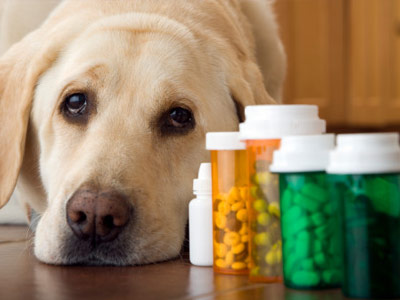 We vets often write instructions on the bottle of medication like “Give three times a day” or “Give once a day.” Seems simple enough, right?
(photocredit: )
Did you know that some medications actually work best when given a certain way? As always, check with your vet if you have specific questions. Here are some drugs that, for the vast majority of patients, work best when timed right.
NSAID’s – Non-Steroidal Anti-Inflammatory Drugs
Examples of this drug: Rimadyl/ Carprofen, Previcox, Metacam/Meloxicam, Deramaxx
These drugs are like a doggie version of Advil (which, for the record, don’t ever give to your dog!). The are often used for arthritis or other chronic pain, as well as after surgery. Often they are prescribed for once a day use, although sometimes twice a day is prescribed. If given once a day, give this medication in the morning, with breakfast. That way it works throughout the day while your dog is active, and any “wearing off” happens overnight, while he’s sleeping. It won’t make him sleepy, so in my experience, giving in the morning is ideal.
Eye medications
If your vet prescribed medication to be applied to the eye twice a day, that isn’t hard. What about four times a day? Or even SIX times a day? Unfortunately, to be most effective, that does not mean 6 times a day during the day while you are awake. A medication applied to the eye 6 times a day needs to be given every 4 hours. That means you set your alarm for some time in the night. And it totally sucks. But, depending on what you’re treating, it could be the difference between your dog keeping or losing the eye. So lose some sleep to save your dog’s eye.
Insulin
Hopefully your vet and her technician drove this point home. If you aren’t sure though, I’ll help. If your vet prescribed the insulin to be given twice a day, then it MUST be 12 hours apart. I understand you also have a life, a job, etc. What I tell my clients is they can get an hour of wiggle room on either side, a couple times a week. That means if you are giving the insulin at 8am and 8pm, you can shift a single shot to as early as 7 or as late as 9 if you have to be somewhere. Bear in mind if you do that, the next shot must be given on time, as close to the 8:00 mark as you can. For instance, if you give your cat insulin late one time, at 9am, and then have to bump it up to 7pm that same day, that cat just got insulin 10 hours apart instead of 12. You could have problems like low blood sugar. So keep it at 11 (ideally 12) hours apart when possible.
Certain antibiotics
“The -cyclines” Examples: doxycycline, minocycline, tetracycline
A lot of us use cheese to give medications to our dogs. Cheese contains calcium (well, most of it does). Antibiotics in this family cannot be absorbed as well when given with foods containing calcium. Now, full disclosure, if you’re using a small amount of cheese, and that’s the only way you can (easily) get the pill into your dog, then do it. If you’re giving an entire serving of cheese (multiple slices), I would maybe look for an alternative. (Pill pockets are a good idea, or peanut butter, but check the label!)
Antacids
If your vet has recommended pepcid/famotidine, prilosec/omeprazole, or other stomach acid reducers, check with your vet about the other medications your pet is on. Sometimes, the antacid needs to be given an hour or so after other medications, as giving it before or at the same time may inhibit the body’s ability to absorb those other drugs. Conversely, some medications might be better absorbed when given with these medications. Worth a phonecall to your vet!
If your pet has been prescribed carafate / sucralfate, this drug is in a different family as the other antacids. This medication actually coats the stomach and intestines, searching for little bleeding spots and healing them. Yes, it’s an awesome drug. Thing is, that coating action acts like a shield and doesn’t let any other medications in! I often recommend giving other drugs a 2 hour head start, then give the sucralfate. And yes, with sucralfate often given 2 or 3 times a day, this gets challenging! Again, ask your vet if you aren’t sure of timing.
To feed or not to feed?
And notice I did not mention whether meds should be given with food or not. In the case of the majority of medications, giving with food often helps them go into the animal best, and they are tolerated best (ie- less vomiting). There are notable exceptions, however, so instead of listing hundreds of drugs and if they should or shouldn’t be given with food, if you aren’t sure, check with your vet. In general, most antibiotics and pain pills do best with food.
And, just to make sure we’re all cool….
This is obvious to some people, and news to others, so worth saying.
Medications prescribed for twice a day should be given as close to every 12 hours as possible. Medications prescribed for three times a day should be given as close to every 8 hours as possible. Four times a day? Yep, every 6 hours.
Web-DVM guest blogger Dr. Karen Louis is a practicing small animal veterinarian. See more of her articles at her blog at VetChick.com.

Keep your pets safe this holiday season!
The holiday season is right around the corner starting with Halloween (yes, in my home, we consider Halloween a holiday!). It is both a joyous and busy time and it can be easy to overlook certain...

Help for nervous/anxious dogs
There seems to be a growing number of excessively nervous, often skittish dogs. This can range from anxieties, such as noise or storm anxiety, anxiousness about being separated from pet parents,...
Bird flu is infecting cats and cases are rising – What you need to know!
H5N1 Avian Influenza is causing far more trouble than just just high egg prices. The bird flu has successfully jumped species now able to infect cats and people. Although the ability to infect...

Read Dr. Roger’s Latest Book!

 Be Healthy & Fit With Celebrity Trainer Steve Jordan
- The New Measure of a Life Well Lived: Why Health Span Matters More Than Longevity
- The Wealth Spark: Igniting Your Path To Abundance and Success
- Bright Line Eating with New York Times best selling author Dr. Susan Peirce Thompson
- Maximizing Your Workout Time: Efficiency Tips from Westwood Private Fitness
- How to Transform Your Dad Bod: Insights from the Fit Father Project – New Podcast Episode Out Now!