Check Out Pets Podcasts at Blog Talk Radio with Roger Welton DVM on BlogTalkRadio
Prepare For Your Pet’s Future Health By Banking Stem Cells
Stem cells are biological cells that are undifferentiated and capable of differentiating into more specialized cells that are specific to tissues and organ systems. There are two types of stem cells present in mammals. Embryonic stem cells are present in the inner mass of cells of the developing embryo. These are the most versatile stem cells that can differentiate into virtually any cell type, as these cells are the basis for the all of the body’s specialized tissues and systems. Adult stem cells are present in various tissues of the body and are part of the repair system of the body. Adult stem cells are particularly rich in certain tissues types, such as adipose (body fat) tissue and bone marrow (the soft inner core of bone). Adult stem cells are found most robustly in younger animals versus older animals, explaining in part the increased healing capacity of young animals in comparison to older animals.
Given the stem cell’s unique ability to differentiate into other body cells, stem cell therapy is increasingly becoming a cutting edge method to treat any manner of diseases in dogs and cats. Since veterinarians are simply utilizing the innate regenerative properties of stem cells to treat diseased or damaged tissues, these treatments carry no risk of unwanted side effects or toxicity. Below is a list of diseases where stem cell therapy is currently being implemented, with more practical uses being added all of the time:
– Inflammatory bowel disease
– Kidney failure
– Liver disease
– Osteoarthritis
– Heart disease
– Autoimmune disease
– Cancer
– Systemic infection
As previously stated, stem cells are richest in adipose tissue and bone marrow, and found in the highest numbers young animals. Thus, it is best to collect cells for stem cell replication and banking from the tissues of animals when they are still young and healthy. An ideal time to do this is when a puppy or kitten undergoes a spay or neuter procedure, as the pet will already be under anesthesia for the procedure. During a spay, fat that is rich in stem cells can be collected from an area just deep to the abdominal incision line of the spay procedure, called the falciform ligament. Although a neuter procedure for a male does not require an abdominal incision, to harvest falciform fat would only require a tiny abdominal incision one inch long.
Once collected, the tissue sample is sent to one of a growing number of companies that will bank the tissue for you. Cell culturing enables a life time supply of stem cells to treat your pet indefinitely, all from that one original fat sample. Thus, from one minimally invasive harvesting procedure, your pet’s quality of life and longevity can be greatly increased later in life.
Dr. Roger Welton is the President of Maybeck Animal Hospital in West Melbourne, FL, Chief Editor of the Veterinary Advice and Information Website, Web-DVM, and founder/CEO of Dr. Roger’s Holistic Veterinary Care.
What Has Happened To The German Shepherd Dog Breed?

They were once one of the most elegant, majestic dog breeds in the world. Among the most versatile dog breeds, they were as able to serve as military dogs, police dogs and Seeing Eye dogs, as they were to simply be loving, cuddly family pets. As beautiful as they were intelligent, German Shepherds were justifiably among the most popular breeds in the United States.
To be sure, occasional examples of what German Shepherds once were are still among us, coming from exceptionally ethical breeders that breed as much for temperament as they do optimal health and lack of congenital disease. More commonly, however, what I typically encounter in practice are very fearful, skittish, unhealthy German Shepherds, riddled with genetic disease and prone to bite. More than half of the German Shepherd dogs that come in my exam room have to be muzzled because of fear aggression. Even with the German Shepherds whose fear does not lead them to bite, the office visit is often unpleasant and difficult for the dog owner, veterinarian, and veterinary staff alike; challenged to give a comprehensive physical examination, with the dog in utter terror from simple nail trims or ear cleanings. From a health perspective, German Shepherds are commonly afflicted with severe skin allergies, inflammatory bowel disease, hip dysplasia (inherited deformity of the hip joints), congenital heart disease, degenerative myelopathy (a degenerative spinal cord disorder that leads to paralysis and eventually death), and are prone to cancer.
Like many other breeds that become popular, German Shepherds became the victim of irresponsible, unethical breeding, born of greed, ignorance, and combinations of both. In-breeding was and remains rampant, leading to inherited recessive genetic disease and neurotic temperament, unhealthy or ill-tempered dogs not removed from the gene pool. Puppy mills are the guiltiest party with regard to these issues, but backyard breeders and ill-informed people looking to make a quick buck by breeding their dogs are just as guilty of ruining what was once a near perfect breed of dog.
For those of you who are German Shepherd dog breed enthusiasts, please do not take offense to this post. The reason I took the time to write this blog post was to create awareness of the plight of this once great dog breed, not to denounce or offend those who love the breed. My late Uncle Eddie absolutely loved German Shepherds, and because of him, I grew up around them. In Uncle Eddie’s dogs, I saw truly great German Shepherd dogs, examples of which I only occasionally see today; a sad circumstance for those who love the breed and have had the good fortune to see them at their best.
If you want a German Shepherd and are in the market for one, if you do not take precautions, it is more likely than not, that you will end up with a dog that is nothing like the dog you expect, while shelling out thousands of dollars in veterinary care due to numerous health issues. To protect yourself as a consumer and to be an advocate for bettering the German Shepherd dog breed, you can begin by taking the following precautions:
1.) Absolutely do not purchase a puppy from a pet store.
2.) If you find a breeder, demand that the breeder present OFA health certification of the hips, eyes, and heart for both parents.
3.) Demand a state health certificate of sale signed by a licensed veterinarian prior to purchase.
4.) Meet the both parents of a prospective litter to assess their overall physical appearance and temperament. Avoid purchasing litters of skittish, fearful, or aggressive dogs.
5.) Do not purchase from a litter of puppies that were conceived before either parents were at least 2 years of age. Many congenital diseases do not manifest until as late as 2 years of age; thus in breeding them prior to this age, breeders unknowingly pass on genetic disease to offspring by breeding before 2 years of age.
Dr. Roger Welton is the President of Maybeck Animal Hospital in West Melbourne, FL, Chief Editor of the Veterinary Advice and Information Website, Web-DVM, and founder/CEO of Dr. Roger’s Holistic Veterinary Care.
Bonded For Life

One of the joys of living in the area of Florida that I do is that our communities are all recent construction. Since the county has recent mandates in place that with new construction a certain percentage of land has to be set aside and designated as wildlife conservation land, we live among conservation land tracks, the largest of which is 80 acres in the center of my community. There is a small two acre one right across the street from me. Thus, it is not unusual to see river otters, bobcats, bullfrogs, and all manner of wildlife living virtually among us, the most majestic and beautiful for me are the sandhill cranes.
Sandhill cranes are very large grey birds that have long legs and necks, small heads, pointy beaks, and characteristic red heads. They stand as large as four feet tall and have up to 7 foot wing spans. Whether they are in flight or walking across one’s front lawn (a common occurrence, since our cranes are very accustomed to people), they never fail to inspire awe.
One of the most beautiful traits of sandhill cranes is that once mated, they are paired for life, until one mate dies. Female and male raise their chicks together, and since they commonly have twins, it is not uncommon to see a family of four. The chicks stay with their parents until they reach adulthood, and then go their own way to find their own mates.
Every spring, we see the adorable little chicks following their parents around, and see their little families grow. By this time of year, the offspring are a large as the parents, and the only way we can tell them apart from the parents, is that the red coloring of the head has not yet filled in. We refer to them as “teenagers.” Unlike human teenagers, however, sandhill crane teenagers continue to following their parents around, learning to forage for food and keep clear of predators.
One day, the teenagers get the red on the heads, while continuing to follow their parents for a time, until one day they are gone in a flash. Mom and dad cranes remain together, only to repeat the process again in the spring.
So enamored with our cranes, my son’s elementary school adopted the cranes as their official mascot. I was very proud my kindergartener last year when he won a “Crane With Character Award,” for showing exemplary kindness and courtesy toward his classmates and peers. A bird so devoted to one another and to their offspring, I believe that my son’s award was aptly named.
Dr. Roger Welton is the President of Maybeck Animal Hospital in West Melbourne, FL, Chief Editor of the Veterinary Advice and Information Website, Web-DVM, and founder/CEO of Dr. Roger’s Holistic Veterinary Care.
Is Your Pet Too Old For Anesthesia?
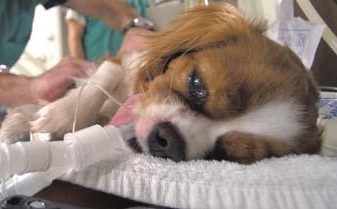 Almost one in three times I recommend a dental cleaning on a senior age pet 8 years or older, this is the first question I am posed. Owners will still occasionally ask the question about age-related anesthetic safety for other procedures that require anesthesia, such as soft tissue and orthopedic surgeries, but most commonly, pet owner fear of anesthesia is most associated with dental and other elective procedures.
Where did this fear of anesthesia come from? We generally do not have the same fear when anesthesia is recommended for ourselves. Fear of anesthesia is generally not a concern for human patients when, for example, a colonoscopy is recommended.
Truth be told, anesthesia of veterinary past carried more risk than it does today. Veterinary hospitals outside of a veterinary university setting could not purchase the newer, safer anesthesia and induction agents, nor could they purchase the top of the line anesthesia stability monitors; and still keep the cost of procedures affordable to the owners. As a result, while anesthesia in general practice was far from being outright dangerous, it was not as safe in comparison to human medicine, and certainly not as safe as it is today. As a result, not only were many pet owners aware of this fact, veterinarians were generally wary of recommending anesthesia unless quality of life was categorically on the line. Anesthesia was not likely going to be recommended for a routine dental cleaning for stage 1 periodontal disease. Of course, this would lead at some point to such an advanced level of dental disease that not only would anesthesia be necessary to deal with the teeth, but oral surgery would necessary to extract teeth and debride dental abscesses…which, incidentally, would lead to longer anesthesia.
I do not know exactly when the change in veterinary anesthesia safety took place, but it was well underway when I was a new veterinary graduate in 2002. As the cost of safer, modern anesthetics and monitoring equipment became more affordable, more practices were increasingly getting equipped with these modalities. As a doctor, I did not have the same anesthesia concerns as my older colleagues. Confident in not just the anesthetics and monitoring equipment, there was no time in my career that I have had qualms about recommending anesthesia for elective procedures in senior pets (of course with the exception of obvious mitigating circumstances like cardiac or liver/kidney problems, etc.). Of course, old notions die fast. Thus, a generation of veterinarians and pet owners remained, and some to degree, even remain today, that held the same outdated fear of anesthesia in senior pets.
In the current veterinary hospital climate with anesthesia safety now rivaling that of human anesthesia, the overall risk of death from anesthesia is comparatively low, even in senior pets, provided proper precautions are taken, such as pre-anesthetic blood screening, thorough physical examination, and other proactive pre-anesthesia preventative diagnostic measures. The greater danger is failing to follow through on a necessary procedure out of fear of anesthesia.
I will leave you with a brief true story. A client of my hospital, a registered nurse interestingly enough, is terrified of anesthesia for her pets. Thus, she declined my repeated yearly recommendations for much needed dentistry for her Italian Greyhound. He reached a point by the age of 13, that the smell from his mouth was so offensive that it was difficult to get within 3 feet of him without smelling, and I could not examine his mouth because of how painful it was for him, for me to even touch his face. The dog’s quality of life was poor because of this, but it was not until the dog came in with a severely swollen muzzle, refusing to eat and losing weight, that the owner was faced with anesthesia with the patient now systemically compromised from severe infection and malnutrition – not to mention thousands of dollars’ worth of oral surgery to repair the oral cavity (I had to reconstruct the patient’s upper jaw because of all the bone loss from years of decay).
Following debridement and surgery, I knew the dog would be too painful to eat post-operatively for at least one week, so I had to place a feeding tube to provide the dog nutrition while he healed. The owner learned a very difficult lesson from this experience, and her dog paid a serious price because of her irrational fear of anesthesia. Even at 13, systemically compromised, and under anesthesia for 90 minutes; he came through seamlessly from an anesthesia stability perspective.
Anesthesia is certainly nothing to take likely, but it should also not be feared when necessary. With current anesthetic and anesthesia monitoring technology making the safety of anesthesia compare with that of human medical anesthesia, the far greater danger is to allow mild conditions to progress to outright debilitating and dangerous ones out of fear of an important medical means to an end.
Dr. Roger Welton is a practicing veterinarian and well regarded media personality throughout a number of subjects and platforms. In addition to being passionate about integrative veterinary medicine for which he is a nationally renowned expert, Dr. Welton was also an accomplished college lacrosse player and remains to this day very involved in the sport. He is president of Maybeck Animal Hospital , runs the successful veterinary/animal health blogs Web-DVM and Dr. Roger’s Holistic Veterinary Care, and fulfills his passion for lacrosse through his lacrosse and sport blog, The Creator’s Game.
Reflections Of A Middle Aged Veterinarian
As we age, birthdays kind of lose their magic. We may get happy birthday greetings from friends and family, perhaps a special dinner, but for most of us adults it is little more than just another day, often even working on our birthdays; another year older, another year removed from our youth. Turning 40 today, however, I am overwhelmed with a feeling of gratitude and reflection on a truly blessed life.
Looking back on the early years of my journey, as a child, I was moved and awed by the beauty of animals. Whether it was playing with my family dog, watching squirrels at play in my backyard, or watching muskrats swim in the river in the town woods, they always fascinated me. I also had an overwhelming yearning to keep animals safe and free of harm…I could never understand how anyone could find joy in shooting them with pellet guns or mistreating animals in any manner.
Although lacrosse and girls eventually began to occupy an increasing segment of my life, my love and fascination with animals never faded. There was only one career choice for me, to become a doctor of veterinary medicine. However, having enjoyed a bit too much lacrosse and girls in college, while my grades were quite respectable in my undergraduate major of biochemistry, they were not in the elite category that it took to gain acceptance to one of only 27 US veterinary colleges, representing about 2000 spots for tens of thousands of applicants. My dream was in jeopardy at no fault but my own.
Refusing to give up on my dream, I found a potential solution, in Ross University, School of Veterinary Medicine in the British West Indies. The offices of the school were in New York City, but the school itself on the island of St Kitts. Ross University was founded by Dr. Robert Ross in 1983 and owned by Yale University at the time I was seeking a veterinary education. Ross had and still has a primarily US student body and faculty. While Ross University certainly scrutinizes grades and test scores, they also look beyond just grades and numbers, considering the applicant as a whole. If they saw that you had the experience, the drive and the character, they would accept you into their rigorous program, but not hesitate to fail you if you did not meet their high standards (my class started with 84 and finished with 33). The high standards were in place, because in order to complete the doctor of veterinary medicine program, following pre-clinical training in St. Kitts, the student had to then successfully complete a full clinical year at a US veterinary college.
Thus my journey took me to the picturesque island of St. Kitts to study veterinary medicine. The island was absolutely scenically and naturally beautiful and the tourist areas were very nice; but the remaining nine tenths of the island consisted of a very poor population, essentially little more than a third world country. The pace of life was slow. The grocery stores were not always stocked with items we simply take for granted here. We had to go to the phone company once a month and stand in a one hour line to pay our telephone bill, and power outages were at least a weekly occurrence (losing air conditioning for any period of time on a Caribbean Island is not fun, nor is studying by flashlight or candlelight, for power outages were no excuse to postpone a test).
But in this atmosphere, I thrived, grew as a person, took less for granted, and gained a greater appreciation for simple things in life. Following my time at Ross, I gained acceptance to the University of Illinois, College of Veterinary Medicine for my clinic training. There, I aced every clinical rotation through the veterinary teaching hospital, with the exception of one…equine medicine. Having grown up in northeast NJ, as much as I found them beautiful and majestic, I never really felt 100% comfortable handling horses, so I had to settle for my only B. This is pretty funny, considering my wife who I met while rotating through the radiology department (Melissa was a radiology technician there), has an immense passion for horses and is an accomplished rider.
After all of this, the payoff finally came and the fulfillment of a dream arrived: a career of doctor of veterinary medicine. This is all I ever wanted to do for a living, and I jumped right in, getting involved in every aspect of medicine, surgery, emergency and critical care, and most recently, alternative/holistic medicine. But as much as being a veterinarian can be gratifying and exhilarating, in the end, it is still a job; one that you have to wake up for every morning and not leave until all the work is done. There is paperwork, call backs, dictating, and typing. When you own a veterinary hospital as I do, there is also taxes, insurance, building repairs, and staffing issues to name but a few responsibilities that tend to zap the joy out of anything.
Being a job notwithstanding, however, there are still moments in the career when you look back and reflect why you are doing this to begin with, and how fortunate you are to have the privilege to do it. Whether it is saving an innocent life, teaching the younger members of my medical team, learning a new cutting edge procedure, or investing in new state of the art medical equipment; these moments cause you to give pause and realize that you do not just “go to work” every day, but are living your dream.
Turing 40 today, I appreciate that my life has been a dream realized, a dream come true, and I am utterly filled with gratitude that I have lived it, and will continue to live it. Looking back, although I took the scenic route to achieve my dream, I would not change a thing. Going to school initially overseas, built my character and gave me a unique experience few have had. Gaining acceptance to Illinois showed me the rust belt, a part of the US I previously knew little about. Illinois also led me to my beautiful wife and amazing mother to our two children.
No, I absolutely would not change a thing. 🙂
Dr. Roger Welton is the President of Maybeck Animal Hospital in West Melbourne, FL, Chief Editor of the Veterinary Advice and Information Website, Web-DVM, and founder/CEO of Dr. Roger’s Holistic Veterinary Care.
Are Pets Telepathic?
Most pet owners/lovers have had the experience of pets seeming to react to our feelings, even when we do not necessarily verbalize or act out on them. When we are grieving, stressed, or experiencing anxiety, pets – especially dogs and cats – seem to sometimes change their behavior toward us, perhaps acting extra affectionately, or rather than attack us with joy at the door, they may instead quietly and tenderly approach us to offer their affection. When we are angry about something that has nothing to do with the pet, even for those of us that internalize anger rather than curse, throw things, or yell, pets can often sense it best to keep their distances until we calm down.
Science has long recognized this phenomenon, but wrote it off as pets’ instinctual reactions to changes in our body language, and/or subtle changes in our scent brought on biochemical reactions that occur in our body as the result of our emotions. But is there more to it than that? Can our pets actually read our minds? Biologist and researcher Rupert Sheldrake has compelling evidence that in fact they can.
In one study, Sheldrake studied dog anticipation of the owner’s return. In one particular experiment, a dog named Jaytee was videotaped repeatedly when her owner was away. When the owner was not in the process of returning, Jaytee visited the window only 4% of the time. However, when the owner was in the process of returning home at random times, Jaytee visited the window 55% of the time. Since there was no pattern to the owner’s absences or her return, there was no explanation other than some kind of telepathic connection Jaytee had with her owner in knowing she was on her way home. The statistical probability of this phenomenon happening by chance is statistically astronomically small. What’s more, the same pattern was seen in over 100 similarly videotaped experiments.
Aimee Morgana’s parrot N’Kisi would frequently verbalize photographs she was looking at or images she saw on television, often with words that were not in her bird’s known vocabulary; all despite being separated by 50 feet and a solid wall between the rooms. Suspecting her bird may be able to read her thoughts, a reader of Rupert Sheldrake’s work, Aimee contacted Sheldrake to collaborate in an experiment.
In the experiment, images were put in envelopes that neither the bird or the owner were previously aware of, thus creating a “double blind study.” The bird and owner were separated by the same solid wall and distance, and the owner would open an envelope, visually and silently examine the image, and in the other room, the bird’s reaction was recorded. Amazingly, out of 71 images, N’kisi scored a hit (a hit being the bird stating the correct keyword associated with the image the owner was looking at) 23 times, far exceeding the statistical probability for random words uttered by N’kisi to match a given image the owner was looking at at any given time.
I recall my adolescent family Cocker Spaniel Stanley, who despite being the family dog, was my dog. He followed by everywhere, slept in my bed, went everywhere with me, and was my shadow and side kick. Sick with terminal lung cancer, my Grandmother moved into our home to spend the remainder of her life in our home under hospice care. Her hospital room was on the first floor of the house, whereas my room was upstairs.
From the moment Grandma moved in to several months later when she passed, Stanley did not leave her bedside except to go outside to potty and to eat. He did not come up to my room to sleep, and did not follow me around as he had all the years before. I of course, did not mind, as I knew that Stanley on some level knew that Grandma needed him more than I did for those final months of her life. After she passed, Stanley went right back to being my shadow and coming upstairs every evening to sleep in my bed.
As an undergraduate biochemistry major and doctor of veterinary medicine, when it comes to matters of spirit and metaphysics, I am innately skeptical. However, personal experience, stories told by credible clients of my veterinary hospital, and the work of scientists like Sheldrake and other researchers in this field that have found unexplained, statistically credible evidence of pet/ petowner telepathy; I am left convinced that we are connected to our pets by more than emotion.
For more on Rupert Sheldrake, his research, and the topic of pet telepathy, I refer you my main source for this article:
http://www.sheldrake.org/research/animal-powers
Dr. Roger Welton is the President of Maybeck Animal Hospital in West Melbourne, FL, Chief Editor of the Veterinary Advice and Information Website, Web-DVM, and founder/CEO of Dr. Roger’s Holistic Veterinary Care.
How We Manage Dogs And Cats Through The Grey Area Of Life
I not only see pet owners contend with this period of canine and feline life, but have contended with it time and again as a pet owner myself. By the “grey area of life,” I am referring to the time when a dog or cat has reached a very advanced age, the body is breaking down, the pet is a shell of his/her former self; yet they eat, potty outside, enjoy being pet, and there is no definitive systemic disease that confirms that it is no longer humane to keep them alive.
These pets often have poor eyesight or be blind altogether. They may not hear well or are deaf altogether. Most have debilitating general arthritis and suffer from mild to severe cognitive dysfunction (dementia). For many owners of these pets, it is questionable at times whether the pet recognizes them.
Pet owners often share with me that they wrestle with the fact that they do not know it they are being inhumane by keeping them alive. They wonder if the pet is now existing more for their own inability to say goodbye, with no virtually no quality of life; or if the pet enjoys adequate quality with its age related deteriorated state. Pet owners seek guidance from me to help them make the correct determination.
The advice I will give you is the same advice I give my own clients…and the same guidelines that I live by for my own pets. The first step for these pets is to make certain there are no diseases that may indicate that quality is severely compromised, or if there is a reason beyond age related breakdown as to why they make exhibit certain deficiencies. Here are some examples:
– The patient has arthritis: Are there any metabolic diseases like hypothyroidism that may be exacerbating the effects of arthritis.
– The patient cannot hear: Are there infections or inflammatory polyps in the ear canals that may be contributing to loss of hearing”
– The patient has urinary incontinence: Does the patient have underlying diseases that may be causing that, such as diabetes, kidney failure, or urinary tract infections?
– …and so on.
It is important that we not just assume that a certain health problem is just the result of age related breakdown. Once we assess the patient’s overall health, only then can we see if any of these issues are treatable, if it truly is an age related problem, and really assess quality as objectively as we can. After this is determined, we can then look at the four essential functions that are necessary for any a pet to enjoy a reasonable quality of life.
1.) The ability to ambulate – Can the patient walk from point A to point B. Is the able to at least visit the litter box or go out in the yard to potty effectively?
2.) The ability to urinate and defecate effectively.
3.) The ability or willingness to eat and drink.
4.) The ability to breathe.
If the pet can perform all of these functions without serious debilitation or pain, then it is likely that quality of life is adequate. If there is severe pain or debilitation as the pet engages in these functions that are essential to enjoy a reasonably good quality of life and there are no medical modalities left to change that, then the pet owner must give serious consideration to humane euthanasia.
The biggest grey area I see is the case of cognitive dysfunction, far more common in dogs than it is a cats. The affected dog may be fine with 1-4 on the list of essential physiological function, but the cognitive dysfunction has caused confusion, anxiety, and sleeplessness for the dog. For dogs who live for the companionship and love of their beloved owners, the stress that comes from lack of recognition of those they are most profoundly bound to can be tormenting. Thus, even though they can function for all intents and purposes, quality of life may still be at an inhumane low. There are medications to help treat canine cognitive dysfunction, but the improvements are often short lived, weeks to months at best. As a result, a case can certainly be made subjectively that a dog that suffers the advanced form of this disease is most humanely treated by letting him go peacefully by humane euthanasia. The decision for humane euthanasia in these cases can be especially difficult for the owners who ultimately make it, many unable to shake the feeling of guilt of perhaps the decision is premature.
As a veterinarian who strives to preserve animal life, I am never in any hurry to euthanize an animal. However, to let them live on suffering without the possibility of relief, even in the absence of a smoking gun disease that makes the decision for euthanasia clear cut, is inhumane. Where that point is, is not often clear.
From the veterinarian’s end, we assess the health, offer any viable treatment options if any. Once the point arrives when all treatment options have been exhausted and yet the pet’s quality is in question; the decision for euthanasia must unfortunately come from the pet owner or family who have loved the pet and knows him/her better than anyone else in the world. From my perspective, when the pet is in this grey area of life, if that decision comes from the heart, it is never wrong.
Dr. Roger Welton is the President of Maybeck Animal Hospital in West Melbourne, FL, Chief Editor of the Veterinary Advice and Information Website, Web-DVM, and founder/CEO of Dr. Roger’s Holistic Veterinary Care.
Best To Err On The Side Of Caution
A retired gentleman brought his 9 year old Siberian Husky to see me last week. His dog had been clipped by a car right in front of his house, by a kid who was texting while driving. Luckily, the kid was not driving too fast, knocking the dog onto the ground, but from the owner’s perspective who had witnessed the while incident, it was more like a bump and startle than outright hit by car.
The Siberian Husky behaved normally both immediately and shortly afterward, leaving the owner annoyed with the kid who hit his dog as the result of paying more attention to his cell phone than the road, but relieved that things could have been a whole lot worse. Still, the owner was not comfortable for some reason, and despite never having been one to alarm easily, he nagging a nagging feeling that he really should have his Husky seen by a veterinarian as a precaution. After all, what is the price of an examination fee in comparison to the peace of mind that his dog is healthy and safe?
The retired gentleman and his Siberian Husky entered my exam room and he recounted the incident, seemingly unconcerned and confident that I would give his dog a clean bill of health. I could understand his confidence, for at first glance the dog did seem fine, no worse for the wear and wagging her tail. However, upon examining her and discovering paling gums and abdominal pain, I became immediately concerned. X-rays and blood work quickly determined that the dog had ruptured her spleen upon impact with the car, and she was actively internally bleeding. I recommended immediate emergency surgery.
Once I was in the abdomen, I was able to stop the profuse bleeding by performing a splenectomy (surgical removal of the spleen), and although she had lost a significant amount of blood, we had gotten to her in time to prevent the necessity for a blood transfusion. We closed her, hospitalized her, and discharged her two days later.
The owner was absolutely stunned. On one hand, he would not have been able to rest easy without having his dog evaluated by a veterinarian. On the other hand, he strongly believed that the visit would simply be precautionary; a peace of mind visit. In the end, he was relieved that he had followed his intuition to have his dog evaluated rather than take his chances, as had he not; she would have been dead within hours.
This is a prime example that (1) texting while driving is bad, and (2) it is always best to err on the side of caution.
Dr. Roger Welton is the President of Maybeck Animal Hospital in West Melbourne, FL, Chief Editor of the Veterinary Advice and Information Website, Web-DVM, and founder/CEO of Dr. Roger’s Holistic Veterinary Care.
Important Lessons From Mona The Pitbull
 My Christian faith has taught me that we are to model our own lives around the example of our Savior, Jesus of Nazareth. Love your neighbor and even your enemies as you love yourself. In the face of violence or evil, turn the other cheek. Do unto others as you would wish them to do unto you. In a nutshell, we should be exhibiting unconditional kindness at all times regardless of the circumstances.
Of course, none of us realistically lives up to those expectations, no matter how devout one may endeavor to be. True, it is good to set our goals high, but being human by nature sets us up to inevitably have moments of failure…and many even fail far more often than they succeed. But fret not, as that is about how far I will go with the existential and theological part of my discussion today, as this is an animal themed blog after all. Interestingly, while I have always been acutely aware of these aforementioned sentiments, it was a dog who most recently reminded me of them…one of the most beautiful souls I have had the privilege to meet: Mona, a rescued Pit Bull brought in by Friends for Animals Sanctuary, a wonderful animal rescue group I have recently blogged about.
Mona was found to be heartworm positive at the shelter, so the rescue group knew that an integral component to getting her rehabilitated and a good permanent home was to have her heartworms treated. Mona thus first came to me for a heart worm treatment consultation. I aged Mona to be approximately 3-4 years of age, and as evidenced by her pendulous and scarred mammary glands, she likely was bred repeatedly without respite, whose puppies were likely to be used for sinister purposes. She likely never knew a day of human kindness in her life, yet when I walked in the exam room, she walked up and greeted me like we were old friends. As I bent down to pet her, she put a paw on my knee and gently licked my ear. Mona most certainly had me at hello, but she proved to be even more extraordinary as time went on.
Heart worm treatment, unfortunately requires two deep injections of an arsenic based compound in the lumbar muscle over the back, each administered 24 hours apart on the left and right sides, respectively. The injections themselves are painful, and the soreness afterward even more profound, ever present for 5-7 days post injection despite all of the best pain management we have available. When I come across a case like Mona, a gentle and loving creature despite a lifetime of human mistreatment, giving these injections is heart breaking for me. Just shortly after she has been shown human kindness for the first time in her life, I am about to make her feel pain.
However, the 2 days went by and both injections were given, with barely a whimper from Mona. She greeted me just as affectionately on day two as she did on our original visit; took a treat from my hand and licked my face even after the second injection. She walked out of my hospital after day two wagging her tail. It occurred to me after Mona left, how amazing it is that a creature for which kindness had never come her way for the first several years of her life, to whom it could not be explained that the pain we inflict in the course of her treatment is with the best of intentions for her, could be so gracious, forgiving and unconditionally loving.
In essence, Mona lives her life in the manner that all Christians endeavor but are doomed to at least occasionally fail, yours truly included. That is probably the reason she was abandoned in the first place. There was no trace of violence in her spirit, and likely none in her offspring; so she was callously discarded. Thanks to Friends For Animals Sanctuary, Mona will continue to keep her paw print on this world and in our hearts. Anyone who feels up to the task of providing Mona the forever home she deserves, contact her rescuers at:
http://friends4animalssanctuary.org/
Dr. Roger Welton is the President of Maybeck Animal Hospital in West Melbourne, FL, Chief Editor of the Veterinary Advice and Information Website, Web-DVM, and founder/CEO of Dr. Roger’s Holistic Veterinary Care
WARNING: Don’t Let A Groomer Do “Dental” On Your Dog
I am increasingly noticing the following signs go up over groomer storefronts, “Painless Gentle Dental,” “Anesthesia Free Gentle Dental,” and other variations. When I see it, I photograph the signs and report them to the Florida State Veterinary Board. Essentially, these groomers are trying to sell dental services although none has a medical license or training to do so. Not only is it illegal, but it is a serious danger to your pet.
While groomers offering tooth brushing services are perfectly acceptable, getting their hands on dental tools and passing off their untrained use of them as a replacement for a dental prophylaxis properly performed by a veterinarian, is quackery in its most serious sense. Not being trained to use these instruments leads to poor cleaning, especially below the gum line where the tartar exerts its worst damage, but also results in frequent injury, infection, tooth fractures, and enamel damage. Not following up scaling of the teeth with a proper polish, leaves pits and grids on the teeth that serve as matrix to actually make tartar likely to adhere more readily in the future.
What’s more, groomers often do not scale the back teeth and the inside surfaces of the teeth either because they are satisfied to only clean the teeth and surfaces that are visible to the owner, or they lack the ability to get in those areas because most dogs will not open up and say “Ah.” Thus the inner surfaces of the teeth, rear premolars and molars are left virtually unclean, while the dog owner is left with a false sense of security that her pet has healthy teeth and gums.
Case in point, I saw a 12-year-old Shih Tzu recently for a routine visit. The owner was so surprised when I told her that her dog had Stage 4/4 periodontal disease, the most severe level of periodontal disease, since her dog was getting dentals from her groomer once every 6 months for her entire life. Sure enough, the incisors, canine teeth, and forward premolars were clean, but the rear teeth and inner surfaces of the teeth have severe tartar, pus at the gum lines, gum recession, and bone loss. I ended up having to perform 14 tooth extractions on the dog, in the course of two hours of oral surgery, at significant expense to the owner.
Groomers performing dentistry is unethical at best, illegal and dangerous at worst. Not only should you avoid allowing a groomer to offer your dog dental services beyond tooth brushing, but you should report a groomer offering such services to your state veterinary board.
Dr. Roger Welton is the President of Maybeck Animal Hospital in West Melbourne, FL, Chief Editor of the Veterinary Advice and Information Website, Web-DVM, and founder/CEO of Dr. Roger’s Holistic Veterinary Care

Keep your pets safe this holiday season!
The holiday season is right around the corner starting with Halloween (yes, in my home, we consider Halloween a holiday!). It is both a joyous and busy time and it can be easy to overlook certain...

Help for nervous/anxious dogs
There seems to be a growing number of excessively nervous, often skittish dogs. This can range from anxieties, such as noise or storm anxiety, anxiousness about being separated from pet parents,...
Bird flu is infecting cats and cases are rising – What you need to know!
H5N1 Avian Influenza is causing far more trouble than just just high egg prices. The bird flu has successfully jumped species now able to infect cats and people. Although the ability to infect...

Read Dr. Roger’s Latest Book!

 Be Healthy & Fit With Celebrity Trainer Steve Jordan
- The New Measure of a Life Well Lived: Why Health Span Matters More Than Longevity
- The Wealth Spark: Igniting Your Path To Abundance and Success
- Bright Line Eating with New York Times best selling author Dr. Susan Peirce Thompson
- Maximizing Your Workout Time: Efficiency Tips from Westwood Private Fitness
- How to Transform Your Dad Bod: Insights from the Fit Father Project – New Podcast Episode Out Now!