Top 2019 Pet Resolutions

Every year I post the top most relevant goals pet owners should strive for in the coming new year. Below is my 2019 wish list for pets:
1.) Stop insisting on grain free diets.
In the past few years, there has been a massive trend toward feeding pets grain free diets, now representing greater than 46% of pet food market share. Given the hindsight of many years of pet owners feeding these types of diets, there still remains zero evidence that these diets improve the overall quality of pet health. In fact, there is mounting evidence that quite the opposite is true.
Grains contain many key nutrients that include essential amino acids. When grains are eliminated and replaced with peas, chick peas, and tapioca, this may lead to nutrient deficiencies.
A group of cardiologists out of the Baltimore area alerted the FDA that they have been seeing a major increase in the deadly heart disease, dilated cardiomyopathy (DCM). DCM was previously known only to be a strictly genetic disease seen only in very specific breeds of dogs (Great Danes, Dobermans, and occasionally German Shepherds). The cardiologists are particularly troubled that the new rash of DCM cases are being seen in breeds that the disease is not typically seen in, such as Shih Tzus and Schnauzers. Upon retrospective case analysis, it was discovered that the common link between these unusual cases of DCM was the feeding of boutique style, grain free diets.
As a proactive measure, the cardiology group petitioned the FDA to look into the matter and earlier this year who then launched an official investigation into the link between grain free diets and heart disease in pets.
Interestingly, the main selling point of these diets is that the ancient wild evolutionary ancestors of dogs and cats did not eat grains, so it is more natural to feed grain free. I would ask anyone who buys this promotion, did those ancient ancestors eat chick peas, peas, tapioca, and beet pulp instead?
The saddest part about the grain free trends is that the the main driving force behind their popularity are breeders, groomers, and pet store personnel that have probably zero formal science training and certainly not any formal veterinary training; not on the advice of licensed veterinarians. Even more disturbing, these companies do no perform feeding trials to support their health claims, nor do they have veterinary clinical nutritionists on staff. One exception, Blue Buffalo, just hired their first veterinary clinical nutritionist but it is not clear if they are yet performing feeding trials.
Up until this year, the only pet food companies that have veterinary clinical nutritionists on staff and perform feeding trials are Royal Canin, Hills, and Purina. For the rare case of grain sensitive health conditions, both Royal Canin and Hills offer well balanced grain free foods for both dogs and cats.
2.) Stop favoring your breeder’s medical advice over your veterinarian!
It is okay if you do not necessarily have 100% faith in your veterinarian’s opinion. If you have doubts, get a second opinion…from another veterinarian, not a breeder! I once saw a meme on Facebook stating that going to your breeder for veterinary medical advice is like going to a pimp for gynecological advice. While is a bit over the top, as I would consider only about 95% of breeders pimps, it is not too far off the mark.
Some of the advice I have heard breeders giving their customers has made me cringe. Worse than the cringe factor, however, is watching a client have doubts as I explain medically and physiologically why the breeder’s advise is wrong and my advice is correct. I stand there inwardly thinking what a colossal waste of my time it is that I must convince a pet owner of my expertise gained from over 16 years in clinical practice over some breeder whose main expertise is having the ability to get two horny animals together to mate.
3.) Stop overfeeding your pet.
Overfeeding pets and making them subsequently obese is misguided love! Obesity shortens lives and predisposes to all manner of diseases including cancer that will shorten your pet’s life. The obesity epidemic in pets rivals that of people with > 50% of pets presenting obese and it is so unnecessary. No matter how much you feed your pet they will want more! They do not understand moderation nor do they want it. It is up to the owner to gauge the portions and types of foods pets eat.
So many people look at me dumbfounded as I tell them that their pet is obese, claiming that they cannot possibly know why because no one overfeeds the pet in the home. This commonly leads to medical testing for diseases that can cause obesity that far more often than not come back negative and a client’s denial of the truth not only puts the pet’s health at risk but also wastes their money.
4.) Get good quality pet insurance.
Veterinary health costs increase by 4% – 6 % each year. This is not due to veterinarian greed, but instead due to the cost of vendors, reference laboratories, and network contractors raising their prices each year. While our economy is good, wages for the average middle class worker unfortunately have not kept pace with the vibrant economy. And if 2008 taught us anything, no good economy lasts forever and can even get downright frightening. Prevent the possibility that you may have to choose one day between the life of your pet and the financial stability of your family. Get pet insurance!
Dr. Roger Welton is a practicing veterinarian and highly regarded media personality through a number of topics and platforms. In addition to being passionate about integrative veterinary medicine for which he is a globally recognized expert, Dr. Welton was also an accomplished college lacrosse player and remains to this day very involved in the sport. He is president of Maybeck Animal Hospital , runs the successful veterinary/animal health blogs Web-DVM and Dr. Roger’s Holistic Veterinary Care, and fulfills his passion for lacrosse through his lacrosse and sport blog, The Creator’s Game.
In Considering Chemotherapy Cancer Treatment For Your Pet Do Not Think Of It In Human Terms
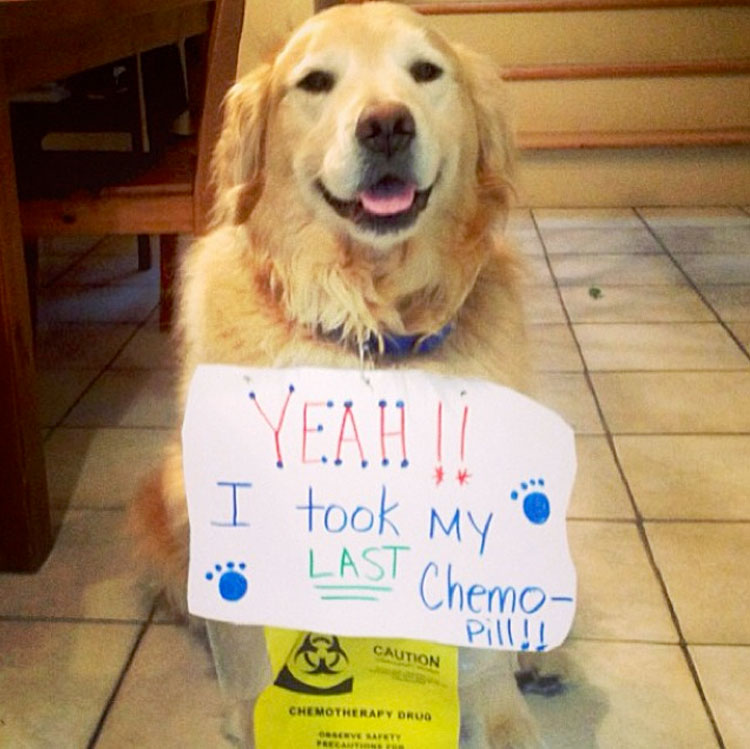
When I am presented with a cancer case that is of a type that is likely amenable to successful remission rates and management with chemotherapy, often the mere mention of the word chemotherapy causes clients to cringe. This is understandable given what we see on the human side of cancer treatment via chemotherapy. I am writing today to assure you that the paradigm and reality of chemotherapy in pets is very different from human medicine because our goals are very different.
In human cancer medicine, the primary and ultimate goal is eradication of the cancer. In the process of attempting to reach this goal, chemotherapeutic agents and doses are chosen that often make the patient very ill as healthy cells are compromised or even killed as collateral damage as the drugs are killing cancer cells. Rapidly dividing cells such as those that grow hair, line the GI tract, and produce blood cells within the bone marrow are especially sensitive to chemotherapy. Thus, we commonly see hair loss, gastrointestinal sickness, and red and white blood cell suppression (leading to anemia and immune system suppression, respectively) in people undergoing chemotherapy.
In pets, we are mandated to balance our therapeutic goals with maintaining quality of life. This means choosing chemotherapeutic agents and dosing that will both treat the cancer, possibly achieve remission, all while maintaining quality of life. For some cancers remission times can exceed 2 years. For example, I currently have a 14 year old feline patient that I diagnosed with lymphoma of the liver. She is currently 27 months into remission and we have been able to back off the oral chemotherapy dosing frequency to once every 3 weeks.
Still chemotherapy, depending on the type of cancer and the treatment necessary to manage it, may not be appropriate for every pet. For example, if a chemotherapy regimen requires frequent initial visits to the hospital because the agents need to be administered intravenously, if that patient were fractious, aggressive, or otherwise a high stress patient when at the veterinary clinic, frequent visits reduce quality of life. For such cases, I actually steer clients away from pursuing chemotherapy because, what is the point of achieving remission when we have to make the pet repeatedly miserable to get them there? There is also sometimes considerable expense involved that is hard for owners to justify so that they may have their pet with them for months to a couple of years longer.
The main point of this article is not to necessarily convince owner to pursue chemotherapy for pets with treatable cancer but instead to encourage maintaining an open mind about it and give the veterinarian a chance to explain what it entails, what the treatment expectations are, and what the cost is. With the alternative of shutting down once the word chemotherapy is uttered, an owner of a pet with treatable cancer could be missing out on reasonably affordable, minimally invasive, and cost effective treatment that will restore and maintain quality; and buy more precious time with his/her beloved pet.
Dr. Roger Welton is a practicing veterinarian and highly regarded media personality through a number of topics and platforms. In addition to being passionate about integrative veterinary medicine for which he is a globally recognized expert, Dr. Welton was also an accomplished college lacrosse player and remains to this day very involved in the sport. He is president of Maybeck Animal Hospital , runs the successful veterinary/animal health blogs Web-DVM and Dr. Roger’s Holistic Veterinary Care, and fulfills his passion for lacrosse through his lacrosse and sport blog, The Creator’s Game.
How Veterinary Study Groups Is Saving Veterinary Medicine
Veterinary medicine as predominantly independent small businesses has been under assault from corporate big business since the early 2000’s and continued ramping up of big business efforts to acquire veterinary clinics is changing the face of veterinary medicine. Companies like VCA, Banfield, Blue Pearl, Vet Core and NVA are buying up veterinary clinics in record numbers, reminiscent of the 1980’s and 1990’s when optometry underwent the same type of big business invasion (try finding a private optometry office that is not a corporate chain – not easy). An organization called Veterinary Study Groups thankfully is also gaining traction to offer independently owned veterinary practices an opportunity to stave off the corporate invasion so that the profession, its patients and clients, and its veterinarians and medical teams can retain their small business roots that are are far more personal and endearing than working as a cog in the wheel of a giant corporation.
Before getting into Veterinary Study Groups, it is important to offer a little bit of background into why big big business is having such success at acquiring practices. As veterinarians, we are taught medicine first and foremost. Most of us are not intrinsically business people and without formal training we tend to run our businesses very poorly. We get into practice ownership so that we may practice medicine in a manner and within an environment that fits our initial expectations of what veterinary practice should be like when we envisioned pursuing a career in veterinary medicine to begin with. However, beyond the vision and the passion of veterinary medicine, we often lack the fundamental knowledge and skill sets that are necessary to run a financially stable and successful small business, whether it is budgeting, understanding benchmark percentages, human resources, and tax planning (these few items listed here are just scratching the surface). As a result, it leaves many veterinary practice owners disillusioned with practice as the practices grow yet become no more profitable (or sometimes less profitable) and more dysfunctional from a business perspective than when we purchased or started practice to begin with.
The next issue is that big business is coming in and offering big dollars for practices beyond what a young veterinarian associate next in line to buy his/her emlployer’s practice or outside veterinarian could realistically pay for a practice. The vast majority of aspiring veterinary practice owners need a bank loan to purchase a practice, but the bank must see gross revenue and cash flow that will offer reasonable assurance that the bank note will realistically be paid back. Big corporate does not have this concern and are even willing to lose money on a practice purchase for a few years because they have the volume based reference laboratory, vendor, insurance, and tax savings to overcome deficits rather quickly and hundreds (in some cases thousands) of profitable veterinary clinics to offset any temporary deficits.
Thus, we are left with practice owners that are burned out from the business side of veterinary medicine, not necessarily wanting to sell to a nameless, faceless big corporation, but cannot get remotely the same dollars for their practice from perhaps a long time veterinarian associate they care about and would love to see carry on their legacy. Having not been successful in setting up a good retirement scenario for them and their families, veterinarians often feel they have no choice but to sell to big corporate.
Thankfully, there is now a plan B: Veterinary Study Groups. Veterinary Study Groups as of the writing of this article is a co-op of more than 1200 independently owned veterinary clinics that combine their numbers to leverage partnership agreements with reference laboratories and vendors with pricing that better competes with large veterinary corporations. They have a benchmarking data collection system by which practices compile their financial data and compare against their individual Veterinary Management Group (VMG – more on this below), and against all Veterinary Study Group clinic averages.
We meet twice a year in Veterinary Management Groups of 20 veterinary practice owners recruited and chosen from all over the US and Canada to keep us compliant with anti-trust law to receive all manner of business training with expert content providers and gain consensus among one another on best practices and strategies. The entirety of the global Veterinary Study Groups meets in a Congress once every 2 years where we are presented with inspiring speakers from all walks of corporate and personal success the learn from the best and brightest in the business world.
My description of Veterinary Study Groups above just scratches the surface of the benefits of membership, but the bottom line is that Veterinary Study Groups enables the independent practitioner to not only survive but thrive in an increasingly challenging business climate. Within my Veterinary Management Group of which I have been a member since 2012, I not only have the privilege to meet and plan with twice a year, I can e-mail or call them at any time before I launch a new idea or am about to make a big purchase for my practice. They advise and I advise in return with all the selflessness in the world because of the bond we have created as colleagues and friends. Together, we are no longer individually small fish in a big ocean with circling sharks…we are a team that has one another’s backs within an ever growing organization that has our group’s back.
Dr. Roger Welton is a practicing veterinarian and highly regarded media personality through a number of topics and platforms. In addition to being passionate about integrative veterinary medicine for which he is a globally recognized expert, Dr. Welton was also an accomplished college lacrosse player and remains to this day very involved in the sport. He is president of Maybeck Animal Hospital , runs the successful veterinary/animal health blogs Web-DVM and Dr. Roger’s Holistic Veterinary Care, and fulfills his passion for lacrosse through his lacrosse and sport blog, The Creator’s Game.
5 Reasons Veterinary Technicians Are Heroes – A Tribute On National Veterinary Technician Week
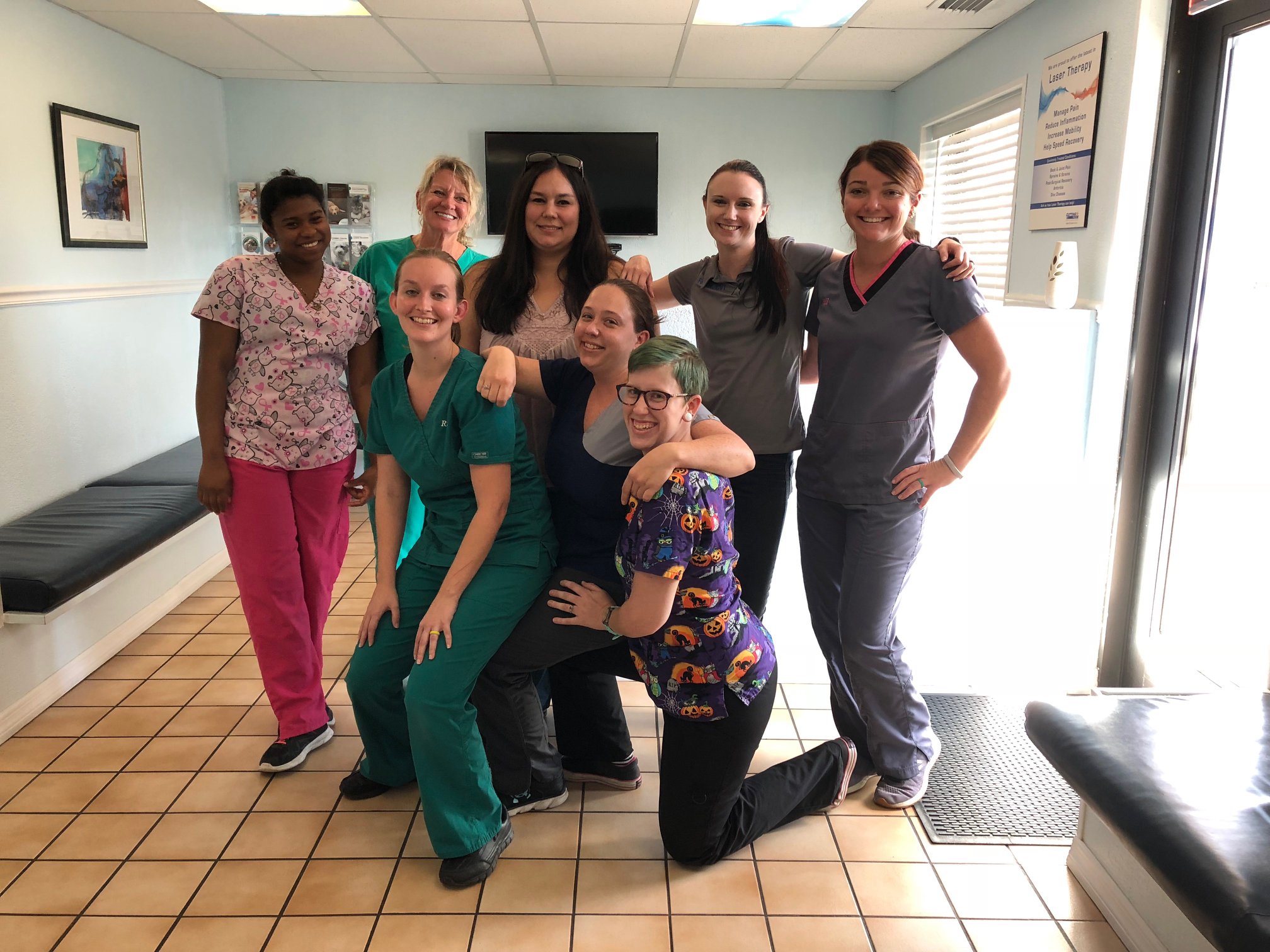
In honor of 2018 National Veterinary Technician Week, I would like to highlight 5 reasons why veterinary technicians are nothing short of heroes. As a practicing veterinarian for 16 years and a practice owner for 13 years, I have known for a very long time that a veterinary clinic/hospital is only as good as the veterinary technicians that see to patient care and minute by minute veterinary practice operations.
1.) They do it for love of the profession!
Veterinary technicians spend at least 2 years in veterinary technology school, pass national boards, and need to maintain a license with continuing education. It is a rewarding profession for those who love the job for the sake of the job. Sure, they need to make a living, but in a field that pays less than the amount of education, skill , patience, and hard work that the job of a veterinary technician demands, they are in it for aspirations that far surpass monetary reward.
2.) They are fearless!
In one single day it is not uncommon for a tech to get bitten, scratched, knocked over, and urinated or defecated on; yet they persevere, change the scrubs, dress their wounds, and push on with little to no complaint. Thankfully, techs are well trained enough to avoid serious injury most of the time so urgent care visits are not all that common, but it is a rare vet tech that avoids at least a bad scratch in work week.
3.) They are multi disciplined!
In the course of a single morning, a veterinary technician may serve as s phlebotomist, physical therapist, dental hygienist, radiology technician, cytologist, inventory manager, ICU nurse…I really could keep going on here but you get the idea. Point is, veterinary technicians are nothing if not versatile with a capital “V”.
4.) Despite their toughness, they are compassionate and empathetic.
A vet tech may be fearless, stressed, and possesses an amazing work ethic, but one of the their most endearing traits is that no matter what the circumstances, they never lose their humanity for the animal patient and the families that love them.
5.) They keep veterinarians focused and grounded.
Juggling often heavy case loads, calling on lab results, and keeping up with charting, it is our technicians that give us constant reminders to triage our cases, call on the most urgent lab results first, perform follow up after care progress calls, and keep us moving when the more chatty of us get a little behind on schedule (of course I am not one of those). They are often our conscience and our rocks when our jobs occasionally leaves us emotionally and physically drained. Their words, their tenacity, and their spunk lifts us up when we feel we may have nothing left.
Happy National Veterinary Technician Week my friends! May this week each year always remind you how special you are!
Dr. Roger Welton is a practicing veterinarian and highly regarded media personality through a number of topics and platforms. In addition to being passionate about integrative veterinary medicine for which he is a globally recognized expert, Dr. Welton was also an accomplished college lacrosse player and remains to this day very involved in the sport. He is president of Maybeck Animal Hospital , runs the successful veterinary/animal health blogs Web-DVM and Dr. Roger’s Holistic Veterinary Care, and fulfills his passion for lacrosse through his lacrosse and sport blog, The Creator’s Game.
In Pet Food, What Constitutes “Natural,” “Human Grade,” or “Holistic?” Diets

Pet food marketing deception is taking over the pet food industry in ways that are making veterinarians feel like we are banging our heads against a wall. With beautiful pictures of whole foods in their native state on diets self labelled as natural, human grade, and holistic, who can resist the temptation to feed one’s pet these amazing diets? Read on and learn about what these terms mean and how to properly understand a pet ingredient food label, and you may have a change of heart.
Natural Pet Food
The current definition of “natural” pet food as per the American Association of Feed Control Officials (AAFCO) is:
“A feed or feed ingredient derived solely from plant, animal or mined sources, either in its unprocessed state or having been subject to physical processing, heat processing, rendering, purification, extraction, hydrolysis, enzymolysis or fermentation, but not having been produced by or subject to a chemically synthetic process and not containing any additives or processing aids that are chemically synthetic except in amounts as might occur in good manufacturing practices.”
The biggest tell here is “..having been subject to physical processing, heat processing, rendering, purification, extraction, hydrolysis, enzymolysis or fermentation.” To be fair these processes are common to nearly all pet foods and are necessary components to putting ingredients into a kibble form. On the other hand, does this sounds natural to you? Does this justify labeling a diet as natural when nearly all diets fit this description?
In addition, without research and development facilities that are utilizing veterinary clinical nutritionists, actual feeding trials, and quality control, the vast majority of the diets out there are not even performing this processing correctly; to the extent that the dietary nutrients derived from the ingredients are in often not in a form that is digestible for pets. Just how vast is this deficiency?
Currently, there are only three pet food companies that have research and development facilities overseen by clinical nutritionists: Royal Canin, Hills, and Purina. Go to Pet Smart some time and look at the number of diets for sale that are not one of these three manufacturers and the number of diets that do not have veterinary clinical nutritionists and R & D research facilities will astound you.
To get a clear picture of the pet food marketing deception, let’s take a look at the ingredient label of a popular pet food that is labeled as natural AND holistic (read on for holistic, you are going to just love what a holistic pet food label means!).
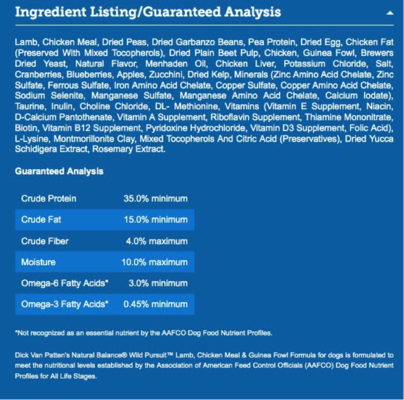
Let us start with ingredient #2, chicken meal. This is the definition of chicken meal per AAFCO:
“Chicken meal is the dry rendered product from a combination of clean chicken flesh and skin with or without accompanying bone, derived from whole carcasses of chicken, exclusive of feathers, heads, feet and entrails. Meal here is used in the sense of ‘an ingredient which has been ground or otherwise reduced in particle size.'”
Chicken meal is generally much higher in protein than the animal is in its native state because much of the water content has been separated out. Processing into chicken meal also removes micro-organism contaminants such as bacteria and viruses and provides a convenient and cost effective method to provide adequate crude protein in the food to form the pet food into kibble.
To be sure, nearly all diets include some form of animal “meal,” but not all diets label themselves as natural. It most certainly does not resemble the whole food beauty we see in pictures on the front of the bags of natural pet food.
However, you may read on through the rest of the pet food label and think to yourself that the meal is okay, since clearly this diet has other natural stuff in it like cranberries, blueberries, apples, and kelp. Unfortunately, you would be falling victim to more pet food label deception once again! You see, all ingredients listed after the first 7 ingredient of a pet food label collectively represent only 1% of the total content of the food. That would amount to perhaps one or two cranberries in an entire bag of food.
Holistic Pet Food
Okay, so natural pet food is an epic fail and hardly likely to be produced with any research and development and quality control experts or feeding trials. At least we have holistic diets to fall back on. Below is the definition of a holistic diet as per AAFCO:
There is none! There is NO set of criteria that designate a diet as holistic!
Human Grade Pet Food
Sorry once again, since the US Department of Agriculture (USDA) considers all pet foods to be “animal feed,” AAFCO has no definition for this term either.
Bottom Line Common Sense Pet Food Selection
I am not a cheerleader for any one particular pet food so I keep my recommendations to three basic criteria for the selection of pet food:
1.) AAFCO certification at a bare minimum
2.) Research and development facility overseen by veterinary clinical nutritionists that actual engaged in feeding trials (we know who currently has these)
3.) Take the advice of your veterinarian for specific prescription therapeutic diets for nutritional management of disease where clinically applicable
Dr. Roger Welton is a practicing veterinarian and highly regarded media personality through a number of topics and platforms. In addition to being passionate about integrative veterinary medicine for which he is a globally recognized expert, Dr. Welton was also an accomplished college lacrosse player and remains to this day very involved in the sport. He is president of Maybeck Animal Hospital , runs the successful veterinary/animal health blogs Web-DVM and Dr. Roger’s Holistic Veterinary Care, and fulfills his passion for lacrosse through his lacrosse and sport blog, The Creator’s Game.
Plan To Have Your Large Breed Female Dog Spayed? Read This First!
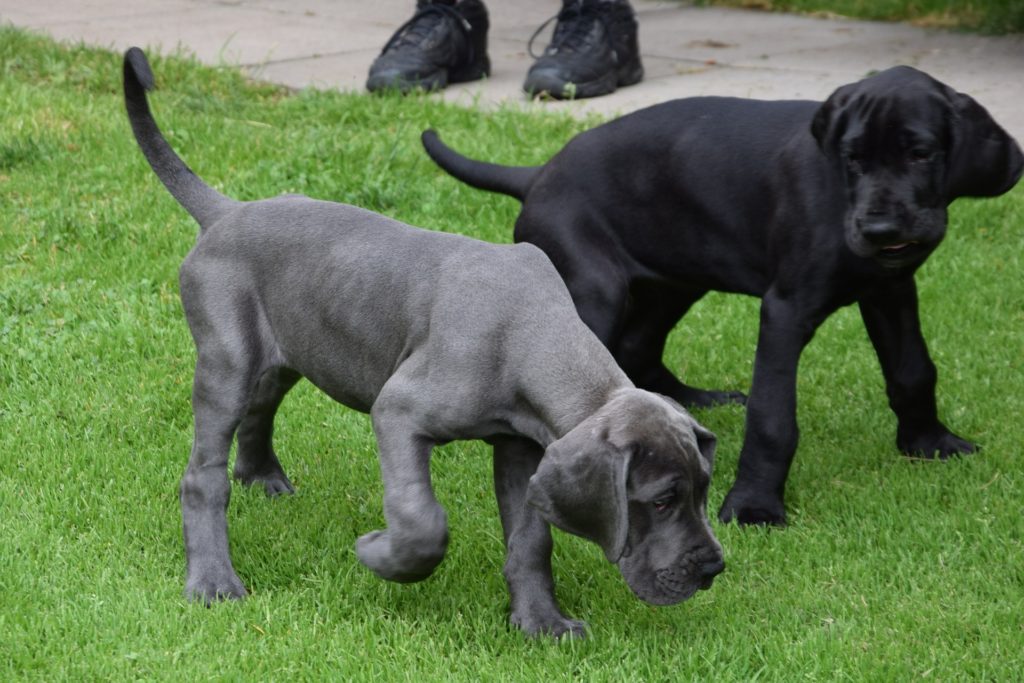
A spay procedure as it is commonly called, is an abdominal surgery where the veterinary surgeon removes the female organs of reproduction, the ovaries and most of the uterus. The procedure is therefore technically called an ovariohysterectomy. Since the veterinary surgeon has to make a surgical entry into the abdomen in order to perform the spay procedure, this presents a unique opportunity for a preventative additional procedure that make save your large breed dog’s life at a later time.
Deep chested large to giant breed dogs can be prone to a condition where gas and fluid get trapped in the stomach causing it to tautly distend, termed bloat. This condition causes a great deal of pain and and caught in time, the stomach can be decompressed with the patient under sedation with the passage of a stomach tube and successfully treated medically and prevented with GI protectants and low residue diet. In other cases, the bloated stomach can twist, a condition known as gastric torsion, which can be fatal even with early surgical intervention. This latter consequence that is extremely dangerous can be effectively prevented by performing a preventative procedure during the routine spay called a gastropexy.
For a modest additional surgical fee and abdominal incision only a few inches longer, a small portion of the stomach can be tacked to the body wall to keep it more fixed in place. As a result, if a dog were ever to experience bloat, it would be highly unlikely for the stomach to twist and recovery could to be far less dangerous, more expedient, less invasive, and far less expensive.
Whether or not bloat will occur to a large or giant breed dog is not certain but it appears to have a strong genetic influence, as it appears to run in families. There are behavioral and husbandry factors that have been pointed to that theoretically would make sense may trigger bloat (excessive activity following a meal, large amount of drinking after eating kibble, swallowing of air due to bowls being too low for a tall dog, to name a few), but my experience has told me that these factors have played overall very little role in whether a dog may bloat or not.
It really has come down more than anything to apparent genetic predisposition in certain large, deep chested dogs, over-represented especially in Great Danes, Standard Poodles, Labrador Retrievers, Golden Retrievers, German Shepherds, Doberman Pinschers, and mixes of these breeds. However, I will caution that I have seen enough bloat and gastric torsion in other large, deep chested dog breeds that I would have concern for the possibility of bloat in any breed of dog 70 pounds or larger.
Thus, I recommend prophylactic gastropexy for any large breed dog or large breed mix when they are scheduled for neuter or spay. I commonly get push back when recommend having gastropexy done during routine neuter (castration) in male dogs because the neuter procedure does not require the veterinary surgeon to make an abdominal surgical entry. Realistically, the required incision would be rather small with a quick recovery (that would provide him a life time of prevention) and I still recommend gastropexy during male sterilizations, but I rarely perform them because of it being a tough sell to the owner.
For the spay, on the other hand, we are already in the abdomen to perform it, so with an additional 10 minutes of surgical time, a slightly larger incision, and a little bit of additional cost, you can create circumstances where an incidence of bloat will not be a life threatening, invasive, and expensive ordeal for your big dog. To me, that is a no brainer.
Dr. Roger Welton is a practicing veterinarian and highly regarded media personality through a number of topics and platforms. In addition to being passionate about integrative veterinary medicine for which he is a globally recognized expert, Dr. Welton was also an accomplished college lacrosse player and remains to this day very involved in the sport. He is president of Maybeck Animal Hospital , runs the successful veterinary/animal health blogs Web-DVM and Dr. Roger’s Holistic Veterinary Care, and fulfills his passion for lacrosse through his lacrosse and sport blog, The Creator’s Game.
A Contrast Between Veterinarians & MD’s

It never fails to amuse me when I hear human medical doctors referred to as “real doctors,” when making the distinction between a veterinarian, aka, animal doctor, and a doctor that treats people. I know in most cases it is not any attempt to be disrespectful or malicious, just a manner of speech, but having heard this so many times for so many years, it inspired me to write about the differences between veterinarians and human so called “real doctors.” For the sake of the article, I will refer to them as MD’s.
Please see some of the most significant contrasts below:
- There are only 29 accredited veterinary schools in the US as opposed to 141 accredited medical schools in the US, making it just under 5 times harder to get accepted to veterinary school.
- Veterinarians have to learn the anatomy, physiology, medicine and surgical techniques for 7 species, whereas in the same number of years of school, MD’s only have to learn the aforementioned knowledge for 1 species.
- MD’s have patients that tell them how they feel, what may have occurred to them, or where they may hurt. Veterinarians, not so much.
- In addition to practicing medicine for just one species, MD’s specialize in one medical discipline.
- While there there are veterinary spets, a vast majority of veterinarians do not specialize and like me it is not uncommon to be an internist, surgeon, dentist, and dermatologist all in the course of one morning.
- Despite it being more competitive to gain acceptance to school, pay the same amount of money to attend school, and spend the same number of years in school as MD’s, according to Money.USNEWS.Com, the average MD earns twice that of average veterinarian.
- Veterinarians are infinitely more likely to get bitten, scratched, urinated on, or pooped on by their patients than MD’s (no stats on that, my own personal observation).
- Veterinarians call you on lab work results often the next day and do not charge you for their time to do so.
- MD’s make you wait often as long as a week to get even simple blood work results and make you make an appointment to deliver the information in person (for which they bill you and your insurance company another visit fee).
- Veterinarians offer their patients yummy treats unless their tummy is too sick for them.
- With the exception of a lollipop from the pediatrician, I cannot recall ever getting a yummy treat from my doctor.
- You often do not get seen by your MD but instead see a so called “physician extender” like a PA or Nurse Practitioner
- Not veterinarians, you get the doctor every time.
- MD’s have seemingly little consideration for your time. They consistently run an hour plus behind and rarely even apologize for your wait time.
- Veterinarians (not all but most) strive to minimize your wait, apologize when we run behind, even comp exams when the wait is excessive.
These are just a few contrasts between veterinarians and their real doctor human counterparts. Please don’t get me wrong, this article is not meant to be a dig at MD’s, as millions of doctors do brilliant life saving and life sustaining work every day. They most certainly have my admiration and respect. I just wanted to remind everyone that animal doctors can be pretty cool too. Look no further than Dr. Herchel Green, the veterinarian character in Walking Dead.

Dr. Roger Welton is a practicing veterinarian and highly regarded media personality through a number of topics and platforms. In addition to being passionate about integrative veterinary medicine for which he is a globally recognized expert, Dr. Welton was also an accomplished college lacrosse player and remains to this day very involved in the sport. He is president of Maybeck Animal Hospital , runs the successful veterinary/animal health blogs Web-DVM and Dr. Roger’s Holistic Veterinary Care, and fulfills his passion for lacrosse through his lacrosse and sport blog, The Creator’s Game.
The Most Tried And True Method For Training Your Puppy
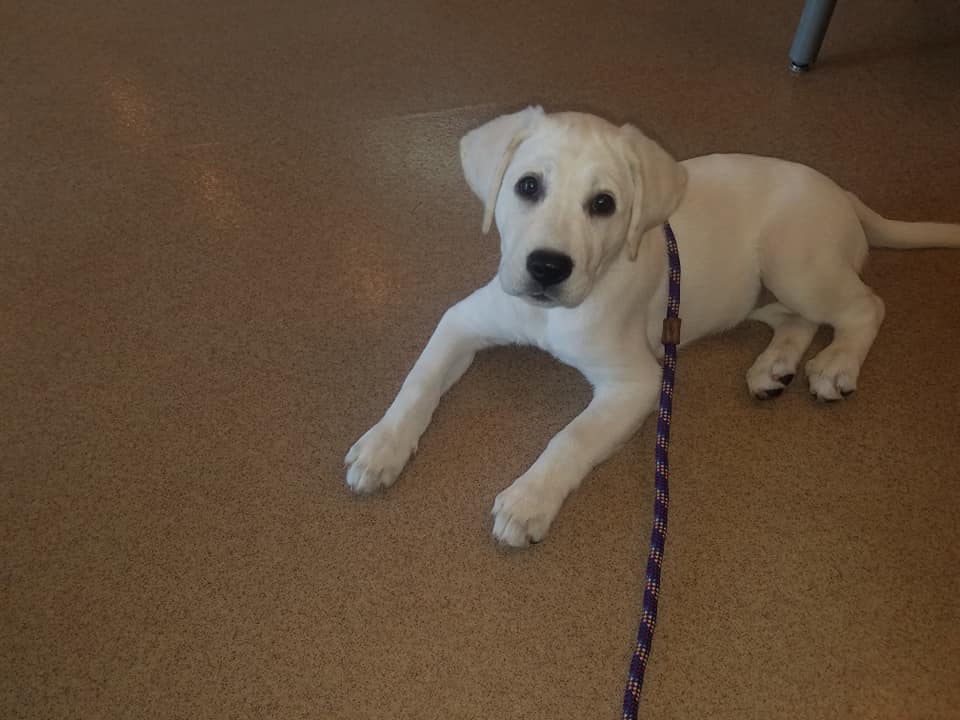
I am not shy to admit that dog training or behavior is not particularly high on my lists of interests or something I am especially good at. However, having recently been unexpectedly convinced to rescue a Labrador Retriever puppy (not that it took much arm twisting), I am in the midst of house training a young puppy. While it is a lot of work as anyone who has raised a puppy well knows, there is a training method that has withstood the test of time as the single best method to house train: crate training. If applied consistently and correctly, it will minimize frustration on the part of both owners and puppies and ultimately set the stage for a great furry family member for years to come.
Crate training takes advantage of an instinctive canine trait that they resist eliminating in a space they have to lay in. Thus, when one cannot pay direct attention to the puppy to recognize the signs that they need to be run out the door to go potty (circular sniffing behavior, just waking from a nap, urge to defecate shortly or even immediately following a meal, etc.), the puppy should be placed in the crate. Not paying direct attention applies to any period of non-direct supervision. Not being home or sleeping are obvious ones, but this also includes: on the phone, working on the computer, eating dinner, cleaning the house, etc… Below are helpful tips to follow when crate training your puppy to maximize its benefit:
- The puppy will bark, yelp and cry when placed in there at first – do not give in!
- Letting them out as the result of carrying on reinforces their tendency to vocalize when they are put there.
- Do no yell at them to shut up! This gives them attention, albeit negative attention, it is still attention nonetheless.
- Certainly do not kick the crate or shake it, again negative attention, but this is psychologically damaging to the puppy and inappropriate.
- Do not try to talk to them in a soothing tone to make them less upset. Tough love is the key, just ignore them. Use ear plugs or leave the home if you have to the first few times.
- Do NOT use bark shock collars! These are cruel from my perspective and instill fear to the puppy while in the crate. These are awful training devices.
- When leaving the home or going to bed, do not make a spectacle of putting the puppy in the crate. Instead, put her in 30 minutes before leaving or going to sleep so that she can settle in and not get worked up. Go not say goodbye or goodnight. Conversely, when returning to the home or waking in the morning, do not go right to letting the puppy out, wait 15 or 20 minutes and only let her out when she is quiet.
- Keep safe chew toys in the the crate to help create a pleasant environment in the crate for the puppy.
- Feed the puppy in the crate so that she associates it with her favorite activity: eating. Our 3 month puppy is already trained to enter her crate, sit and wait a few seconds before we give her the bowl of food.
- To prevent future table begging behavior, put the puppy in the crate during family meals. This instills in the puppy that when the family eats, she is not to be hovering.
- In our little Stella’s case, the condition for which we ended up rescuing her as a special needs puppy, her condition is a rare gluten sensitive one that could mean danger for her if she were to snap up human grade food items with gluten in them, so not hovering around the table also reduces her risk.
- Purchase a crate that you can section off to adjust as the puppy grows. Back in the day, we either had to purchase increasingly larger crates to accommodate growth (which got costly), or buy a crate large enough for the approximate future size of the puppy and get creative sectioning with cardboard. Now, many crates come with dividers that adjust the size of the crate as the puppy grows. You want the crate to be large enough so that they can readily turn around and sprawl out when sleeping, but not so large that they can urinate/defecate on one end while comfortably sleeping on another; this defeats the main purpose of the crate.
- Do not leave the puppy in the crate too long! Puppies can only hold their urine and stool for about one hour for every month of age. For example, in Stella’s case at now 3 months of age, we must let her out at least once every 3 hours. We are are not to be home for longer than that, we make arrangements for someone to come by to let her out.
Done correctly and consistently, crate training a puppy takes away a lot of the frustration that accompanies house training a puppy, while giving the puppy a safe place they can call their own. Most actually come to like it and will use it in the future even after being house broken as their Snoopy like dog house in the home (of course, laying inside of of it, not on top of it). In the case of puppies and young dog breeds like the Labrador Retrievers that are prone to chewing electrical cords, shoes, holiday ornaments, or just about anything; these items pose a danger to the puppy, so crating them when not supervised helps to keep them safe as well.
Dr. Roger Welton is a practicing veterinarian and highly regarded media personality through a number of topics and platforms. In addition to being passionate about integrative veterinary medicine for which he is a globally recognized expert, Dr. Welton was also an accomplished college lacrosse player and remains to this day very involved in the sport. He is president of Maybeck Animal Hospital , runs the successful veterinary/animal health blogs Web-DVM and Dr. Roger’s Holistic Veterinary Care, and fulfills his passion for lacrosse through his lacrosse and sport blog, The Creator’s Game.
Price Shopping For A Spay Or Neuter Procedure? Read This First!
Earlier this week I had a neuter that cancelled after the owner had already showed up to drop off her dog for the procedure. The admitting technician recognized immediately at check in that the front desk staff member who had scheduled the procedure made a mistake in not checking and ensuring that the owner received a printed, itemized treatment plan that outlines exactly what we do and what the total cost of the procedure is. It is our policy to not not engage in any service without at full providing full disclosure of cost and having the owner sign off on approval.
As such, the admitting technician provided the neuter treatment plan prior to admission and the owner was rather surprised and called her husband prior to leaving their dog. They had a completely different price in mind based on information they had gotten from friends that had in the past used a local high volume, low cost spay/neuter clinic. They decided to cancel the procedure and discuss whether they would have the procedure done with us and reschedule at a later time or consider the low cost clinic.
We take full responsibility for the breach in protocol and subsequent sticker shock that ensued, since the appointment should not have even gotten this far without the owners having known full well what the cost would be and specifically why the cost was more than they may see at another clinic. We never disparage other clinics but rather provide a full explanation of our treatment plan simply ask the owner that when deciding to choose a clinic for a procedure, understand that the difference in cost often reflects our gold standard surgical program so that they can compare apples to apples.
What we make no apologies for is what we charge for spay and neuter. As a clinic that is accredited by the American Animal Hospital Association (AAHA), we conduct our surgical program in a veterinary university fashion, using the best and latest anesthesia monitoring equipment, following the most up to date anesthesia protocols, and performing the surgery with a fully scrubbed and gowned veterinarian in a cap and mask, with the same dedicated veterinary nurse from admission through surgical prep, recovery, and discharge. This last aspect minimizes inconsistencies in post-operative pain management treatment and post-operative discharge instructions. Every surgical patient also gets am IV catheter for administration of intraoperative fluids to maintain electrolyte balance, hydration, and blood pressure (and to administer life saving emergency drugs if a patient were to crash) and each patient receives an endotracheal tube through which the gas anesthesia is administered (which also protects the airway and enables manual ventilation in the event that a patient stops breathing).
Common corners that high volume, low cost spay-neuter clinics cut to reduce cost include the following:
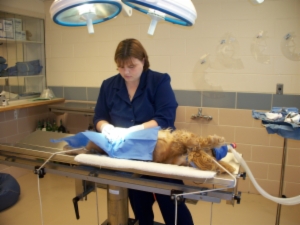
- Veterinarian does not scrub or gown for surgery, just throws on sterile gloves. You can see in the picture above, the low cost veterinarian is not even wearing a cap and mask and has an unacceptably small sterile drape field.
- Surgical instrument packs are used for multiple patients (as opposed to a fresh sterile pack for each patient).
- No dedicated nurse, as the patients tend to be passed along in assembly line fasion.
- Gas anesthesia is administered via mask not endotracheal tube so there is no airway protection in the event of airway closure or if the patient vomits while under anesthesia (and provides a much less effective ability manually ventilate the patient if breathing stops).
- Very rudimentary and cheap anesthesia monitoring equipment or no anesthesia monitoring equipment at all (as opposed to our patients that have oxygen saturation, EKG, blood pressure, heart rate, breathing rate, and CO2 level constantly monitored in real time until they are recovered).
Because they are done so routinely, many pet owners have minimized the seriousness of spay and neuter surgical procedures. Spay especially is a major abdominal surgery technically called an ovariohysterectomy that involves tying off major blood vessels to prevent life threatening bleeding. While the neuter procedure does not require entry into the abdomen, it still requires tying of major blood vessels to prevent hemorrhage and requires an incision that could get infected if both the patient and veterinarian are not properly prepped (and also requires safe administration of anesthesia).
There are many ways to save money when frugality is called for. Surgery should not be one of them.
Dr. Roger Welton is a practicing veterinarian and highly regarded media personality through a number of topics and platforms. In addition to being passionate about integrative veterinary medicine for which he is a globally recognized expert, Dr. Welton was also an accomplished college lacrosse player and remains to this day very involved in the sport. He is president of Maybeck Animal Hospital , runs the successful veterinary/animal health blogs Web-DVM and Dr. Roger’s Holistic Veterinary Care, and fulfills his passion for lacrosse through his lacrosse and sport blog, The Creator’s Game.
Why The Millennial Generation Is Great For Veterinary Medicine

It disappoints me when I hear members of my Generation X speak disparagingly of Millenials, referring to them as lazy, unmotivated snow flakes that will run our country into the ground as their generation ages into raising families and running our government and businesses. How quickly Gen Xers forgot that the same things were said about us by our Baby Boomer parents, yet we churned out the likes of Elon Musk, Larry Page and Sergey Brin (the latter two co-founders of Google). From my own childhood group of lacrosse playing, surfing, free spirits, we have a veterinarian, chiropractor, high ranking Bank of America attorney, celebrity fitness trainer, orthopedic surgeon, and three successful corporate executives. Take that Baby Boomers, we did just fine!
While it is true that Millennials tend to be job hoppers (according to the Harvard Business Review, 21% of Millennials have left their jobs for another in the past year – a number that is three times that of non-Millennials), it is not out of boredom, inability to handle stress, flakiness, or laziness. When we examine the data provided by Harvard Business Review studies on what motivates Millennials in the work place, they are clearly motivated by different factors than Gen Xers and Baby Boomers and interestingly, money is not a major motivating factor for them. Please see the chart below for complete list comparing generational employment motivation (from the Harvard Business Review).
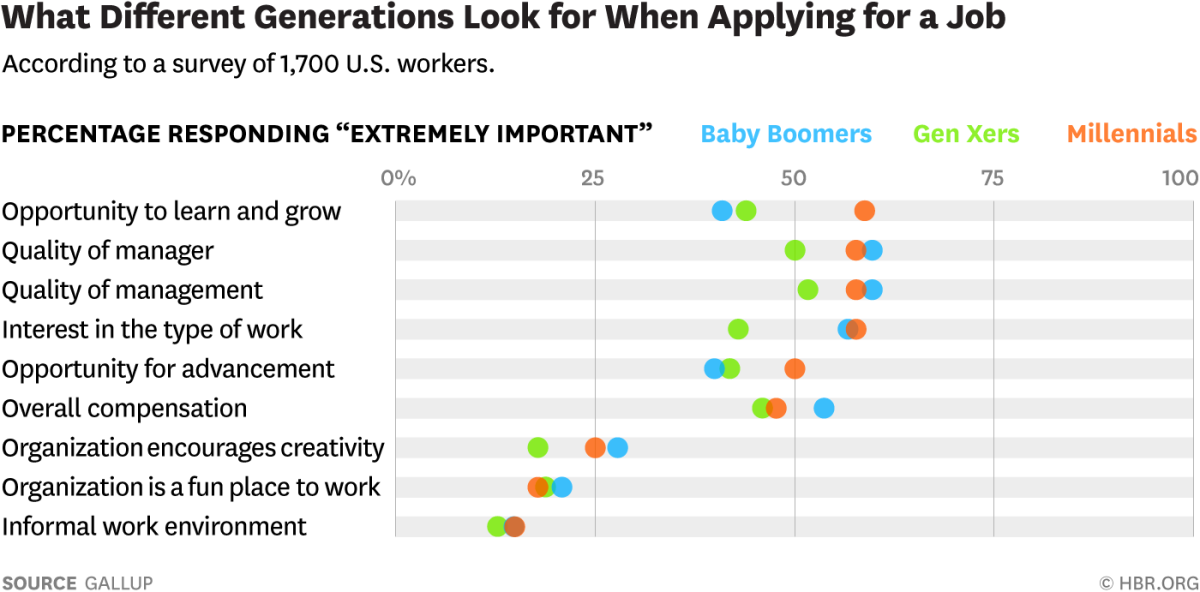
We can clearly see that that Millenials are less money motivated and far more motivated by opportunity to learn and grow, good leadership, and opportunity for advancement. Clearly, if they do not see these things that they value in their job they have far greater compunction than previous generations to leave and find anther job more in line with their values. Curiously, interest in the type of work they do as a primary motivating factor puts them more in line with Baby Boomers than it does with Gen Xers who do not seem all that motivated to be interested in the type of work they do. It should actually not be very surprising in hindsight having known many Gen Xers that have remained in jobs they hated, bosses they detested or had toxic environments for years on end.
So, why do these traits make Millennials so well suited for veterinary medicine? Veterinarians and veterinary technicians are more than plenty qualified to have achieved admission for schooling to become much better paid human medicine equivalent MD’s and RN’s. The veterinary medical professionals that comprise our medical teams endured just as much education at the same expense as our human counterparts, yet chose a profession that pays significantly less. The we chose as we did is because the joy of our work healing and maintaining the health of animals is far more rewarding an experience for us personally. In short, our passion trumps our desire to make more money. When one loves what they do for a living they never really work a day in their life and Millenials embody that ideal.
The other reason veterinary medicine is well suited for Millennials is that the leadership and quality of management of veterinary medicine is evolving in a very positive way. Being owned in general by individuals who are by nature empathetic and idealistic, veterinary clinics as businesses in the past were very poorly run from a standpoint of both financial stability and human resources. With the advent of Veterinary Study Groups that create veterinary practice vehicles for proper budgeting, bench marking and implementing programs like Traction that define processes, standard operating procedures, and hold leaders as well as subordinates to be consistent and accountable to one another; the human resource culture and financial stability of veterinary clinics is heading increasingly into rarely heretofore seen levels.
In am grateful for the core group of Millenials that are part of the medical team of my veterinary clinic (some of whom are pictured in the featured image of this article). Most of them have been working in my clinic for years, all are punctual and work hard and diligently, truly care about the patients and our clients that love them, and as a result raise the bar of the level of veterinary medicine that we provide. We are all very excited to be adding our first Millennial doctor to the practice October 1, 2018.
So Baby Boomers and my fellow Gen Xers, stop belly aching about Millennials. Provided with good leadership, good training, and reasonable prospects for advancement in their careers, they will give you their all. It is a very good thing that careers are far more to Millenials than a means to earn a paycheck which is especially true in the field of veterinary medicine.
Dr. Roger Welton is a practicing veterinarian and highly regarded media personality through a number of topics and platforms. In addition to being passionate about integrative veterinary medicine for which he is a globally recognized expert, Dr. Welton was also an accomplished college lacrosse player and remains to this day very involved in the sport. He is president of Maybeck Animal Hospital , runs the successful veterinary/animal health blogs Web-DVM and Dr. Roger’s Holistic Veterinary Care, and fulfills his passion for lacrosse through his lacrosse and sport blog, The Creator’s Game.

Keep your pets safe this holiday season!
The holiday season is right around the corner starting with Halloween (yes, in my home, we consider Halloween a holiday!). It is both a joyous and busy time and it can be easy to overlook certain...

Help for nervous/anxious dogs
There seems to be a growing number of excessively nervous, often skittish dogs. This can range from anxieties, such as noise or storm anxiety, anxiousness about being separated from pet parents,...
Bird flu is infecting cats and cases are rising – What you need to know!
H5N1 Avian Influenza is causing far more trouble than just just high egg prices. The bird flu has successfully jumped species now able to infect cats and people. Although the ability to infect...

Read Dr. Roger’s Latest Book!

 Be Healthy & Fit With Celebrity Trainer Steve Jordan
- The New Measure of a Life Well Lived: Why Health Span Matters More Than Longevity
- The Wealth Spark: Igniting Your Path To Abundance and Success
- Bright Line Eating with New York Times best selling author Dr. Susan Peirce Thompson
- Maximizing Your Workout Time: Efficiency Tips from Westwood Private Fitness
- How to Transform Your Dad Bod: Insights from the Fit Father Project – New Podcast Episode Out Now!