Listen to internet radio with Roger Welton DVM on Blog Talk Radio
Looking For The Right Pet Food
Dear Listeners, Viewers, and Readers,
With all of the new pet foods coming out each and every day, with so many people with (often strong) opinions about which brands are good or bad, how does a dog or cat owner sift through all of the advertisements, advice, and “opinions” about pet food and select the right one for his/her pet?
Tonight, I define what some of the branding terminology really means, and concrete ways that pet owners may be able to discern which foods are reputable, appropriate for life stage of one’s pet (s), and having been tested appropriately and under scrutiny prior to being put out on the pet food market. In this part of our industry that lacks any real oversight, this is information stands to help you make perhaps the most important decision about your pet’s health, and feel confident about your choice of food for your dogs and cats.
I caution you to not be tempted to dismiss my talk tonight, because you may have heard the unfounded and completely untrue notion that veterinarians like me are ignorant with regard to nutritional matters, that somehow the vet schools omit teaching us this most basic determinant of optimal or poor health. This may be popular rhetoric among Internet pet chat forums, but it could not be further from the truth. Animal Nutrition comprised an entire semester of first year course work, with a mid term and final examination and everything. Later in second year physiology and medicine course work, these general nutrition premises are taken a step further with disease specific nutrition.
So trust me when I tell you, your veterinarian is and always will be the best source of information when it comes to your pets’ nutritional needs. Enjoy the show, and feel free to send me questions or comments to be addressed in the next upcoming episode to comments@web-dvm.net.
Thanks as always, for caring about what I have to say! 🙂
Sincerely,
Roger Welton, DVM
Dr. Roger Welton is the President and chief veterinarian at Maybeck Animal Hospital in West Melbourne Florida, as well as CEO of the veterinary advice and health management website Web-DVM.net.
Does Spay/Neuter Increase Obesity Risk in Pets?
Dear Listeners, Readers, and Viewers:
The topic for this evening’s podcast was conceived in response to the common sentiment among pet owners that sterilization procedures (ovarohysterectomy or spay in females dogs and cats; orhiectomy or neuter in male dogs and cats) predispose pets to obesity. The notion that sterilized dogs and cats tend to have a higher tendency to become obese is not one that pet owners pulled out of thin air, but comes from their own general observations…and their observations are correct. Statistically, sterilized pets clearly have a tendency to become obese than their unsterilized counterparts.
The question is, is there a direct physiological connection of sterilizing pets to their tendency to become obese, or are there other factors that contribute to this? For example, for a pet owner to have a pet spayed or neutered pet indicates a certain commitment to pet care, which in turn increases the likelihood of that pet being living a pampered, perhaps overindulgent lifestyle. How much of a factor may this play if at all?
Like most topics I discuss on the air, the answer is not that simple, however, this topic has actually been heavily studied at the veterinary university level, helping us to gain clear insights into this phenomenon. Tune in to learn more. 🙂
We also have 2 listener e-mail questions to address this evening. I remind you that all are welcome to submit you own questions or comments by e-mailing them to comments@web-dvm.net. As always, I thank you all for caring about what I have to say.
Sincerely,
Roger Welton, DVM
Dr. Roger Welton is the President and chief veterinarian at Maybeck Animal Hospital in West Melbourne Florida, as well as CEO of the veterinary advice and health management website Web-DVM.net.
The Shot-Wagon: The bottom of the veterinary barrel.
Dear Listeners, Viewers, and Readers,
Tonight I will be discussing a troubling trend I have seen spreading in the field of veterinary medicine, a paradigm of wellness veterinary care that has exploded exponentially with the tough economic reality that has gripped our country the past several years: the shot-wagon. Since this is a relatively short topic, I also plan to talk about breed specific legislation and an organized group that is poised to fight against this recent trend that they deem unfair and unsubstantiated. They are still in the process of building their website, but here is their Facebook link, with already 6000 + likes:
https://www.facebook.com/groups/473470059348352/
They are a new group that reached out to me recently. Although this evening I plan to highlight why I am strongly opposed to breed specific legislation, I do not know allot about this group at this point, so I invite you all to draw your own conclusions. I am encouraged to see that there is an organized movement to push back against breed specific legislation, so I certainly hope they turn out to be an effective, yet professional and respectful organization that reflects well on their cause.
There are 2 listener e-mail questions this to address on the air this episode. Please keep the e-mails coming, as listener participation is one of the best parts of the show. Send you questions/comments to comments@web-dvm.net.
Thanks as always, for caring about what I have to say!
Sincerely,
Roger Welton, DVM
Dr. Roger Welton is the President and chief veterinarian at Maybeck Animal Hospital in West Melbourne Florida, as well as CEO of the veterinary advice and health management website Web-DVM.net.
Combating Zoonoses (diseases transmissible to us)
Dear Listeners, Viewers, and Readers:
I do some online consultation as part of my rather varied career repertoire – as if I don’t have enough to do 🙂 . A couple of days ago, I was absolutely floored by one particular consultation that involved a man and his dog, both suffering from a parasitic disease that comes from raccoons. The likely mode of transmission was his dog having sniffed, ate, or otherwise contacted raccoon feces, then through casual contact with his human owner, passed it along to him. Both are now very sick, and treatment thus far has been frustratingly unsuccessful, which is what prompted him to pursue my online consultation service.
This gentleman’s and his dog’s experience inspired me to dedicate this episode to deadly zoonosis, a branch of infectious disease medicine that includes diseases that can be transmitted from our pets to us and our families. Our children, the elderly, and the immune suppressed (e.g., cancer patients, HIV patients, or otherwise immune compromised people), are especially susceptible to some of these very dangerous diseases, so be sure to tune in and learn to prevent these diseases from affecting not only your pets, but your precious human family as well!
Also, we have one listener e-mail questions to address this evening. We encourage all of our listeners to participate in our program by contributing your questions or comments at comments@web-dvm.net.
Thank you again, for caring about what I have to say!
Sincerely,
Roger Welton, DVM
Dr. Roger Welton is the President and chief veterinarian at Maybeck Animal Hospital in West Melbourne Florida, as well as CEO of the veterinary advice and health management website Web-DVM.net.
Myths About Our Pets’ Foods
Transcript from this week’s episode of The Web-DVM:
Asking someone about their preferences in pet foods can be as polarizing as if you asked about their political affiliation. Many pet owners have very strong opinions and beliefs when it comes to the type of food they choose for their four-legged companions, however, there are a few myths about pet foods or pet food ingredients that need some clarification.
First, a very common assertion in online discussions, and even in veterinary waiting rooms, is that corn is a bad ingredient and our pets cannot digest it. In fact, some people will outright refuse any pet food that contains any corn in the formulation.
But, looking more closely at ingredient labels, pet owners will see that the “corn” present in many pet foods is actually corn meal or even corn gluten meal. These processed ingredients provide a very high quality carbohydrate source and a very digestible source of amino acids. An important fact to remember is that nutrients are the most important part of a pet’s diet, not the specific ingredients!
Despite the numerous myths circulating, corn is no more allergenic that any other protein source and actually has been shown to be less allergenic than beef, soy, wheat and dairy proteins.
The next myth has to do with an unfortunate naming convention. Almost everyone has seen pet food commercials showing paid actors pretending to be disgusted by the pet food ingredient called “meat by products”. Again, the confusion and misunderstandings happen because of what humans have decided to name particular parts of the meat producing animals.
In reality, by-products include highly digestible and nutritious organs, such as the liver and lungs and do NOT include things like hair, horns or hooves, as advertising gimmicks would have you believe.
Finally, many people believe that veterinarians are not instructed in any sort of nutrition basics during their intense schooling. This is actually a big fallacy as almost all veterinarians will have at least a semester devoted to nutrition and many may have completed undergraduate nutrition courses before applying to veterinary school. Continuing education opportunities that discuss nutrition are also popular lectures for veterinarians and veterinary technicians.
What you feed your pet will be a decision you make based on a variety of factors. But, don’t fall victim to Internet fads promoted by individuals without scientific training or who will profit when you purchase their brand of food. It’s also important to review a variety of information sources before you reach any conclusion about how good, or bad, a particular ingredient might be.
Whether you choose to use a “grain-free” diet, an “organic” pet food or the cheapest food you can find, it’s important to discuss your pet’s nutrition with your veterinarian. He or she can help you understand what the pet food labels really mean and help you make a sound decision based on the needs of your pet.This is Roger Welton reporting, for The Web-DVM.
Dr. Roger Welton is the President and chief veterinarian at Maybeck Animal Hospital in West Melbourne Florida, as well as CEO of the veterinary advice and health management website Web-DVM.net.
Walmart and Target are Now in the Pet Medication Business
Dear Readers, Listeners, and Viewers,
My podcast this evening focuses the new reality of veterinary medicine, superstore giants have turned their sites on our industry, and not only are they here to stay, they are going to exert more influence and eat up a larger portion of the pet veterinary industry as time goes on.
Now this has many veterinarians scared, depressed, angry…name your negative emotion. For pet medication revenue for the past 15-20 years has served to improve the quality of our profession with the ability to afford the best equipment and technology, attract the the best employees, and keep the cost of services much lower than our human medical counterparts. That ship has now sailed, yet despite that revenue loss, we are still mandated to provide a high level of care and services that our customers are accustom to, keep up with new technology, pay our employees well and offer them benefits, and continue to pay our taxes and other operational costs. I can see why many a veterinarian may be losing sleep over this.
This veterinarian, however, is not concerned. I will explain why I have little concerns about Target, Walmart, and any other big business trying to snare their share of the veterinary industry. I will also explain why the entry of these corporate giants into this industry may seem good for pet owners on the surface with lower pricing for pet medications, but I will remind you that not all is as peachy as it may seem. There is no such thing as a free lunch, and this circumstance will be no different. Be forewarned that there will be negative consequences as a result of this new reality, so tune in to find out!
Also, we have 3 listener e-mail questions to address tonight. Feel free to submit your questions/comments to be addressed on the air by e-mailing them to comments@web-dvm.net.
Thanks as always for caring about what I have to say. 🙂
Sincerely,
Roger Welton, DVM
Dr. Roger Welton is the President and chief veterinarian at Maybeck Animal Hospital in West Melbourne Florida, as well as CEO of the veterinary advice and health management website Web-DVM.net.
What Quiet Killer is Stalking Our Cats?
Transcript from this week’s episode of The Web-DVM:
Almost everyone knows a friend or acquaintance who is diabetic. What most people may not realize is that diabetes may be present in their own home, possibly in a feline friend. Diabetes is a group of diseases that result from either inadequate insulin production or the inability of cells to respond to this hormone.
The main characteristic of diabetes is the presence of high levels of glucose in the blood…this is known as hyperglycemia. In humans, one type of this disease is known as Type I or insulin-dependent diabetes. This illness results from the body’s immune system destroying the cells that make insulin. This is the predominant form of diabetes in our canine companions and there is no known way to prevent it. Type II, or non-insulin dependent diabetes, accounts for 90-95% of diabetes in people and 85-90% of cases in cats. In this instance, the beta cells of the pancreas that produce insulin either become exhausted or they fail to respond to signals to produce the hormone. The important aspect of this to remember is that it is possible for treatment to lead to a remission of the disease.
Although the true incidence of feline diabetes is not precisely known, estimates for North America show that about 1 in every 200-400 cats develop this disease. What is important to remember is that as our cats have developed a tendency towards obesity, diabetes cases have risen rapidly.
Cats with diabetes often go extended periods of time with no real sign that anything is wrong. When signs do appear, the first indications are a cat who needs to use the litter box more frequently and who is drinking greater amounts of water. Unfortunately, cat owners are not always aware of these signs, especially if their kitty often goes outdoors. This means that many cats aren’t diagnosed for months after the onset of diabetes. Without diagnosis and treatment, diabetes will eventually cause a metabolic condition known as ketoacidosis. This leads to dangerous changes in the blood chemistry, dehydration and eventually, death.
When cats are seen by a veterinarian, this disease is often diagnosed with a simple blood test. Hyperglycemia or any glucose in the urine (glucosuria) is often indicative of diabetes. Unlike diabetic dogs who will be on insulin replacement for the rest of their lives, it is possible to treat cats and allow for remission.
The goal of treatment in cats is to restore the functionality of the beta cells and their ability to produce insulin. In fact, new evidence is now showing that high protein, low carbohydrate diets are instrumental in helping cats defeat diabetes. In short, although your feline friend may need insulin initially, you might be able to reduce or even eliminate this medication as you help the cat lose weight. As with any medical condition, the very best source of information will be your veterinarian. He or she can steer you through the diagnosis and treatment process and then help you with monitoring your pet’s progress and potential recovery.
This is Roger Welton reporting, for The Web-DVM.
Dr. Roger Welton is the President and chief veterinarian at Maybeck Animal Hospital in West Melbourne Florida, as well as CEO of the veterinary advice and health management website Web-DVM.net.
Everything you need to know about heartworm disease in dogs and cats
Airs Friday, June 1, 2012, 9PM EST. Listen to this podcast directly from my show page by CLICKING HERE
Dear Listeners, Viewers, and Readers:
I like to update coverage of heartworm disease at least yearly not only to keep up with current preventive and treatment modalities, but because of so much lack of general knowledge about the disease among pet owners. Such a common disease in dogs, and rising in cats, it always surprises me how little the average pet owner knows about heartworm disease. So this evening, I will explain heartworm disease, from transmission to clinical infection, to advanced and end stage disease, to treatment, to prevention. I will discuss its relevance in both canine and feline species, as well as briefly review the major heartworm prevention options available (there seems to be a new one out on the market every time I turn my head).
We have 3 excellent listeners e-mail questions to address this evening, and always, I invite you to post comments right here at the blog or submit e-mail comments/questions to be addressed by me on the air, by sending them to comments@web-dvm.net.
Thank you as always for caring about what I have to say!
Roger Welton, DVM
Dr. Roger Welton is the President and chief veterinarian at Maybeck Animal Hospital in West Melbourne Florida, as well as CEO of the veterinary advice and health management website Web-DVM.net.
Top 10 Pet Myths
Airs Friday, June 1, 2012, 9PM EST. Listen to this podcast directly from my show page by CLICKING HERE
Dear Listeners, Viewers, and Readers:
Tonight, I will be revising my top 10 list of canine and feline myths with a different twist…I will put both dog and cat medical myths lumped into one top 10 list. This will save air time in presenting both species in one episode, but will also allow be to prevent redundancy for myths that both dogs and cats share in common.
My top 10 lists are based on feedback I get from clients and colleagues throughout the year, making each new one unique as it reflects a new year’s misinformation. There are likely to be some repeats as some myths refuse to die, but there will be several new ones as well. In order to prepare you for this episode, here are the myths I will be debunking tonight:
1.) Cancerous tumors in dogs and cats spread faster once they are exposed to air.
2.) Spay should be delayed until a pet has one or two heats so that they can experience the hormones to develop properly mentally and physically.
3.) It does not matter where I get my pet spayed or neutered…I mean, it’s just spays and neuters, right? No big deal.
4.) It does not matter where I get my pets’ shots…I mean, it’s just shots, right?
5.) Garlic and brewers yeast are effective flea preventives.
6.) My dog does not need heartworm preventive because he is primarily an indoor dog.
7.) Grains are the root of most disease in dogs and cats.
8.) My dog destroys things out of anger or spite when I leave the home
9.) My pet will get fat if I spay/neuter him/her because these procedures slow the metabolism.
10.) Human grade omega-3-fatty acid and joint health supplements are okay to use on my pets.
As always, I invite you to post comments right here at the blog or submit e-mail comments/questions to be addressed by me on the air, by sending them to comments@web-dvm.net.
Thank you as always for caring about what I have to say!
Roger Welton, DVM
Dr. Roger Welton is the President and chief veterinarian at Maybeck Animal Hospital in West Melbourne Florida, as well as CEO of the veterinary advice and health management website Web-DVM.net.
Nature’s Anti-Inflammatory
Airs Wed, May 2, 2012, 9PM EST. Listen to this podcast directly from my show page by CLICKING HERE.
Dear Listeners, Readers, and Viewers:
This evening I will be shedding light on an inexpensive, simple nutritional supplement that fights and reduces inflammation everywhere in the body. Regardless of the tissue, whether gut, brain, skin, or joints, keeping your pet armed with this resource acan slow the onset of, and be an integral part of management of, any number of disease processes whose end result is inflammation.
In my talk I will reveal what this magic substance is, explain how and why it works, and explain the importance of selecting high quality forms of this nutritional supplement, as poor quality versions can actually make our pets sicker.
Plus, I will be addressing three listener e-mail questions, and please don’t be shy to send me your e-mail questions/comments to comments@web-dvm.net.
Thank you as always, for caring about what I have to say! 🙂
Sincerely,
Roger Welton, DVM
Dr. Roger Welton is the President and chief veterinarian at Maybeck Animal Hospital in West Melbourne Florida, as well as CEO of the veterinary advice and health management website Web-DVM.net.

Keep your pets safe this holiday season!
The holiday season is right around the corner starting with Halloween (yes, in my home, we consider Halloween a holiday!). It is both a joyous and busy time and it can be easy to overlook certain...

Help for nervous/anxious dogs
There seems to be a growing number of excessively nervous, often skittish dogs. This can range from anxieties, such as noise or storm anxiety, anxiousness about being separated from pet parents,...
Bird flu is infecting cats and cases are rising – What you need to know!
H5N1 Avian Influenza is causing far more trouble than just just high egg prices. The bird flu has successfully jumped species now able to infect cats and people. Although the ability to infect...

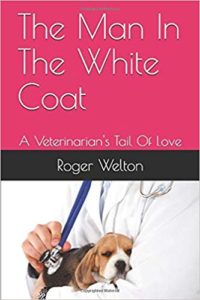
Read Dr. Roger’s Latest Book!
 Be Healthy & Fit With Celebrity Trainer Steve Jordan
- The New Measure of a Life Well Lived: Why Health Span Matters More Than Longevity
- The Wealth Spark: Igniting Your Path To Abundance and Success
- Bright Line Eating with New York Times best selling author Dr. Susan Peirce Thompson
- Maximizing Your Workout Time: Efficiency Tips from Westwood Private Fitness
- How to Transform Your Dad Bod: Insights from the Fit Father Project – New Podcast Episode Out Now!