Second hand smoke harms our pets too!
CLICK HERE TO WATCH VIDEO AT MY YOUTUBE CHANNEL
Transcript from this week’s episode of The Web-DVM:
Secondhand smoke has been implicated in the illnesses and even deaths of non-smokers. What’s even more disturbing is that smokers may have unknowingly contributed to severe disease in pets.
Most people understand that secondhand smoke from cigarettes contains an incredible number of hazardous substances and many of them are carcinogenic. These chemicals are found in high concentrations in carpets and on furniture around the home. Pets sharing this environment will get these toxins on their fur and then ingest them during normal grooming.
Dr. Ann Hohenhaus, a board certified spet in veterinary internal medicine and certified veterinary journalist, has written that increased numbers of smokers and smoking in households corresponds with higher levels of the by-products of nicotine metabolism in pets sharing that home.
Research is now showing that our pets’ health is affected in ways similar to what is seen in humans.
In the early 1990s, researchers found correlations between nasal cancers in dogs and the presence of smokers in the home. There is also a concern that environmental tobacco smoke may increase the incidence of lung cancer in our canine friends as well.
Cats may actually be at higher risk for serious disease when they live in a smoking environment. As mentioned above, many cigarette smoke toxins settle to low levels in the home and cats will pick up these substances on their fur. Because of their fastidious grooming habits, cats end up ingesting a higher level of chemicals and this leads to a greater chance of several types of cancer.
Lymphoma is a cancer of white blood cells and is one of the most common cancers seen in our pet cats. When smokers are present in the cat’s household, the risk for this killer is increased by two or three times over cats living in non-smoking homes. Sadly, when our feline friends are diagnosed with lymphoma, the prognosis is very poor and many won’t survive another six months.
Another serious cancer with links to secondhand smoke is a cancer of the mouth known as squamous cell carcinoma, or SCC. Studies have linked a higher risk for SCC in cats living in smoking homes. Again, the prognosis is very grave and most pets won’t survive another year.
Of course, the best course of action is to give up the tobacco habit entirely. It’s not only best for the health of the smoker, it will also greatly reduce risks for pets. Understanding that it’s not easy to quit this addictive habit, people who smoke and have pets should attempt to minimize their pets’ exposure by smoking outdoors.
Another important thing to remember is that smoking in the car with pets can create a toxic environment, even with the windows open. If you must smoke when you drive, leave your pets and kids at home!
Pets who are developing illnesses from secondhand smoke may exhibit symptoms ranging from lethargy to coughing to the appearance of masses in the mouth. It’s important to have your pet seen by a veterinarian if any of these signs are noted.
This is Roger Welton reporting, forThe Web-DVM.
Dr. Roger Welton is the President and chief veterinarian at Maybeck Animal Hospital in West Melbourne Florida, as well as CEO of the veterinary advice and health management website Web-DVM.net.
Beware, MRSA is on the rise!
Airs Wed February 15, 2012, 9PM EST. Listen to this podcast directly from my show page by CLICKING HERE.
Dear Readers, Viewers, and Listeners:
Tonight I will be taking about the rise of a very dangerous strain of bacteria called MRSA (Methicllin Resistant Staphylococcus Aureus). We are seeing increasing cases of this type of infection, and the scary part is that it has a unique ability to mutate and gain resistance against our best antibiotics, as well as jump species and even put the human family at risk. Don’t miss this one, as I highlight how you can protect you and your family from MRSA. Plus, I will be addressing 3 listener submitted e-mail questions throughout the podcast.
As always, I invite you to post comments right here at the blog or submit e-mail comments/questions to be addressed by me on the air, by sending them to comments@web-dvm.net.
Thanks as always for caring about what I have to say!
Sincerely,
Roger Welton, DVM
Dr. Roger Welton is the President and chief veterinarian at Maybeck Animal Hospital in West Melbourne Florida, as well as CEO of the veterinary advice and health management website Web-DVM.net.
Should You Consider A Trust Fund for your Pet?
CLICK HERE TO WATCH VIDEO AT MY YOUTUBE CHANNEL
Transcript from this week’s episode of The Web-DVM:
Pets have become integral and beloved members of millions of families across North America. We provide them with special diets, unique toys and even grieve heavily when they pass away. Unfortunately, many dedicated owners fail to consider what might happen to their pets if they are suddenly unable to care for them.
Historically, this was never much of a concern. Pets have always been considered “property” by state and national governments and so when a person died, their possessions, along with the animals they owned, were disposed of as directed by the person’s will or by the probate court handling the estate.
Over the ages, many people have tried to incorporate special provisions into their wills for their pets. English Common Law actually began to recognize pet trusts as far back as 1842. But it’s only been in recent years that true strides have been accomplished.
The first problem to overcome was that of the legal hurdle that “property cannot legally own property”. This means that the animal (property) cannot receive money (more property) in a will for its continued care. In a similar manner, a pet cannot be named a beneficiary of a trust. But, in the 1990s, the Uniform Probate Code changed to actually permit pet trusts. To date, 45 of the 50 U.S. states allow an owner to create a trust for their animals.
The next, and probably bigger issue, is to educate pet owners about their options. Failing to consider what to do with your pet in the event you are unable to care for him or her could lead to your dog, cat or other pet ending up in a shelter or with a new pet owner.
Pet trusts actually provide many benefits. First, since trusts are valid even while the owner is still alive, even if he or she is disabled or incapacitated. This simple fact allows the pet’s care to continue without the necessity of going through probate.
In addition, if the owner needs to move to an assisted care facility or nursing home, a pet trust is valuable in helping to keep the pet and owner together.
Finally, and perhaps most importantly, a pet trust is administered by a trustee (separate from the pet’s caretaker) who has a legal obligation to follow the guidelines set forth by the owner. This helps insure that your wishes for your pet are carried out and helps minimize the potential for fraud. You will want to make sure you have selected a willing and trusted person as the caretaker before the time for one is needed.
As with any legal matter, you should discuss the potential for creating a pet trust with your attorney. Also, your veterinarian may know of attorneys who specialize in these sorts of trusts or even other resources that will help you provide for your pet after you are gone.
This is Roger Welton reporting, for The Web-DVM.
Dr. Roger Welton is the President and chief veterinarian at Maybeck Animal Hospital in West Melbourne Florida, as well as CEO of the veterinary advice and health management website Web-DVM.net.
Top Ten 2012 Pet New Year Resolutions
Airs Wed February 1, 2012, 9PM EST. Listen to this podcast directly from my show page by CLICKING HERE.
Dear Readers, Viewers, and Listeners:
Happy New Year and welcome to my first podcast of 2012. The inspiration for my Top Ten priority list of resolutions you should strive for in the care of your pet this year comes from my previous year’s experience of observing these aspects of wellness and basic care so blatantly dismissed by far too many pet owners. In this episode I also address 3 excellent listener e-mail questions, one of which is a bit controversial, as it drags me a bit (albeit reluctantly) into POLITICS (OH NO!!!).
As always, I invite you to post comments right here at the blog or submit e-mail comments/questions to be addressed by me on the air, by sending them to comments@web-dvm.net.
Thanks as always for caring about what I have to say!
Sincerely,
Roger Welton, DVM
Dr. Roger Welton is the President and chief veterinarian at Maybeck Animal Hospital in West Melbourne Florida, as well as CEO of the veterinary advice and health management website Web-DVM.net.
Why do dogs sniff eachother’s butts?
CLICK HERE TO WATCH VIDEO AT MY YOUTUBE CHANNEL
Transcript from this week’s episode of The Web-DVM:
Good evening, happy New Year to all, and welcome to our first
episode of the 2012 season.
Put a group of two or more dogs together and it never fails that the initial introductions will consist mainly of a group butt sniffing session. Why in the world to they do this? The answer is actually quite simple.
It is not that dogs are just gross and simply enjoy the scent of another dog’s butt stink. In reality, nestled within a dog’s anal region are two scent glands that tell another dog everything they seek to know about the dog. While we rely on facial recognition and conversation to greet and get to know one another, a dog’s entire autobiography is conveniently located in his butt. From what sex the dog is to what he eats, how healthy he is to even his mood, everything another dog wants to know is there for the taking by simply taking a few big butt sniffs.
You see, a dog’s sense of smell is something we cannot even comprehend. Estimated to be anywhere from 150,000 to 300,000 times more sensitive than our sense of smell, it should come as no surprise that they can learn so much about one another simply by sniffing one another’s nether regions.
So next time your dog is in the company of other dogs and is compelled to engage in that yin and yang concurrent butt sniffing position with another dog, your first instinct may be to pull him or her away – but don’t, they are simply getting to know one another.
This is Roger Welton reporting, for The Web-DVM.
Dr. Roger Welton is the President and chief veterinarian at Maybeck Animal Hospital in West Melbourne Florida, as well as CEO of the veterinary advice and health management website Web-DVM.net.
Happy Holidays from The Web-DVM!
CLICK HERE TO WATCH VIDEO AT MY YOUTUBE CHANNEL
Greeting Readers, Viewers, and Listeners:
I just wanted to take the opportunity to wish all of my supporters, ALL OF YOU, my best wishes for joyous, safe, and peaceful holidays for your human and furry family members. Again, than you for another year of your support.
I will be returning with all new blog posts, podcasts and Youtube videocasts in the middle of January, so stay tuned. We have a large array of interesting, fun, and informative topics to cover, as well as important people in the pet industry to interview and give us all their valuable insight. Until then, please enjoy this re-run of our most popular video of this season, “The cat who loves babies”, and thank you as always, for caring about what I have to say!
Sincerely,
Roger Welton, DVM
Dr. Roger Welton is the President and chief veterinarian at Maybeck Animal Hospital in West Melbourne Florida, as well as CEO of the veterinary advice and health management website Web-DVM.net.
Final thoughts for 2011
Airs Wed December14, 2011, 9PM EST. Listen to this podcast directly from my show page by CLICKING HERE.
Dear Listeners, Viewers, and Readers:
This will be my final podcast of the year, where I will be reflecting on the year’s triumphs, failures, lessons learned, and outlook for 2012. From the stagnant economy and how that affects the pet care industry and pet owners alike, innovations like stem cell therapy and low level laser becoming mainstream medicine, to the abysmal persistence of puppy mills and dog fighting in our country, I plan to cover all the good and bad of 2011.
We also have 4 very interesting listener e-mails to address throughout the show, so be sure to tune in.
As always, I invite you to post comments right here at the blog or submit e-mail comments/questions to be addressed by me on the air, by sending them to comments@web-dvm.net.
I thank all of my fans for another year of your kind and enthusiastic support, and I thank you as always for caring about what I have to say!
Happy holidays and best wishes to you and yours!
Sincerely,
Roger Welton, DVM
Dr. Roger Welton is the President and chief veterinarian at Maybeck Animal Hospital in West Melbourne Florida, as well as CEO of the veterinary advice and health management website Web-DVM.net.
Why do some dogs eat poop?
CLICK HERE TO WATCH VIDEO AT MY YOUTUBE CHANNEL
Transcript from this week’s episode of The Web-DVM:
Good evening ladies and gentlemen, and welcome back to The Web-DVM final episode of 2011. Tonight, I will be addressing a most unpleasant habit of some canines, eating their own feces, or the feces of other dogs. For most of us, the thought of such an act is nothing short of appalling, which is why it is often incomprehensible to most pet owners that their dogs would partake in such an act.
So why do they do this? What many people are not aware of is that under certain circumstances, this is a natural canine behavior. Mother dogs clean their nursing puppies and their environment in part, by eating the feces of the puppies that do not have the capacity to leave the nest to defecate. With multiple puppies in the nest, one can imagine the unsanitary and unhealthy situation that would result from the puppy waste being allowed to accumulate. Other adult dogs in the pack will sometimes help pick up the mommy cleaning duties when litters are too big for her to keep up, or mom becomes sick or dies. This hardwired instinct, therefore exists in most dogs, and certain life circumstances can act as triggers for the behavior.
A dog with an underlying condition that can lead to excessive hunger, such as inflammatory bowel disease, diabetes, or pancreatic disease, to name a few, may resort to eating feces.
A dog with intestinal parasites or other conditions that create blood in the stool can make it more appealing and may cause a dog to eat feces.
Too much time between meals and the hunger sustained in between can trigger a dog to eat feces. Certain diets in individuals can lead to subtle GI malabsorptive issues that can lead a dog to eat feces. Even if you are feeding a good quality diet, there is not one diet that is appropriate for every single dog, hence a change of food may be helpful.
Boredom or separation anxiety when the owner is away from the home can lead to the consumption of feces.
So what do you do about it? First off, the most important thing is to resist the temptation to just assume that your dog is just simply gross. While an underlying cause may ultimately elude us, dogs cannot tell us how they are feeling, so we owe it to them to try to figure out if there is an underlying medical trigger that we can fix.
Your starting point should be a veterinary visit for a general examination, and having the stool examined for parasites and trace blood. It would also be wise to run general blood work to rule out any underlying systemic disease.
If these diagnostics do not reveal anything, try gradually transitioning the dog to a different diet, especially if the one you are currently feeding is of poor quality. If you are feeding your dog only once a day, try splitting his daily food intake into 2-3 separate meals per day.
If you suspect that your dog may suffer from boredom, try engaging with him more with trips to the dog park, walks, etc. If your dog is destructive, soils the home, or vocalizes severely and incessantly when you leave the home, talk to your vet about managing what may be separation anxiety.
If no underlying problem is identified, then be certain to exercise good potty patrol, picking up the feces as it hits the ground. If your dog is too fast for you and gets that feces before you can pick it up, then you may need to resort to leash walks for elimination so the dog can be pulled away from the feces before he can eat it.
Some pet owners resort to food additives to discourage the eating of feces. Some claim to provide a certain nutrient that the dog does not get in his diet and ceases to eat his feces because he no longer craves what he is missing. Others are designed to make the feces less appealing to the dog.
Whatever the approach, be sure to ask your veterinarian if a product is safe before feeding it to your dog, as these products are not FDA or USDA regulated. Even if deemed safe, however, I would not hold your hopes too high for a miracle cure, as most pet owners are left disappointed by these products’ lack of effectiveness.
That concludes tonight’s broadcast. While this is my last YouTube broadcast of the year, I will be concluding 2011 with my final podcast of the year, Veterinary Advice, Animal News and Views, Wed, Dec 14, 2011 at 9 PM EST, so be sure to tune in. I bid all of you happy, safe holidays, and I thank you sincerely for another year of your support!
This is Roger Welton reporting, for The Web-DVM.
Dr. Roger Welton is the President and chief veterinarian at Maybeck Animal Hospital in West Melbourne Florida, as well as CEO of the veterinary advice and health management website Web-DVM.net.
The grain free pet food craze…worth all the hype?
Airs Wed November 30, 2011, 9PM EST. Listen to this podcast directly from my show page by CLICKING HERE.
Dear Readers, Viewers, and Listeners:
In the past few years, there has been movement among many pet industry professionals and even a good number of veterinarians to push for the feeding of grain free, preservative free, pet food. And of course when there is a demand, there will be no shortage of companies happy to fill it…and often charge a rather high premium for this type of food.
The question is, is it really worth it? Are grains really the root of all canine and feline disease as many proclaim? In this episode, I breakdown some real benefits of these types of diets, versus claims that are fantastic and not really based in science and medicine.
As always, I invite you to post comments right here at the blog or submit e-mail comments/questions to be addressed by me on the air, by sending them tocomments@web-dvm.net.
Thanks as always for caring about what I have to say!
Sincerely,
Roger Welton, DVM
Dr. Roger Welton is the President and chief veterinarian at Maybeck Animal Hospital in West Melbourne Florida, as well as CEO of the veterinary advice and health management website Web-DVM.net.
Happy, safe, Thanksgiving from Dr. Roger and The Web-DVM!
CLICK HERE TO WATCH VIDEO AT MY YOUTUBE CHANNEL
Greetings Reader, Viewers and Listeners:
I will not be posting a new YouTube show today, as I have taken some time to spend with family and prepare for the big feast tomorrow. In its place, please enjoy this repeat posting of our most popular video this season, “The cat who loves babies.” Since it showcases my angelic little baby Scarlett, I am quite pleased to know that it has been our most popular episode in the new season, and I am overjoyed to post it again!
I would like to take the opportunity to wish all of our fans a very special and safe Thanksgiving holiday, and know that one of the things I am most thankful for, is having a fan base that cares about what I have to say…which works out splendidly for me, as I always HAVE ALOT TO SAY! I also wanted to remind everyone that Thanksgiving presents unique dangers to our pets, that are well summed up in this excerpt from an article from the wonderfully informative website, Petplace.com. Click here to view the article directly at Petplace:
Prevent access to counter tops – some dogs and especially cats will jump up on to counters (cats) or pull thing off counters. This is so tempting to pets with the succulent smells of turkey and food. The hot stove and hot items on counters can cause severe burns. Hot burners can also cause tail and hair to catch on fire.
Safely dispose of the turkey string and foil– the string that wraps or ties turkey’s legs is often haphazardly placed aside and found and eaten by dogs and cats. The same danger exists with the plastic turkey wrapper. Ingestion of these indigestible items can require life-saving surgery. Place string, aluminum foil, and turkey wrappers in a secure covered trashcan.
Take care with the fireplace – many times Thanksgiving is the first of the winter holidays and the first time the fireplace has been used. Take special care that pets stay away from the fire. It is a good idea to have a carbon monoxide detector in your home to ensure all heaters are adequately ventilated.
Careful with table scraps and food – some dogs and cats deal well with table scraps and others get stick. Small breed dogs can be especially sensitive and develop a disease called pancreatitis. This is especially true with high fat meals. Don’t feed your pet the skins to get rid of them. If you feed anything – offer small amounts of vegetables or meat. Many deserts contain chocolate, which pets don’t need. Don’t feed your pets chocolate.
No Bones – bones can be dangerous to dogs. Don’t feed your dog the bones. If you dispose of them in the trash – make sure the trash is secure from your pet.
Special care with candles – this is a wonderful occasion to light some beautiful candles. Only do this with the candles are supervised. Never leave the room with a burning candle. Pets can knock them over causing burns or house fires.
Beware liquid potpourri – this is another item that is commonly used during the holidays to give the home a wonderful aroma. The liquid potpourri can be very caustic to the gums and throat of ingested. Spray or plug in air fresheners may be a safer alternative.
I plan to return next week with a new episode of my podcast, Veterinary advice, animal news and views, when I will be talking about, The grain free, preservative free pet food craze, worth all the hype? As always, I will also be addressing listener e-mails, which are abundant and passionate to say the least, given our last controversial topic about feline declaw, canine debarking, and other controversial procedures. Please tune in and keep the e-mails coming.
Again Happy Thanksgiving and God bless!
Roger Welton, DVM
Dr. Roger Welton is the President and chief veterinarian at Maybeck Animal Hospital in West Melbourne Florida, as well as CEO of the veterinary advice and health management website Web-DVM.net.

Keep your pets safe this holiday season!
The holiday season is right around the corner starting with Halloween (yes, in my home, we consider Halloween a holiday!). It is both a joyous and busy time and it can be easy to overlook certain...

Help for nervous/anxious dogs
There seems to be a growing number of excessively nervous, often skittish dogs. This can range from anxieties, such as noise or storm anxiety, anxiousness about being separated from pet parents,...
Bird flu is infecting cats and cases are rising – What you need to know!
H5N1 Avian Influenza is causing far more trouble than just just high egg prices. The bird flu has successfully jumped species now able to infect cats and people. Although the ability to infect...
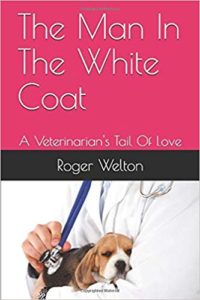
Read Dr. Roger’s Latest Book!
 Be Healthy & Fit With Celebrity Trainer Steve Jordan
- The New Measure of a Life Well Lived: Why Health Span Matters More Than Longevity
- The Wealth Spark: Igniting Your Path To Abundance and Success
- Bright Line Eating with New York Times best selling author Dr. Susan Peirce Thompson
- Maximizing Your Workout Time: Efficiency Tips from Westwood Private Fitness
- How to Transform Your Dad Bod: Insights from the Fit Father Project – New Podcast Episode Out Now!