Preventative Pet Health Care: Non-Core Vaccine – Bordatella – Kennel Cough In Dogs
 photo credit: http://carltonvet.com.au/news/kennel-cough-its-not-all-about-kennels
We have reached the point of our preventative pet health care series where I will be discussing non-core vaccines, that is, vaccines for disease that an individual pet may not have geographic or lifestyle risk for. Bordatella bronchispetica is a very common bacterial causative agent for upper respiratory infection in with dogs. The disease is highly contagious and is spread through the air and by direct contact with mucus secretions, leading to a clinical disease known as kennel cough. It is known to tear through kennels and shelters with high morbidity but generally low mortality.
Although mortality rates for kennel cough are generally low, it should not be considered lightly. The human strain of bordatella is responsible for whooping cough in people (cross infection between species does not occur). Infected dogs typically exhibit a characteristic hacking cough that can seem as if they are trying to gag something up. Fever, lymph node enlargement in the neck, poor appetite, mucus discharge from the nose, and lethargy are common. Less commonly, infection can spread to the lungs, causing bronchitis, bronchopneumonia, or pneumonia. In these less common circumstances, there is typically a secondary opportunistic infection with particularly virulent bacteria that have an affinity for the lower respiratory system.
Risk factors for infection with bordatella include dogs that spend periods of time with other dogs, such as grooming, dog park, boarding kennels, and dog shows. Thus, for these dogs, bordatella vaccination is commonly recommended. Realistically, any dog can develop infection from another dog even with minimal contact, so some dog owners choose to vaccine their dogs for bordatella even if they do not necessarily fall into the high risk category.
There is an injectable and intranasal vaccine against bordatella commercially available. Although both options are safe and effective, I prefer the intranasal for its virtually non-existent adverse reaction rates.
Dr. Roger Welton is the President of Maybeck Animal Hospital in West Melbourne, FL, Chief Editor of the Veterinary Advice and Information Website, Web-DVM, and founder/CEO of Dr. Roger’s Holistic Veterinary Care.
Preventative Pet Health Care Series – Feline Respiratory Disease Complex – Calicivirus
 (photocredit: http://michiganpaw.org/top-shelter-medicine-veterinarian-comes-michigan/)
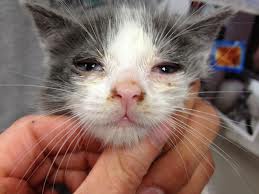
Today’s Preventative Pet Health Care Series continues with feline respiratory disease complex with calicivirus. As previously stated, in my herpesvirus post, 90% of all feline upper respiratory infections stem from herpesvirus or calicivirus. Unlike herpesvirus, calicivirus is fairly stable in the environment, not uncommonly persisting for as long as 10 days. This makes it an extremely contagious disease known to rapidly spread and persist in multiple cat environments, such as shelters, catteries, and homes with large numbers of cats. To add another layer of frustration and also differentiating the disease from herpesvirus in cats, calicivirus patients commonly remain contagious for several months beyond recovery.
Signs of calicivirus are similar to herpesvirus in cats: fever, lethargy, sneezing, coughing, inappetence, and listlessness/labored breathing in severe cases. Calicivirus like herpesvirus commonly is complicated by opportunistic bacterial infection, typically Chlamydia, which readily proliferates in conjunctival (eye membrane) and respiratory tissues. Thus antibiotics are often beneficial in aiding in a feline’s recovery from calicivirus infection.
In some rare cases, calicivirus can reach a chronic form in the gums, leading to gingivitis and dental disease. Some of these cases can become quite serious and debilitating with ulceration of the gums and the development of painful lesions of the teeth known as feline odontoclastic resorbtive lesions (FORL). Dental cleaning and extraction of diseased teeth will often be helpful in controlling this form of calicivirus.
Calicivirus is quite preventable, present as a safe and effective component of the combination FVRCP core vaccine. This vaccine is given as part of the kitten series at 6, 9, and 12 weeks of age, boostered at one year, then administered once every three years thereafter.
Dr. Roger Welton is the President of Maybeck Animal Hospital in West Melbourne, FL, Chief Editor of the Veterinary Advice and Information Website, Web-DVM, and founder/CEO of Dr. Roger’s Holistic Veterinary Care.
Final Thoughts 2014 (continued – Page 3)
to pad our bottom line. As a veterinarian watching this special, it made my skin crawl to watch as they aimed to prove their point through out of context snippets, trick camera angles, and conjecture. More recently was an article posted by the Indianapolis Star, which implicated veterinarians in working in league with big pharma and very much for sale, ready to push the drugs and immunizations of the drug companies most willing to pad our pockets.
I have stated time and again, that if a veterinarian’s primary motive were money, any one of us could have found a much more lucrative home in human medicine making 2-5 times the salary of a veterinarian. With no disrespect to our human medical counterparts, the reality is that it is 7 times easier to find acceptance in medical school than veterinary school simply because there are so many more medical school. But instead, we chose the more competitive and challenging, yet far less lucrative route of veterinary medicine because our primary motivation was, is, and always will be the innocent creatures that we treat.
Also, the notion that big pharma lines out pockets is preposterous…not only does that simply not happen (veterinarians are small potatoes compared to the money big pharma makes in human medicine and medical devices); what the Indianapolis Star is suggesting is illegal. Aside from an occasional lunch and learn (a pharmaceutical rep brings the staff lunch to educate us on new products and/or existing product updates), pharmaceuticals offer us nothing to sell their products. Between product back orders, convincing us to carry their products then turning around and enabling internet pharmacies to sell them in mass quantities for lower retail than they charge us for wholesale; big pharma offers us more headaches than perks. This is true to the point that many industry experts foresee the veterinary medical profession getting out of the pet medication game altogether within 3-5 years; with the disparities that big pharma creates for us making the veterinary in-hospital pharmacy unsustainable.
With no shortage of villains to expose to a public so eager for the next scandal du jour, it is beyond reasoning why the media decided to target veterinarians in 2014. While there are bound to be bad apples in any profession, the truth is I veterinary medicine, they are the vast minority, not the commonplace status quo that some media sources would have you believe.
Rescuing Is In
I cannot speak for national statistics, but my locality is rarely a microcosm, unreflective of national trends. In the case of more people choosing to adopt rescue pets in lieu of purchasing puppies and kittens from breeders and pet stores, I hope that my local trend of increased rescue adoption is representative of a greater national trend. Through pet owner education (one on one discussion, local media sources, and social media), awareness of the plight of overcrowded kill animal shelters (many with appalling conditions) spread through local rescue groups with increasing political clout, the efforts of many finally seem to be paying off. Case in point, shelter euthanasias are down by nearly 30% in 2014 in the county in which I live ad practice.
While we will never completely resolve the plague of puppy mills, catteries, and backyard breeders, nor shelter overcrowding; 2014 has taught us that through the vigilance of volunteers and pet health care professionals working together, we can continue to chip away at the problems, and over time, make a significant difference.
Happy New Year to all! I look forward to writing and podcasting to you in 2015. Thank you for the privilege of your readership/listenership!
Dr. Roger Welton is the President of Maybeck Animal Hospital in West Melbourne, FL, Chief Editor of the Veterinary Advice and Information Website, Web-DVM, and founder/CEO of Dr. Roger’s Holistic Veterinary Care.
Final Thoughts 2014 (continued- Page 2)
not, Atlanta based reporter Jim Strictland ran a story of tales of death by Trifexis, which led to this Facebook page gathering followers in the thousands. Curious, I visited this page and read some of the tales, many of which succeeded at pulling at the heart strings, but were sorely lacking in any scientific link to the cause of death and Trifexis. In fact, anyone with even rudimentary knowledge of medicine and pharmacology would see many of the claims bordering on the outrageous.
But these people could not be convinced otherwise; their dogs wer killed by Trifexis and that was the end of it. It did not matter that Trifexis was merely a combination of two previously long established products (the flea preventive spinosad, the active ingredient of Comfortis; combined with the heartworm preventive milbemycin oxime, the active ingredient of Interceptor). Is it not curious to any Trifexis bashers that neither of these medications has been implicated in mass canine fatalities after years of being on the canine preventive market as separate products; yet existing concurrently in Trifexis, these ingredients are suddenly deadly?
Nevertheless, the conspiracy continues with more joining in every day. Most troublingly, the posts continue to get increasingly aimed at veterinarians, to many of them, the peddlers this deadly medication, callously choosing the profit of the sale of Trifexis at the expense of precious canine lives. It is not uncommon to read statements like “I don’t know if I will ever be capable of trusting a veterinarian ever again.” Unfortunately that is among the nicest of statements made against veterinarians, with others downright vile, some even violent in nature.
Through all of this, there is no mention of the number of dogs whose owners have not bought into the Trifexis mass hysteria, and have benefitted from the product. Believe me, as a small businessman, I have no reason to protect big pharma. If anything, while they provide a lot of the medications that I rely on to treat my patients, I still view my relationship with them as wary for the most part, adversarial at time; often frustrated by their policies and the manner in which they conduct business. However, when a product that effectively prevents deadly heartworm disease and kills fleas more effectively than any other product on the market (heartworm and fleas are a serious problem in Florida where I practice, the former transmitted by the bite of infected mosquitoes leading to right sided heart failure; the latter, causing torment from constant bites, secondary skin infections, and spreads parasites and disease) is attacked with notions that have no scientific credibility, it is troubling. While I do not feel any pity for Elanco, the company that makes Trifexis, I do have pity for the thousands of dogs that will suffer with disease because of their owners choosing to believe unscrupulous reporters and sensational Facebook posts over sound veterinary medical judgment.
2014 Marks the Year of Media Assault On Veterinary Medicine
As previously mentioned, the Trifexis controversy also managed to drag veterinarians under the bus in 2014, implicating us in willfully killing dogs for the sake of our bottom line. But this was not the only instance this year that veterinarians have been attacked, as 2014 marked the year that the media decided that veterinary medicine was an evil that needed to be exposed
It started with a 20/20 “expose’” on ABC that accused veterinarians of recommending unnecessary procedures as a desperate move
Dr. Roger Welton is the President of Maybeck Animal Hospital in West Melbourne, FL, Chief Editor of the Veterinary Advice and Information Website, Web-DVM, and founder/CEO of Dr. Roger’s Holistic Veterinary Care.
Final Thoughts 2014
In today’s post I am taking a temporary detour from my Preventative Pet Health Care Series in order to bring you my final thoughts of the year blog (and podcast) tradition. This year has presented a lot of unique circumstances in the veterinary and pet industry that give me more of an urgency to post a year in review article than ever before. Shortly after the New Year, I will return to, and complete my Preventative Pet Health Care Series.
2014 presented us with many interesting and new states of affairs in the veterinary and pet industries, some exciting and hopeful, others just different, with others disturbing and even hurtful. I outline each of the pertinent topics that topped my list for 2014.
Alternative Veterinary Medicine Make Strong Headway into Mainstream Veterinary Medicine
Alternative veterinary medicine has been making big strides in the past several years into mainstream veterinary medicine with veterinary colleges taking the initiative to study many alternative treatment modalities and provide unequivocal clinical data supporting their efficacy. For example, Colorado State University has made a strong push into veterinary rehabilitation both from a nutritional and treatment standpoint. They have adopted a profound focus on high tech alternative therapy such as therapy laser and water treadmill, but also emphasize the regenerative benefits of nutritional supplementation. Likewise, University of Florida has an entire clinic devoted to the practice of tradition Chinese veterinary medicine, which includes acupuncture and herbal medicine.
While I have bought into an integrative approach to the way I practice veterinary medicine combining the best aspects of both mainstream and alternative veterinary medicine for many years, it was not until 2014 that saw its integration at a significant scale. It is now not as uncommon as it was only a couple of years ago to see practices that integrate these aforementioned alternative treatment methods. While human medicine remains highly dug in with deep divides between alternative and mainstream medicine, veterinary medicine is poised to continue a strong push into integrative medicine, the practice of medicine that enables our patients to benefit from the very best that all types of medicine have to offer.
Trifexis Kills Dogs?
A woman with a geriatric dog who had been Trifexis (a combination heartworm and flea preventive) for 2 years, while also was under treatment for Cushings Disease and congestive heart failure, died within a few days of Trifexis administration. She drew the conclusion that it must have been the Trifexis that killed her dog, despite this not being the conclusion her veterinarian drew, the fact that the dog had been on Trifexis for 2 years prior, and had 3 other possibilities that could have been the cause of death: old age, congestive heart failure, and Cushings Disease. Given the pet owners concern that Trifexis had something to do with her dog’s death, the manufacturer of Trifexis, Elanco paid for a post mortem examination of the dog, which determined the cause of death to be congestive heart failure.
Undeterred by this, the pet owner started a Facebook page called “Trifexis Kills Dogs,” began to draw a following of other pet owners convinced that their dogs died from Trifexis administration. Seeing an opportunity to exploit the controversy justifiably or
Dr. Roger Welton is the President of Maybeck Animal Hospital in West Melbourne, FL, Chief Editor of the Veterinary Advice and Information Website, Web-DVM, and founder/CEO of Dr. Roger’s Holistic Veterinary Care.
Preventative Pet Health Care Series: Feline Herpesvirus (Rhinotracheitis)
 (photocredit: http://www.beverlyoaksvet.com/)
90% of upper respiratory infections in cats are the result of either feline herpesvirus or calicivirus (calicivirus will be covered in the next preventative health care series). More than 80% of cats have had exposure to herpesvirus, making it one of the most common disease complexes in cats. The good news is that most cases of herpesvirus are self-limiting, with only a minority of cases taking on a more severe and/or long term chronic form.
On the other hand, one of the more frustrating aspects of herpesvirus in cats is that, while the immune system in most cases suppresses future outbreaks in the healthy, adult cat, periods of stress or other circumstances that may lead to immune suppression (old age, other concurrent disease, immune suppressive therapy, etc.) may lead to future potential outbreaks. This is because the virus, similarly to the various herpesviruses in people, never truly is cleared from the system, remaining latent in the host’s DNA. Thus, just as a person who experienced chicken pox, a herpesvirus, may develop shingles later as a senior or geriatric aged and/or immune suppressed form, cats may also develop future outbreaks of herpesvirus. As such, even though the likelihood is high that a given cat may have been exposed to herpesvirus, an AAHA based immunization protocol (outlined below) is still a good idea to boost the immune system against future outbreaks.
Herpesvirus may take on two forms in cats, the most common form of which is upper respiratory infection. Signs include sneezing, coughing, nasal discharge, hoarse voice, and fever. It is not uncommon to see a very high fever. In some cases, opportunistic secondary bacterial infection may lead to lower respiratory infection, leading to bronchitis or pneumonia. These complicated cases are seen most commonly in very young or very old cats, some of which require hospitalization and intravenous fluid therapy and antibiotics to resolve. The more common, self-limiting cases are treated with an outpatient course of antibiotics to manage opportunistic secondary bacterial infection while the feline patient clears the virus, a process that typically leads to resolution in 7-21 days.
Another form of herpesvirus leads to conjunctivitis, which is infection of the inner membranes of the eyelids, the third eyelid, and cornea of one or both eyes. Swelling, excessive discharge, and excessive tearing are common. In some cases, the cornea can form a focal region of eroded tissue called a corneal ulcer. Cases of herpesvirus conjunctivitis in cats are typically treated with a combination of systemic and topical antibiotic drops. In cases where there is a corneal ulcer, a corneal lubricant/protectant topical drop called Genteal is commonly concurrently used.
Chronic Forms
Both the respiratory and ocular forms can reach chronic states, where the feline patient suffers from ongoing or chronic recurring infections. For either form, it is often helpful to supplement the affected cat’s diet with the amino acid, L-lysine. L-lysine safely modulates the immune system to optimally suppress herpesvirus. For the ocular for, it is often helpful to maintain the patient on a topical antiviral drop called idoxuridine.
Prevention
As previously mentioned, herpesvirus outbreaks and/or novel infections are effectively prevented with an effective and safe vaccine. Represented as the “R” (R stands for the clinical syndrome herpesvirus causes called rhinotracheitits) in the combination core feline vaccine, FVRCP, the vaccine is given at 6, 9, and 12 weeks of age, boostered at one year, then administered once every 3 years thereafter.
Dr. Roger Welton is the President of Maybeck Animal Hospital in West Melbourne, FL, Chief Editor of the Veterinary Advice and Information Website, Web-DVM, and founder/CEO of Dr. Roger’s Holistic Veterinary Care.
Preventative Pet Health Care Series: Feline Panleukopenia Virus (aka, Feline Distemper)

(photo credit: http://quoteeveryday.com/sad-kitten/)
Today, we move on to the more neglected of the two main companion animals with regards to preventative pet health care, cats. Some statistical reports conclude that only less than 30% of cats in the US are regular participants in preventative health care. It is my sincere hope that this series will help reverse this troubling trend.
Most cat owners have heard of feline distemper only because the distemper vaccine represents the core recommended regular vaccination for pet cats. Because the vaccine is highly effective, most cat owners fortunately do not have any practical experience with the actual feline distemper infection.
Feline distemper is actually nothing like distemper virus that we see in dogs – feline distemper is a slang term for the virus that causes panleukopenia, which is actually a parvovirus. The virus is considered ubiquitous, meaning it is found in virtually every place that is not regularly disinfected, and is highly contagious among unvaccinated cats, most commonly kittens and young adult cats living in groups. Feral colony cats, animal rescue groups, catteries, barn cats, and animal shelters are at high risk for outbreaks.
The feline distemper virus has a single strand of DNA surrounded by a protein coating. It is very stable in the environment, known last up to one full year indoors at room temperature and often even survives freezing. It also survives treatment with such common disinfectants as alcohol and iodine but 10 minute saturation in bleach (diluted 1 part bleach in 32 parts water) is sufficient to kill the virus.
Given its hardiness in the environment, virtually every cat in the course of its life will be exposed to this virus.
Infection occurs when the virus enters the body through the mouth or nose, what we term the oronasal route. Whether illness results or not depends on the immunity in the victim in proportion to the number of individual virus particles entering the body.
As previously stated, feline distemper is caused by a parvovirus. Many people are familiar with this term as parvovirus infection is a generally well known concern for disease in dogs, most notably puppies. Canine parvovirus is actually closely related to the feline panleukopenia virus and thus much of the information regarding canine parvovirus holds true for feline distemper. The feline distemper virus, however, is more difficult to remove from the environment and more lethal than its canine counterpart. Also, cats cannot be infected with feline parvovirus, nor can dogs be infected with feline distemper.
Infected cats shed abundant amounts of virus from all body secretions including feces, vomit, urine, saliva, and mucus. The virus persists long after evidence of the original body secretion has dried or been cleaned by anything other than a disinfectant known to kill the virus. The virus enters the cat’s body with an affinity for rapidly dividing cells in the body, notably the lymph nodes, bone marrow and intestinal cells.
In the bone marrow, the virus suppresses production of red blood cells and white blood cells, leading to anemia (low red blood cells) and compromised immune system (the white blood cells are the immune cells needed to fight the infection). With regard to the immune system, infection with panleukopenia the patient is left vulnerable to more viral invasion, as well as opportunistic secondary bacterial infection.
In the intestines, the virus causes ulceration of the lining, leading to diarrhea and life-threatening dehydration as well as bacterial infection. The patient often dies from either dehydration or secondary bacterial infection.
Because most cats are exposed to this virus to some extent, it is unusual for a cat to have zero immunity to it. Additionally, the vaccine is so effective that even one dose can provide long-lasting protection. As a result, infection is largely limited to unvaccinated younger animals housed in groups, which directly corresponds with exposure to virus numbers large enough to overwhelm their partial immunity. Mortality (death rate) of sick cats is typically considered 90%, making it a deadly viral infection.
A specific syndrome may occur if infection occurs during pregnancy. If infection occurs in early to mid pregnancy, the kittens will likely abort. If the kittens are fairly far along, the cerebellum may become infected, leading to incomplete cerebellar development, known as cerebellar hypoplasia. The cerebellum is the part of the brain that coordinates spatial orientation and movement, enabling the cat to walk and balance. Without a normal cerebellum, a kitten is often born with what are known as intention tremors, that is, whenever he focuses on purposeful movement, he tremors so much that normal movement is impaired, often severely.
Any kitten or unvaccinated adult cat with fever, appetite loss, diarrhea, and/or vomiting is a suspect for feline distemper. Low white blood cells and red blood cells in general bloodwork are hallmark clinical parameters of panleukopenia infection.
The SNAP Fecal ELISA test kit made for parvovirus in dogs is often used for cats as a means to reach a diagnosis of pankeukopenia. This test detects parvovirus in stool and is considered by some veterinarians to be accurate; although the test is not specifically labeled for this use by the manufacturer. Feline distemper vaccination 5 to 12 days prior to running the test can lead to a positive result as the virus from the vaccine will be detected. It is thus important to keep this information in mind when using this test to make a diagnosis; as recent vaccination may cause a false positive. Virus isolation, PCR testing, and antibody level measurement are other commonly used diagnostics to conform panleukopenia.
Infected cats can recover if the cat can be kept alive through aggressive supportive care until the immune system recovers from the panleukopenia and is able to mount an immune response to clear the virus. This is accomplished through aggressive fluid therapy and intravenous antibiotics preventing dehydration and controlling secondary bacterial infections. Given a very guarded prognosis even with aggressive and timely hospital care, there is low probability of survival without hospitalization.
If a cat is fortunate enough to recover from this infection, the feline patient generally suffers no permanent damage is and the cat goes on to live a normal like with lifetime immunity from future infection.
Prevention is very effective with vaccination. The vaccination protocol that I favor begins when a kitten is 6 weeks of age, then bolstered at 9 weeks and 12 weeks. The vaccine should then be bolstered one year later, followed by booster once every 3 years for the rest of the cat’s like.
Vaccination with a modified live vaccine in pregnant cats should be avoided due to risk of the kittens developing cerebellar hypoplasia (see above).
Dr. Roger Welton is the President of Maybeck Animal Hospital in West Melbourne, FL, Chief Editor of the Veterinary Advice and Information Website, Web-DVM, and founder/CEO of Dr. Roger’s Holistic Veterinary Care.
Preventative Pet Health Care Series: Canine Heartworm Disease – The Mother Of Preventative Health Care In Dogs

photo credit: http://www.petvetinc.com/
Heartworm, also known as dirofilaria immitis, is a worm parasite that infects the hearts of dogs. It is spread by the bite of a mosquito infected with its microscopic infective unit called microfilaria. Thus, wherever there are mosquitoes, there is a risk of heartworm disease.
Once infected, the microfilaria goes through several stages of development, emerging as an adult heartworm in 6 months. Although the adult heartworm does not emerge for 6 months, however, once a dog is infected, the larvae are producing infective units that are transmissible to feeding mosquitoes and spreadable to other dogs within 10 – 42 days of infection. Consequently, not only would your dog’s own health compromised by heartworm disease, once infected with heartworm, your dog would be a source of infection to spread to other dogs.
Once they reach adulthood, heartworms are constantly replicating, leading to significant infestation within one year. As the worms travel back and forth from the right ventricle of the heart to the lungs via the pulmonary artery, they cause inflammation and damage to the heart muscle, the lungs, and the pulmonary artery. The end result of heartworm disease is right sided heart failure, clots, or both.
Treatment for heartworm, while necessary, carries risk. Risks include reaction to the injectable arsenic based heartworm treatment, reaction to the dead worms and/or microfilaria, clot formation, or some or all of the above. In my central Florida based veterinary hospital, we treat about 5-7 new cases of heartworm disease per month.
Luckily, heartworm is easily and safely prevented by administering a monthly heartworm preventive medication. There are a number of heartworm preventive medications available on the market, the selection of which may depend on the unique health needs of the patient, individual tolerance, and/or cost. Monthly heartworm screening is strongly advised as part of the yearly well visit.
Why is it necessary to do yearly heartworm screening for my dog when I keep him on year round prevention?
1.) No matter how conscientious and owner may be, there is no such thing as 100% compliance. Even being a few days late on heartworm preventive medication, a dog has the potential to become infected.
2.) While heartworm preventatives are very effective, no protection is 100%. Thus, a small percentage of dogs still become infected despite vigilant preventive administration. These cases would continue unknown if regular screening was not performed.
3.) Many heartworm preventative manufacturers will not guarantee the safety and efficacy of their products without a yearly heartworm test.
Dr. Roger Welton is the President of Maybeck Animal Hospital in West Melbourne, FL, Chief Editor of the Veterinary Advice and Information Website, Web-DVM, and founder/CEO of Dr. Roger’s Holistic Veterinary Care.
Preventative Pet Health Care Series: Parainfluenza Virus in Dogs

(photo credit: www.petadvice.com)
Canine parainfluenza virus is a highly contagious respiratory virus in dogs. It should not be confused with canine influenza, which is most prevalent on racetracks and among the type of dogs that live there (Greyhounds); but is a separate and distinct virus, much less common than parainfluenza virus. Since infection may spread via the air or through the inhalation or ingestion of respiratory secretions from an infected dog; and given that an infected dog will continue to be contagious for 2 weeks beyond cessation of clinical signs of disease, just about any dog is at risk to become infected with parainfluenza virus in the course of his/her lifetime. Puppies and senior age dogs are at highest risk for infection.
Clinical signs of disease include:
– Cough
– Nasal discharge
– Lack of energy
– Fever
– Poor appetite
Many cases of parainfluenza are self-limiting, with healthy adult dogs often having the ability to overcome the virus without veterinary intervention. However, it is not uncommon for secondary bacterial infection to complicate cases of parainfluenza and lead to bronchitis, bronchopneumonia, or pneumonia. Thus, it is advisable to seek veterinary care in the event that a dog is showing the aforementioned signs.
Treatment for uncomplicated parainfluenza virus that remains in the upper respiratory region includes cough suppressants, steam nebulization, and antibiotics to prevent/treat secondary bacterial opportunistic infections. In cases of complicated parainfluenza virus infection where there is bronchopneumonia or pneumonia, treatment is most effective in hospital with intravenous fluids, intravenous antibiotics, and if necessary, an oxygen cage.
There is an effective vaccine against parainfluenza virus that is administered as part of the core DHPP combination vaccine. The DHPP is administered at 6, 9, and 12 weeks of age, then booster and 1 year later. After the 1 year booster, the DHPP vaccine is administered once every 3 years. Parainfluenza immunization also comes of 3 one component in a trivalent kennel cough vaccine against Bordetella, and canine adenovirus type I, 2 other common canine respiratory pathogens. Kennel cough vaccine is administered commonly for high-risk patients (dogs who frequent kennel’s, grooming facilities, and or dog Parks) as a 1 year immunization.
Dr. Roger Welton is the President of Maybeck Animal Hospital in West Melbourne, FL, Chief Editor of the Veterinary Advice and Information Website, Web-DVM, and founder/CEO of Dr. Roger’s Holistic Veterinary Care.
Preventative Pet Health Care Series: Canine Parvovirus

(photo credit: http://pets.thenest.com/)
Just about every mammalian species has its own unique parvovirus’s. Luckily, parvovirus’s are species specific and do not cross infect other species. In the case of canine parvovirus, the virus has an affinity for regions of the body where rapid cellular replication occurs. Thus the gastrointestinal tract, the lymphatic system, and the bone marrow are primary targets of the virus.
Canine parvovirus is transmitted by the fecal oral route, meaning that it is either ingested or inhaled when a dog comes in contact with the secretions stool or urine of infected dog. Parvo is a highly contagious disease in dogs and has a incubation period of 3-7 days.
Once infected, the most common clinical sign initially his diarrhea. The diarrhea is typically especially malodorous and within 1-2 days commonly becomes laden with blood and mucus as well. Because the virus attacks the bone marrow, the soft inner portion of long bones responsible for the production of red blood cells and white blood cells, the gums are commonly pale or white instead of their normal pink color. This is because of anemia (low red blood cell count). The white blood cells since they are also synthesized in the bone marrow are often very low, making it very difficult for the patient to mount an immune response. Thus, secondary infections are very common.
Hospitalization for parvovirus can be very expensive because it requires an isolation ward due to its high risk of contagion. Blood transfusions are also commonly necessary because of blood loss in the stool and the inability of the bone marrow to effectively synthesize new red blood cells to replace the blood loss. Treatment is generally supportive, with aggressive intravenous fluids, antibiotics, and anti-nausea and antidiarrheal agents; it is not uncommon for infected dogs to have to be hospitalized for 5-7 days.
Thankfully, a very effective vaccine is available to protect dogs against this very common and deadly virus that carries a mortality rate of 50% even with aggressive treatment. Parvovaccine is represented in one of the P’s in the core DHPP canine vaccine. This vaccine is administered at 6, 9, and 12 weeks of age, then boosted one year later. Following the one-year booster, the D HPP vaccine can then be administered effectively once every 3 years.
Dr. Roger Welton is the President of Maybeck Animal Hospital in West Melbourne, FL, Chief Editor of the Veterinary Advice and Information Website, Web-DVM, and founder/CEO of Dr. Roger’s Holistic Veterinary Care.

Keep your pets safe this holiday season!
The holiday season is right around the corner starting with Halloween (yes, in my home, we consider Halloween a holiday!). It is both a joyous and busy time and it can be easy to overlook certain...

Help for nervous/anxious dogs
There seems to be a growing number of excessively nervous, often skittish dogs. This can range from anxieties, such as noise or storm anxiety, anxiousness about being separated from pet parents,...
Bird flu is infecting cats and cases are rising – What you need to know!
H5N1 Avian Influenza is causing far more trouble than just just high egg prices. The bird flu has successfully jumped species now able to infect cats and people. Although the ability to infect...

Read Dr. Roger’s Latest Book!

 Be Healthy & Fit With Celebrity Trainer Steve Jordan
- The New Measure of a Life Well Lived: Why Health Span Matters More Than Longevity
- The Wealth Spark: Igniting Your Path To Abundance and Success
- Bright Line Eating with New York Times best selling author Dr. Susan Peirce Thompson
- Maximizing Your Workout Time: Efficiency Tips from Westwood Private Fitness
- How to Transform Your Dad Bod: Insights from the Fit Father Project – New Podcast Episode Out Now!