Dog Naturally Magazine And Their Recommendation For Heartworm Prevention Is A Perversion Of The Spirit Of Holistic Veterinary Medicine
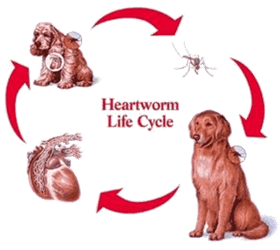
A colleague of mine recently pointed out an article put out by an online publication called Dog Naturally Magazine about the “dangers” of heartworm prevention in dogs and the big secret that they have that we veterinarians in league with Big Pharma hide from the dog owning public, that removes the necessity for the use of heartworm preventives to for prevention of deadly heartworm infestation in dogs. My colleague actually subscribed to the publication to get the article who then kindly sent it to me. As a veterinarian in the state of Florida that is the heartworm capital of the United States (my small 2 doctor practice diagnoses 2-3 new cases of heartworm per month), I felt my blood pressure rising with every sentence I wrote.
On the plus side, the timing of this article could not be better, as I recently posted a clarification of what it really means to be a holistic veterinarian in response to some flack I caught at my Dr. Roger Holistic Vet blog over my endorsement of the Canine Influenza vaccine in response to the recent dog flu outbreak in Florida. I will not reiterate the contents of that article and leave to anyone interested to read it below:
Clarification Of What Holistic Veterinary Medicine Really Means
It is nonsense like that spouted by Dog Naturally that prompted me to start a holistic blog in the first place. Holistic veterinary medicine does not mean abandoning good sense and western medicine, but using an integrative approach to treatment that best serves the patient.
With regard to heartworm prevention, Dog Naturally begins their article with scaring the dickens out of the reader by “exposing” all of the dangerous side effects of heartworm preventives. What they leave out is how exceedingly rare these side effects are. The FDA requires all possible side effects to be listed for a given product regardless of how rare they may be. Look up the side effects of the common over the counter pain and fever reliever ibuprofen some time and it may terrify you to ever take one ever again: blurred vision, stomach bleed, liver failure, kidney failure, ringing of the ears, severe skin rash, dizziness and sudden death! Realistically, I know a lot of people that take ibuprofen for various reasons, myself included, and I have never seen any of these things happen. However, I am certain that on the analogous human side of the Dog Naturally coin, there are inevitably certain that there are people of this ilk sensationalizing these devastating but virtually unheard of side effects.
They then proceed to advise the dog owner that instead of treating with a heartworm preventive, they should instead just test the dog with with a polymerase chain reaction (PCR) test given its high sensitivity to the presence of heartworm in the body, every 4 months. If at any time the dog comes up positive, they can simply call their vet and request a dose of preventive which will supposedly stop the infection in its tracks.
First of all, once a dog owner sees the very high cost of a PCR test (most veterinarian’s standard yearly screening is a much more affordable antigen test), they may take issue with testing every 4 months for the life of the dog. Secondly, they cannot be more wrong that a single dose of preventive in a dog found to be positive will necessary get cleared by preventive if infected within a 4 month period. If the writer had the slightest clue about the parasite’s life cycle, medicine and pharmacology, he would know why.
Heartworm preventives do not work by remaining in the body and killing the infective larval units that are transmitted by mosquito bites. Heartworm preventives kill any infective larvae that may have made it into the dog’s system in the past 30 days. Beyond this time, the infective larvae begins to progress into subsequent stages of development that the heartworm preventive cannot kill. As such, I have diagnosed cases of heartworm in dogs whose owners diligently administered monthly heartworm preventive but simply lapsed by being as little as 2 weeks late on a dose. Certainly by 4 months, unless infection occurred within the past 30-50 days of the test, it would be too late and the owner would now bear the high cost and greater risk of treatment relative to the virtual risk free treatment with monthly preventive), while the poor dog must endure it.
I would encourage the readers of this opinion and general veterinary medicine blog to also subscribe to my Dr. Roger Holistic Vet blog to receive information about proven, natural, and side effect free approaches to veterinary health care that often reduce dependence on medications or invasive procedures that may come with unwanted side effects. In doing so, we manage the “whole” pet, not just the disease, hence the term “hol-istic,” while not abandoning common sense and science to do so.
Dr. Roger Welton is a practicing veterinarian and well regarded media personality throughout a number of subjects and platforms. In addition to being passionate about integrative veterinary medicine for which he is a nationally renowned expert, Dr. Welton was also an accomplished college lacrosse player and remains to this day very involved in the sport. He is president of Maybeck Animal Hospital , runs the successful veterinary/animal health blogs Web-DVM and Dr. Roger’s Holistic Veterinary Care, and fulfills his passion for lacrosse through his lacrosse and sport blog, The Creator’s Game.
Veterinary Misinformation Strikes Again With Canine/Feline Flea & Tick Preventive Bravecto
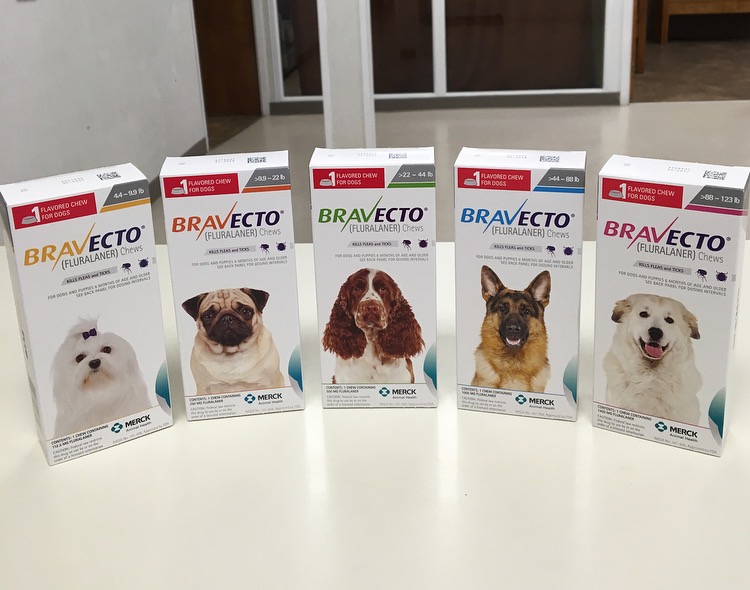 Atlanta based “reporter,” Jim Strickland who “broke the story” of Trifexis (his last dose of sensationalist nonsense hurled at our industry) has struck again against an important veterinary product that is even safer than Trifexis and most other preventive in the canine and feline market. Based on claims from a dog owner whose dog died after his third dose of Bravecto (Bravecto is a 3 month flea/tick preventive, so that would have been the third dose in a 6-7 month period) that it killed her dog, Jim Strickland jumped right on it and reported on the “danger” of Bravecto. With rampant social media and a small but ever present ilk of people that are bent on seeding distrust of veterinarians and the industry, it has steadily gained steam in pet forums and inevitably (like Trefixis and Convenia before it) has reached the status of having a “Bravecto Kills Dogs” Facebook page.
When I first heard about this, I thought at first that perhaps this time around, the “story” would fizzle out and that I would not find myself in my exam room having to explain that the misinformation pet owners are getting on the internet or through the usual suspects in the pet industry that have no medical training or veterinary clinical experience is simply not true. Unfortunately, that did not happen and I have dealt with it enough at this point that I decided it is time to blog about it.
Once again, I write about misinformation at the risk of inevitably attracting internet trolls that will comment on my post and accuse me of being in the tank of Big Pharma who bought me my (non-existent) yacht and is funding my (imaginary) upcoming vacation to Hawaii…among other horrible things they will call me. But is worth it for the people that would sooner accept the word of a biochemist and experienced veterinarian over that of grieving pet owners seeking closure and a reason for the devastating loss of their pet, and a “reporter” that is all to ready to exploit them.
Here is the REAL truth about Bravecto. My clinic has been dispensing Bravecto for over 2 years and have only found it invaluable for the prevention of fleas and ticks for the duration of 3 months, but we have found it exceptionally, even unusually, safe. The FDA data supports our observation. Bravecto’s active ingredient, fluralaner remains in the circulation of dogs and cats unchanged metabolically exerting its flea and tick killing effect for 90 days. It is gradually eliminated in the feces over time. Since no reaction occurs in the body to alter fluralaner to facilitate its clearance, there are no toxic byproducts generated, nor are the primary organs of detoxification – liver and kidneys – adversely affected by the molecule since no modification occurs within these organs.
Before the FDA will approve a veterinary product, they generally require what is known as the LD50 of a drug, which is the lethal dose by which a drug will kill half the patients it is administered to. In both dogs and cats, the FDA waved this requirement for Bravecto because at 10 times the dose, there was not one fatality in test subjects, let alone the 50% necessary to publish the data. This is nothing short of astounding.
Clinically, I have found the product not only incredibly safe (among 1000’s of dispensed doses, I have seen only one case of transient lethargy and one case of mild and self limiting diarrhea), but very effective in the prevention of fleas and ticks. By preventing these external parasites we not only protect our pets and families from these nuisances, but we prevent deadly diseases that they transmit, such as parasitic anemia, Lyme Disease, Rocky Mountain Spotted Fever, Ehrlichiosis, and Yersinia Pestis (Bubonic Plague) to name a few.
“Reporters” like Jim Strickland that exploit grieving pet owners for his own gain and the ilk that are all to willing to jump on the next conspiracy theory about the evil veterinary industry accomplish nothing but scare good people into denying their pets a product that is not only safe but optimizes their health by protecting them from very real health threats.
If you ever have doubts about “information” like this, I would encourage you to ask your veterinarian. As I have stated repeatedly, any one of us could have had much more lucrative careers in other branches of health care, but we chose veterinary medicine because we care and the vast majority of us act for the benefit of your pet as their advocate first and foremost; not as the evil minions of Big Pharma as some would have you believe.
Dr. Roger Welton is a practicing veterinarian and well regarded media personality throughout a number of subjects and platforms. In addition to being passionate about integrative veterinary medicine for which he is a nationally renowned expert, Dr. Welton was also an accomplished college lacrosse player and remains to this day very involved in the sport. He is president of Maybeck Animal Hospital , runs the successful veterinary/animal health blogs Web-DVM and Dr. Roger’s Holistic Veterinary Care, and fulfills his passion for lacrosse through his lacrosse and sport blog, The Creator’s Game.
Florida Canine Influenza Outbreak – What Dog Owners Need To Know
 As a US Department of Agriculture accredited veterinarian, I received official notification that University of Florida College of Veterinary Medicine as of May 26, 2017, had confirmed 7 cases of a new strain of Canine Influenza, H2N2. Canine Influenza is a serious disease that takes 2-3 weeks to recover from. Though it is commonly not life threatening, infected dogs can develop viral pneumonia which often requires hospitalization in an expensive infectious disease equipped isolation treatment facility. Like Influenza in people, it is most dangerous to the very young and the very old.
The disease at first presents very similarly to kennel cough, with a hacking cough, enlarged lymph nodes in the neck, and nasal discharge, but progressively starts to make the dog far sicker than a bout of kennel cough typically would. Due to high disease morbidity (it is airborne and capable of transmission from an infected patient from 20 feet away or further and dogs who are exposed have an 80% chance of contracting disease), it is likely that these handful of confirmed cases are merely the tip of the iceberg. I would most certainly recommend immunizing your dog against this new strain if you live in Florida or near any major airport hub. Most clinics such as my own currently only stock the vaccine for strain responsible for the last Midwest Canine Influenza outbreak H2N8 which is ineffective for the new H2N2 strain.
One veterinary pharmaceutical is currently mass producing a bilvalent Canine Influenza vaccine that will include both the previous Midwest strain and the new H2H2. As of this past Monday 5/29/2017, due to high demand, the vaccine went on a national back order. However, the manufacturer has assured us that the back order will not likely be very long. Thus, my hospital is currently recommending anyone interested in protecting their dogs with the updated vaccine to call and get on our waiting list to be called as soon as we have the vaccine available for administration. I would advise calling your veterinarian to get on their list ASAP!
Dr. Roger Welton is a practicing veterinarian and well regarded media personality throughout a number of subjects and platforms. In addition to being passionate about integrative veterinary medicine for which he is a nationally renowned expert, Dr. Welton was also an accomplished college lacrosse player and remains to this day very involved in the sport. He is president of Maybeck Animal Hospital , runs the successful veterinary/animal health blogs Web-DVM and Dr. Roger’s Holistic Veterinary Care, and fulfills his passion for lacrosse through his lacrosse and sport blog, The Creator’s Game.
Restrain Your Ankle Biter Dog!
 Since this just happened to me – again – just yesterday, I am about to vent! For those of you that do not enjoy my rants, navigate away now, for I am annoyed!
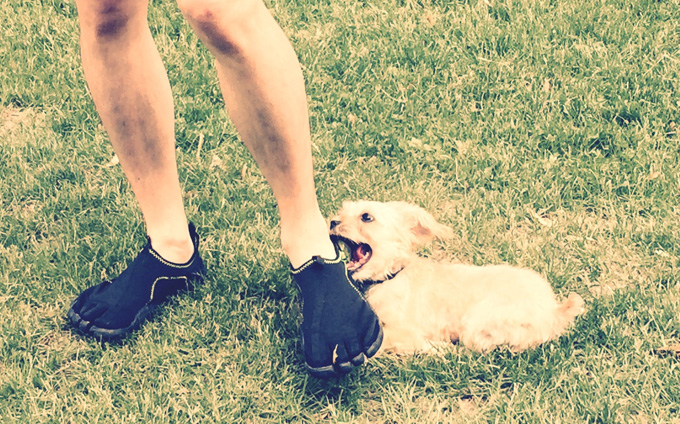
As an avid runner, I was in the midst of a 5 K run yesterday as I was about to pass a woman with a Miniature Pinscher on a leash walking toward me with her face in her phone texting (or Facebooking, or Snapchatting, etc., etc.). If she had bothered to look up from her phone, she could have seen from half a mile away if she actually cared to restrain her dog from attacking my ankles mid stride as I passed her. Since here eyes were not poised to look up from her phone anytime soon, I actually yelled, “On your left, restrain your dog!” having been there, done that far too many times with clueless people and their little dogs and knew what was to come.
Despite her looking up and seeing me with plenty of time to collect her dog, she did not, and once again, I had a seemingly rabid little dog attacking my ankles as I nearly tripped over the leash as I ran by. As a string of expletives were on the tip of my tongue to hurl that the woman, my self control thankfully won the day and I simply turned around and shot her a look of death. While she did not even bother to apologize, I am hoping that the fact that she could not maintain eye contact with me for more than a nanosecond got enough of the point across that she has learned from this experience and will not let it happen again, I am afraid that I am not optimistic.
Let me be clear that as the former owner of a Yorkie, this is not a rant against little dogs. It is instead a rant against the lazy, ignorant, and discourteous fools that all too often adopt these little dogs without the faintest clue of how to raise them or seek out help to assist them. All they see is a cute little thing that looks like a little stuffed animal that they think will live on their lap and travel in their purse. They have no idea that many of these little dogs ( Terriers, Min Pins, Chihuahuas, etc.) if not properly trained and socialized can be very territorial and have a bad case of “little man syndrome” not unlike that of Scooby Doo’s Nephew, Scrappy Doo.
I can empathize with people who get themselves into situations that they do not understand. I can forgive them for having no clue how to train little dogs and even for failing to seek professional help when they clearly are out of their league. What I CANNOT forgive is the inability to recognize that your dog is going to attack my ankles as I run past him and do nothing to reign in the length of the leash to prevent it, or have your face so cluelessly buried in your phone that you fail to even know that I am approaching (not to mention all of the other surroundings walkers should be aware of for safety’s sake!
That is all. I feel much better!
Dr. Roger Welton is a practicing veterinarian and well regarded media personality throughout a number of subjects and platforms. In addition to being passionate about integrative veterinary medicine for which he is a nationally renowned expert, Dr. Welton was also an accomplished college lacrosse player and remains to this day very involved in the sport. He is president of Maybeck Animal Hospital , runs the successful veterinary/animal health blogs Web-DVM and Dr. Roger’s Holistic Veterinary Care, and fulfills his passion for lacrosse through his lacrosse and sport blog, The Creator’s Game.
Allergic Tracheitis -The Ultimate Tickle Cough In Dogs
 This could affect any breed of dog but most commonly occurs with our little guys. They present with a chronic (often hacking cough) yet their temperature is normal, their lymph nodes in their neck are normal size, and their lungs are clear. Many of these dogs also experience which is commonly referred to as a “reverse sneeze,” although the nerd in me always gets annoyed to hear that terminology because it make zero physiological and anatomical sense 9it is actually called a nasopharynngeal spasm…like I said, NERD). Chest x-rays are usually normal in these little canine patients as well.
Anyway, I cannot find anything wrong with your coughing, gagging dog, so it must be your imagination. Just kidding, I actually completely believe you; especially because you just showed me evidence of it on your smart phone (technology is wonderful!) video.
The condition is usually undetectable because the inflammation lies within a thick, cartilaginous structure called the trachea, the main airway that connects the air passage opening of the back of the throat (called the glottis) and the tubes that split to aerate each lung (called bronchi). This inflammation born of allergic stimulation creates an oft unbearable tickle when these poor little dogs breathe or get excited and set them off in spasmodic, hacking, sometimes gagging coughing spells. In other cases, the dogs just cough and/or “reverse sneeze” regularly.
As opposed to lower airway inflammation conditions where narrowing of the airways plays a role in cough or labored breathing, bronchodilators, aka, medications that widen the diameter of the airway, are often of little benefit. Therefore, treatment is aimed at reduction of inflammation within the upper airways. In severe cases, I will sometimes start the patient with an injection of a short acting steroid, such as dexamethasone sodium phosphate, while concurrently starting the patient on a safe and effective antihistamine for long term maintenance management, such as Zyrtec. In milder cases, I will often just start the patient on an antihistamine from the outset, boost with a short acting steroid only if results are lacking in within 1-2 weeks of therapy.
I strongly advise that any patient with inflammatory or allergic airway disease be maintained on veterinary grade omega-3-fatty acids for the anti-inflammatory action of this important supplement. This will often decrease in varying degrees, dependence on anti-histamine, steroids, or other ancillary pharmaceuticals for breathing comfort.
Dr. Roger Welton is a practicing veterinarian and well regarded media personality throughout a number of subjects and platforms. In addition to being passionate about integrative veterinary medicine for which he is a nationally renowned expert, Dr. Welton was also an accomplished college lacrosse player and remains to this day very involved in the sport. He is president of Maybeck Animal Hospital , runs the successful veterinary/animal health blogs Web-DVM and Dr. Roger’s Holistic Veterinary Care, and fulfills his passion for lacrosse through his lacrosse and sport blog, The Creator’s Game.
Brachycephalic Syndrome – The Bane Of The Pushed In Face Dog’s Existence!
 It is a common presentation. You can hear the dog enter the waiting room from the back treatment area as he/she grunts, coughs, and gags their way in the veterinary clinic. The mere act of walking from one point to another is excruciating as the dog struggles to get air. They are usually sweet, purchased for an exorbitant amount of money because of their demand driven by their cute, snub nosed faces. They often live what is becoming an inhumane existence where every breath is a struggle and the dog can barely go for a walk, let alone enjoy any real exercise.
We are talking about brachycephalic dogs breeds that include Pugs, English Bulldogs, Pekingese, and Shi Tzu dogs. Their increasing popularity has driven an explosion of puppy mill and back yard breeders that breed these dogs with no ethical breeding standards nor care for the suffering of the dogs they produce. They have no reason to, as people keep flocking to purchase these dogs for $2000-$3000 or more with no end in sight.
The result of this unscrupulous breeding is an upper airway system that is obstructed throughout the entirety of the upper respiratory tract that has lead to an actual branded disease complex known as Brachycephalic Syndrome. This disease has the following major inherited comformational components:
- Stenotic (narrowed) nares (nostriils)
- In some cases, the nostrils are so narrow that they appear as mere slits in the front of the nose.
- A surgical procedure that widens the openings is available that provides mild relief but often not overly impression with so many other components to Brachycephalic Syndrome.
- Shortened, tortuous sinuses
- With the sinuses having been bred down to a tiny snub nose that is crammed into the face, the sinuses of these breeds are shortened and laden with drastic angles. This passage of air as a result becomes turbulent and uncomfortable, often producing a wheezy sound that propagates air very poorly.
- There is no treatment for this.
- Elongated soft palate
- Behind the hard palate in the middle of the roof of the mouth, resides the soft palate which is a fat pad of soft tissue in the back of the throat. Brachycephalic breeds commonly have an elongated soft palate that protrudes to the extent that it flaps around the throat and partially obstructs the glottis, the opening that allows inhaled air to propagate into the main airway to the lungs called the trachea. It is not uncommon for this excess of soft tissue to lead asphyxiating episodes where the dog simply cannot take in air.
- A surgical procedure called a soft palate resection where a section of excess soft tissue is surgically removed from the soft palate can provide some relief for this condition.
- Stenotic (narrowed) trachea
- The trachea is the main airway that delivers inhaled air to the lungs. Many brachycephalic dog breeds have a trachea that is narrowed. It is not uncommon to see a a dog trying to breath through a trachea of a size that would be more appropriate for that of a dog half its size. Picture breathing through a straw and that will give an idea of what this may feel like.
- A surgical procedure where a synthetic stent can be placed to widen the diameter of the the trachea can offer relief to some of these dogs, but the surgery is costly and carries a fairly substantial degree of risk.
So the next time you see one of these dogs grunting, snorting, and hacking along, do not view these noises as cute little breed quirks, but instead human created anatomical characteristics that make the very act of breathing – something most of use take for granted – a constant struggle for most of its life. Do not laugh when the dog snores so loud it could wake a hibernating bear, and wakes in mid sleep gasping for air.
Brachycephalic Syndrome is a tragedy and failure of humanity and veterinarians are left scrambling to do our best to clean of the mess. Making matters worse, for some reason, many owners of these dogs have the impression that the breed standard for these dogs in addition to struggling to breath is that they are supposed to be morbidly obese. Obesity in turn multiplies the negative effects of Brachycephalic Syndrome and multiplies them at least 10 fold and more than 70% of these dogs are kept severely overweight.
The situation has reached a point where in the UK, a growing group of veterinarians organized by Vet Help Direct is using the power of petition to pressure breed clubs and legislators to act to mandate reasonable breeding standards for these dog breeds at the minimum with even calls to cease breeding them altogether.
Dr. Roger Welton is a practicing veterinarian and well regarded media personality throughout a number of subjects and platforms. In addition to being passionate about integrative veterinary medicine for which he is a nationally renowned expert, Dr. Welton was also an accomplished college lacrosse player and remains to this day very involved in the sport. He is president of Maybeck Animal Hospital , runs the successful veterinary/animal health blogs Web-DVM and Dr. Roger’s Holistic Veterinary Care, and fulfills his passion for lacrosse through his lacrosse and sport blog, The Creator’s Game.
The Day I Was A Client At My Own Animal Hospital
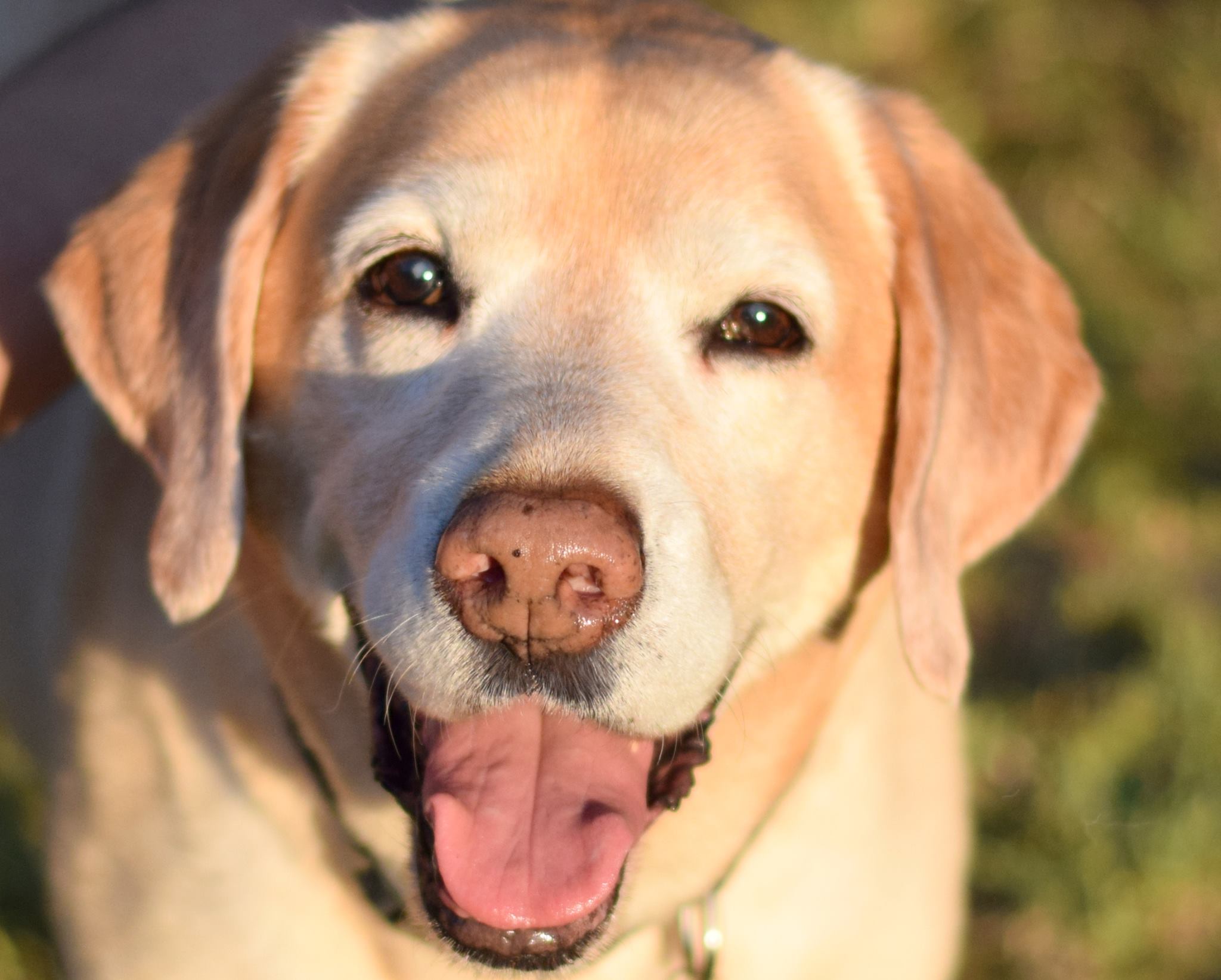 I received a call at 6:30 AM from my mother-in-law while I was at a veterinary conference in Destin, Florida, a 6 ½ hour drive away from home. She was staying at my house watching my kids and pets while my wife and I were away. She was very concerned that my 11 year old Labrador Retriever, Bernie, awoke unable to get up from a laying position, seemingly paralyzed in the rear limbs. Having a recent past history of two knee replacements and back surgery herself, my mother in law was unable to attempt to lift Bernie and transport him anywhere.
With no available nearby family or friends to assist, I called my veterinary hospital to see if they could arrange transporting Bernie to the hospital for medical attention. They were were facing a very busy schedule that morning with several procedures and appointments that required a fully staffed team…It would take two medical team members to transport my dog from my house, a 30 minute drive away. The solution they came up with to get Bernie while minimizing an interruption in their important medical work flow was to contact a medical team members whose day off it was to come clock in and accompany an on service medical team member to transport my dog.
In less than one hour, my dog had been transported to the clinic, examined, and I was given a very relieving report. Bernie’s symptoms had generally reduced and he was ambulatory. Dr. Fogelberg, my associate veterinarian who is an experienced and highly competent veterinarian, determined that Bernie has some back pain from chromic intervertebral disc disease in his back that likely resulted in temporary motor deficits in his hind legs. He recommended rest, anti-inflammatory medication, laser therapy, and to have Bernie boarded at the hospital kennel for the duration of my trip in case he had another flare.
Bernie is an important part of the fabric of my life and that of my family and we love him beyond words. Under normal circumstances, when my pets have medical concerns, I would normally examine them myself and lead my team to help me engage a diagnostic work up and treatment.
With my wife and I being out of town, for the first time, I was relegated to being essentially a client of my own veterinary hospital. After their decisive action, I was grateful to my medical team beyond words. Once the stress of the crisis that was thankfully averted had passed, it occurred to me that my medical team works through crises multiple times a day on behalf of pets and the families that adore them.
While I always hold my medical team in very high regard, having been the beneficiary of their compassion and their competence gave me a renewed perspective on the importance of what we do for a living; and how fortunate I am to have such an impressive team to fulfill our purpose, “Making the world a better place, one pet at a time.”
Dr. Roger Welton is a practicing veterinarian and well regarded media personality through a number of subjects and platforms. In addition to being passionate about integrative veterinary medicine for which he is a nationally renowned expert, Dr. Welton was also an accomplished college lacrosse player and remains to this day very involved in the sport. He is president of Maybeck Animal Hospital , runs the successful veterinary/animal health blogs Web-DVM and Dr. Roger’s Holistic Veterinary Care, and fulfills his passion for lacrosse through his lacrosse and sport blog, The Creator’s Game.
Dog’s Or Cat’s Ears Look Infected? Its Not Mites! Really!
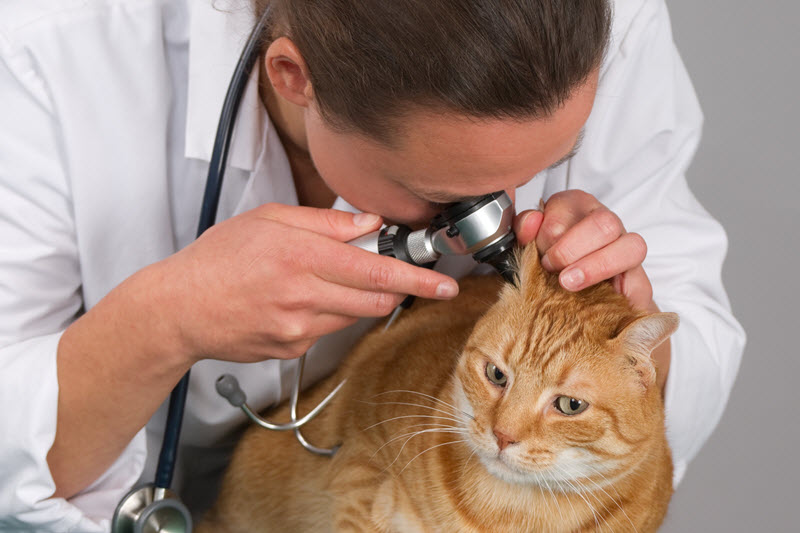 I see about 3-5 cases of ear infections per day in veterinary practice. It is indeed one of the most common ailments that I treat in dogs and cats. Of those 3-5 cases per day that I treat, about 30% of the pet owners bring the pet in firmly believing that their pet is infected with ear mites. According to Dr. Google, that is what it must be. Often they come to me “knowing” the diagnosis but just need to get through the formality of the visit to get the good treatment that big pharma only reserves for veterinarians; because the OTC ear mite drops they got at the pet store did not clear up the infection.
In fact, my inspiration for writing this article this evening was the result of a call from a client who asked me to dispense medication for his cat’s case of ear mites. I relayed the message through one of my technicians that I cannot just dispense medication without examining the patient, checking an ear swab under the microscope to confirm the nature of the infection (in order to choose the appropriate treatment to resolve it), and to inspect the condition of the ear drum to make certain topical therapy is even safe. The owner dismissed my recommendation and instead came in to purchase Revolution because in addition to killing fleas, it also successfully treats mites which his strictly indoor, pampered house cat must have.
With regard to treating ear mites, Dr. Google was in fact correct that Revolution can be an effective treatment for ear mites in addition to its other valuable preventive activities…if only the cat actually HAD mites, all would be well. But alas, this owner will soon find out that his cat does not have ear mites but instead has a far more common case of a bacterial or yeast infection. I suspect I will be seeing him and his cat some time early next week.
Let us return to the 3-5 cases of ear infections I see per day. Of all those ear infections, perhaps 2-3 PER YEAR actually turn out to be a case of ear mites. In those few cases of ear mites that I confirm, it is usually seen in pet store or backyard breeder bought kittens and puppies or in strays. It is almost never a well cared for adult dog or cat that presents with ear mites.
Seriously, I do this for a living, I did not just sleep at Holiday Inn Express last night. 🙂
Dr. Roger Welton is a practicing veterinarian and well regarded media personality through a number of subjects and platforms. In addition to being passionate about integrative veterinary medicine for which he is a nationally renowned expert, Dr. Welton was also an accomplished college lacrosse player and remains to this day very involved in the sport. He is president of Maybeck Animal Hospital , runs the successful veterinary/animal health blogs Web-DVM and Dr. Roger’s Holistic Veterinary Care, and fulfills his passion for lacrosse through his lacrosse and sport blog, The Creator’s Game.
Hip dysplasia – do OFA certified parents mean your puppy will have good hips?
 As you know, I am a huge proponent of adopting dogs from shelters and rescues. Until the shelters are empty, it makes no sense to buy a dog from someone producing puppies. That said, we do need a few people to breed, properly, in order to maintain the breeds we know and love. Further, some people want a specific niche breed that cannot be found (easily) in a rescue. With so many crooked breeders out there (the majority, sadly), we veterinarians have told clients one thing to look for (particularly large breed dogs) is the breeder getting both parents OFA certified for good hips. (Many bad breeders do this too, nowadays, but it’s a start). If the parents have good hips and are OFA certified, then your puppy won’t have hip trouble later in life, right?
Nope!
Hip dysplasia is a complicated, multifactorial disease. It’s defined as a looseness in the joint, causing the junction of the femur (thigh bone) and the pelvis to wobble and be unstable. It’s a ball-and-socket joint (think 8th grade biology) with the head of the femur as the ball, and the pelvis, or acetabulum, as the socket. The socket needs to be deep enough to cover the ball without it slipping around. If the socket is shallow, we have looseness, or instability. This instability leads to bone-on-bone rubbing, and that is where the pain comes in. This friction erodes the cartilage that normally stays between the two bones to provide cushioning. Damaged cartilage means more friction, and major pain! The destruction of the cartilage leads to arthritis – inflammation of the joint.
One study showed that if two parents have good hips by OFA standards, 1 in 4 of the puppies may still develop hip dysplasia. Pretty sucky odds. Turns out this disease involves many many factors. Genetics certainly plays a big role, but nutrition, body weight, environment, muscle mass, and even hormones all may play a role as well.
OFA stands for Orthopedic Foundation for Animals. To get the certification, a dog must be at least 2 years of age, and have x-rays performed under sedation or, ideally, general anesthesia. These x-rays are submitted to the OFA, where three veterinarians who are spets in radiology read the x-rays independently. Normal hips are rated Fair, Good, or Excellent. Hips with signs of dysplasia are rates Mild, Moderate, or Severe. Here’s their website on how they average the 3 opinions. Evaluating the hip joint is rather subjective, and often the three spets may not agree.
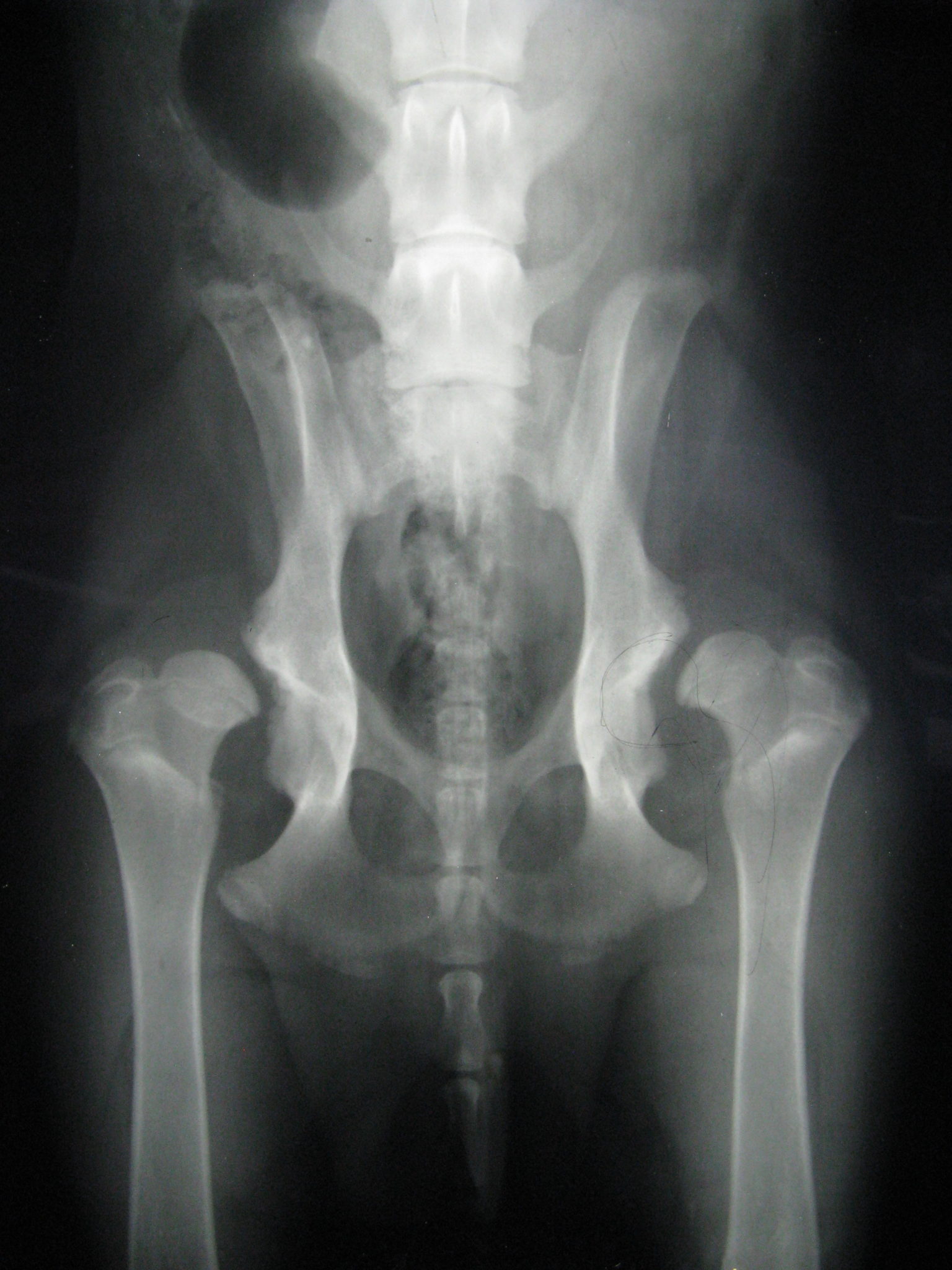
OK, so if your dog has good hips, what’s the problem? A study was published in the Journal of the American Veterinary Medical Association that shows the widely accepted OFA ratings may not be as accurate as we’d like. One thing – the positioning of the x-rays may not be ideal for detecting laxity, or early dysplasia, in the hips. Having a dog lie on his back and pulling the hips straight out and down mimics how a human stands, but it is obviously not a natural position for the dog. Pulling the legs this way might actually push the femur (thigh bone) into the hip socket, masking any dysplasia!
There is another means of assessing dogs’ hips, called Penn-HIP. The x-rays are taken in a more natural position, and instead of human opinion, which can vary widely and be subjective, Penn-HIP offers a mathematical way to measure any looseness in the join. This looseness is assigned a number, known as the distraction index. Here’s their explanation with pictures. Perfect hips have an index of 0, meaning no deviation from ideal. Any hip with a distraction index of 0.3 or greater indicates instability in the joint. These hips are statistically likely to develop arthritis (the pain from hip dysplasia) later in life. Penn-HIP do not offer certifications like OFA, just an evaluation.
The paper in JAVMA compared OFA and Penn-HIP, and found that many hips that were passed by OFA actually had laxity, indicated by a high distraction index, determined by Penn-HIP! Of the hips that the OFA found dysplasia or laxity on, Penn-HIP gave all of them >0.3 index. So if the dog has hip dysplasia found by OFA, Penn-HIP agreed 100%.
However, half of the dogs that earned an OFA score of Excellent had a distraction index >0.3 on Penn-HIP! Over 80% of the Good, and over 90% of the Fair hips on OFA had a distraction index >0.3 on Penn-HIP, meaning hip dysplasia! This tells us that some of the subtle dysplasia or laxity that a human can’t see in one position can be detected in the other.
Is OFA bad? Not at all! They offer certifications, and Penn-HIP does not, so it is something. Also, any veterinarian can take OFA quality films on a dog. To take films for Penn-HIP, veterinarians must take a class from the company and be certified, so that is certainly a limiting factor. Not every vet can use the Penn-HIP system for that reason. OFA can give us a general idea about the parents’ hips (remember, it picked out the really bad ones easily!), but don’t put a ton of weight in it if they say they are great.
So, given all the factors in addition to genetics that play a role in the development of hip dysplasia, and the low sensitivity of OFA films, how sure are you that a puppy from OFA certified parents will have good hips? We can do our best, but there are still many things beyond our control. Your best bet – keep your dog at an ideal weight, using portion control and moderate exercise, and feed a large breed puppy food to your large breed puppy.
Web-DVM guest blogger Dr. Karen Louis is a practicing small animal veterinarian. See more of her articles at her blog at VetChick.com
My dog just ate ______! How to make your dog vomit
 If your dog ate something you know is toxic, what do you do? Making him vomit is in many cases the best next step. Always best to call your veterinarian and make sure. There are some things that should not be vomited up, and also some dogs who are poor candidates for vomiting. Also, if the item in question was consumed more than 90 minutes ago, inducing vomit may not be beneficial.
Making a dog vomit is not without risk. It is a violent activity, and some dogs can inadvertently inhale some of the vomitous into their lungs, resulting in a type of pneumonia called “aspiration” pneumonia.
The most common items dogs eat that we veterinarians get asked about are chocolate, sugar free gum (xylitol), raisins, and food items from the trash. Vomiting is a good idea for these! Here’s a list of items and circumstances where you should most likely notinduce vomiting:
- Anything with bones in it. Small bones, when vomited, can potentially perforate the esophagus – bad news!
- Gasoline, kerosene, bleach or drain cleaner. These are very caustic and irritating, and can do more damage to the esophagus if they go back up it via vomiting.
- The item was consumed hours ago. It’s left the stomach already, so the vomit ship has sailed.
- If your pet is mentally “off”, or has a history of lung or esophageal disease, do not induce vomiting.
- Brachycephalic breeds (smooshy-faces, like pugs, pekingese, or boston terriers) run higher risk of aspiration, so check with your vet before inducing vomit.
Bottom line – if you are unsure, ask your veterinarian. If your veterinarian is closed, contact your nearest emergency clinic, or the National Animal Poison Control hotline (there is a fee for this).
But, if your healthy happy lab got into the dark chocolate covered raisins, making him vomit is the first step. Hydrogen peroxide works very well as an inducer. A new, unopened bottle of 3% hydrogen peroxide will work the best. Does every dog vomit from it? Nope! Nothing is guaranteed in life, but this is most likely to work. For cats, peroxide does not cause vomiting, and only a veterinarian can induce vomiting in cats. So, this article is about dogs only. Cats just need to go to the veterinarian ASAP. Thankfully, cats rarely eat the crazy things dogs do.
Do not use anything other than 3% hydrogen peroxide. Do not use salt. Do not use syrup of ipecac. Do not use any other idea you may have found online.
If you happen to have syringes at home without needles attached, they may be used. Otherwise, a turkey baster may work as well. Squirt the correct amount of hydrogen peroxide into your dog’s cheek, giving him time to swallow. Yes it will foam. And yes it tastes bad. (Sorry dude, you’re the one who had to get into the trash!)
Below is a chart of how much hydrogen peroxide to administer to your dog based on your dog’s approximate weight.
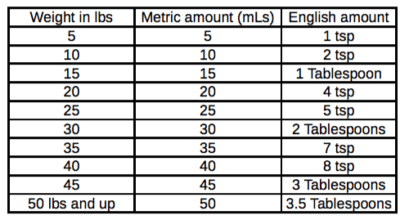
After giving the peroxide, allow 10-15 minutes for vomit. I’d suggest going outside if the weather is at all decent. And watch the dog to see what comes up! Also, some dogs will eat vomit (hey, they eat poop, so why not?) so monitor your dog to make sure the item you’re working so hard to remove from his system does not get re-consumed. It’s always good to examine what comes out to get an idea of how much might still be in the dog.
If 15 minutes go by and your dog has not vomited, repeat the dose of peroxide. You may only repeat the dose one time. Still no vomit? Time to go to the vet. Besides, dogs love to vomit in the car. (Bring some towels just in case).
In many cases, vomiting alone is sufficient, particularly when it’s right after the ingestion. With other toxins, vomit is the first step, but a medication called activated charcoal needs to be administered by a veterinarian. This will absorb the toxins that remain in the dog and stop them from causing harm to organs like the liver and the kidney. Depending on the toxin and the amount consumed (and vomited) some dogs may require blood tests or even hospitalization.
And finally, if you do end up going to the veterinarian, bring the bag, wrapper, or container of whatever your dog ate with you. Knowing precisely what your dog ate will help the veterinarian know which treatments are needed, and which are not.
Web-DVM guest blogger Dr. Karen Louis is a practicing small animal veterinarian. See more of her articles at her blog at VetChick.com

Keep your pets safe this holiday season!
The holiday season is right around the corner starting with Halloween (yes, in my home, we consider Halloween a holiday!). It is both a joyous and busy time and it can be easy to overlook certain...

Help for nervous/anxious dogs
There seems to be a growing number of excessively nervous, often skittish dogs. This can range from anxieties, such as noise or storm anxiety, anxiousness about being separated from pet parents,...
Bird flu is infecting cats and cases are rising – What you need to know!
H5N1 Avian Influenza is causing far more trouble than just just high egg prices. The bird flu has successfully jumped species now able to infect cats and people. Although the ability to infect...

Read Dr. Roger’s Latest Book!

 Be Healthy & Fit With Celebrity Trainer Steve Jordan
- The New Measure of a Life Well Lived: Why Health Span Matters More Than Longevity
- The Wealth Spark: Igniting Your Path To Abundance and Success
- Bright Line Eating with New York Times best selling author Dr. Susan Peirce Thompson
- Maximizing Your Workout Time: Efficiency Tips from Westwood Private Fitness
- How to Transform Your Dad Bod: Insights from the Fit Father Project – New Podcast Episode Out Now!