Check Out Pets Podcasts at Blog Talk Radio with Roger Welton DVM on BlogTalkRadio
Dog or Cat Having a Tumor Removed? Don’t Make the Mistake of Refusing to Send it off for Analysis.

I diagnose tumors almost daily, some which I determine to likely be benign (not cancerous), some which I determine to likely be malignant (cancerous). For cases that I recommend surgical removal of the tumor, as I hand the client the treatment plan (which also itemizes cost), I am commonly asked to not send it off to the lab for analysis as a cost saving measure. Although saving cost is the main drive for this request, the client commonly rationalizes that if it came back cancer, there is nothing that can be done about it anyway, right? While there may be some merit to this sentiment in cases of highly aggressively malignant cancers, in most cases, the pet owner that declines the biopsy analysis usually lives to regret it.
Here are the itemized reasons why I would recommend sending off any tumor that is surgically removed from your dog’s or cat’s body:
1.) Potential Peace of Mind – If the tumor comes back reported completely excised and it is either benign or a minimally aggressive cancer, the prognosis is good to excellent. The case is put to rest, and the owner may live in peace, not having to walk on egg shells with the fear that a cancer may spread, grow back, or resurface elsewhere in the body.
2.) In many cases when tumors are removed and determined to be cancer, follow up treatment may significant prevent the recurrence of the cancer, or at least provide significant remission period with minimal side effects.
3.) Some dogs are tumor prone, but the tumors they form may not be related. In the case of tumors found to be benign or minimally aggressive cancer, future tumors may not be related. Without knowing the identity of past surgically removed tumors, it is impossible to even hypothesize whether there is a correlation. Thus, removal of future new tumors may be justified, but on the other hand, they may not be.
4.) If a tumor is determined to be aggressively malignant and the prognosis is poor to grave, the pet owner may know this to prepare for what is to come, which organ systems will be the most likely to be compromised first, and how they may monitor their furry companion to know when metastasis (spread of a primary cancer to other regions of the body and organ systems) may be occurring. As a team, the veterinarian and the pet owner can better monitor the patient and predict when it is time to step in to engage in palliative treatment to possibly slow the spread of the cancer or at least maintain comfort and quality of life for as long as possible. We may also better know when it is time to elect humane euthanasia.
I will leave you with a recent example, the very case that prompted me to write this post. An 8 year old female Spitz mix had a tumor removed from her upper arm at another veterinarian in town. She had declined the lab analysis of the mass, using the rationale that I discussed earlier in this post.
After a new tumor formed 8 months after the original surgery somewhat further down the arm, the owner brought the dog to see me, and through fine needle aspirate and microscopic analysis of the aspirate smear on a slide, it was determined that the mass was a soft tissue sarcoma. These types of tumors are malignant and locally destructive, but more often than not, are curative with surgery, if complete surgical resection is anatomically feasible.
The problem was that without previous surgical margin analysis, nor the identity of the previous mass being known, it could not be known if there was a relation between the previous tumor and this new one.
As such, I had to treat the scar from the previous surgery as a potential source of malignant cells, and extend my incision to resect not only the tumor, but that region as well. At 8 plus years of age, I determined that risking a more aggressive surgery than necessary would be a better option than being less aggressive, and potentially putting the dog through a second surgery.
In the end, I resected the mass and previous surgery scar site successfully with clean margins. The old scar tissue was free of cancer cells. The prognosis is good of this dog, but in the end, it seems that the old tumor and this new one were not related. I ultimately did not need to get as aggressive as I did. The end result is still good, but had the owner had the previous mass sent off for analysis, she may have saved significant cost and unnecessary discomfort for her dog.
Dr. Roger Welton is the President of Maybeck Animal Hospital in West Melbourne, FL, Chief Editor of the Veterinary Advice and Information Website, Web-DVM, and founder/CEO of Dr. Roger’s Holistic Veterinary Care.
Calm Stressed Out Dogs and Cats with Pheromone Therapy

photocredit: https://www.pinterest.com/soozq418/posts/
Just like people, not all dogs and cats are naturally laid back and as calm as cucumbers. For some dogs and cats, certain events trigger stress, such as fireworks, storms, travel in the car or airplane, or trips to the veterinarian or groomer. For others, life itself is stressful and they suffer from general anxiety, sometimes resulting in behavior problems, such as tendencies to be destructive, over groom, or inappropriately void in the home.
Very often, our traditional solutions to these issues fall short of truly helping these patients. Valium, Xanax, Acepromazine, and other tranquilizers often have inconsistent effects on dogs and cats, in some cases even worsening their stress manifestations, as the disorientation caused by tranquilization leaves them more uneasy and/or queasy. Other times when they do work, the patient often becomes refractory to their benefit after just a few doses.
An exciting product line from cutting edge veterinary pharmaceutical, Ceva, offers us a unique, innovative, and side effect free solution for anxious or stressed pets, whether the anxiety is chronic or episodal in nature, utilizing pheromone therapy. Pheromones are biochemicals secreted by the glands of animals (including humans) that are detected outside the host body by other members of the same species by scent. Pheromones may transmit emotional ques during times of emotion, which may represent calmness or contentment, aggression, or fear.
In the case of the calming product lines that Ceva offers, Adaptil for dogs and Feliway for cats, they are utilizing pheromones that have a calming effect on each species. Adaptil mimics a pheromone that the lactating canine female transmits that serves to calm and soothe her puppies. Feliway mimics the facial pheromone secreted by cats that they use to mark their territory as safe and secure. These products collectively come in plug in diffusers that cover 700-800 square feet, sprays for bedding and bandanas, and collars.
As an example of how these products are used, as my veterinary hospital is about to break ground on a state of the art boarding kennel, we are about to start Ceva’s fear free clinic and kennel kit. In the canine and feline boarding areas, there will be plugin Adaptil and Feliway diffusers, respectively, plugged in at all times. Since the sprays last 6-8 hours, in the morning, we will spray individual bandanas with Adaptil and spray small stuffed toys called “nuzzle buddies” with Feliway and place them in sealable plastic bags. When dogs enter the clinic, if they seem particularly anxious, we will tie an Adaptil sprayed bandana around their necks to wear for the duration of the visit. For all cats (it is a rare cat that is not stressed by a vet visit even if they do not necessarily show it), a nuzzle buddy will be place in their carrier upon arrival.
One of the beauties of working with dogs and cats is that there is no placebo effect…treatments either work, or they do not. Unlike people, animals are not going to convince themselves of a product’s efficacy merely because the want to believe in it. I am moving forward with my hospital’s fear free clinic program because pheromone therapy works, as evidenced not only clearly by the data, but by countless anecdotal reports from veterinary colleagues that tout its efficacy. Clinically, I have had many successful outcomes recommending pheromone therapy.
Dr. Roger Welton is the President of Maybeck Animal Hospital in West Melbourne, FL, Chief Editor of the Veterinary Advice and Information Website, Web-DVM, and founder/CEO of Dr. Roger’s Holistic Veterinary Care.
The Number One Act Of Malpractice in Veterinary Medicine
Check Out Pets Podcasts at Blog Talk Radio with Roger Welton DVM on BlogTalkRadio
This will probably draw the ire of some fellow veterinarians, but it must be stated in this day and age of veterinary medicine. At time when dental x-ray has never been more affordable to veterinary practitioner and client, performing dental extractions without dental x-ray is an unethical and unacceptable standard of care. Failing to take a dental x-ray prior to performing oral surgery to extract a tooth reduces the precision of the procedure, while failing to take an x-ray post extraction leaves the potential for root fragments to be left behind; leaving a source of ongoing chronic pain in patients with no voice that are left to suffer silently indefinitely.
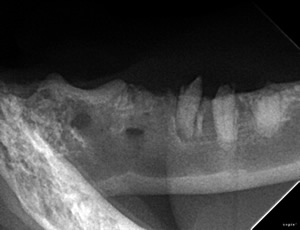 Retained root fragments on the lower jaw of a cat following full mouth extractions at another veterinary hospital
No matter how proficient a veterinarian may be at oral surgery, there is not one single veterinarian that can claim to successfully extract tooth roots in their entirety, 100% of the time. Any veterinarian that does make that claim, most likely does not have dental x-ray capability. Even when a dental extraction appears to have grossly removed tooth roots in their entirely, I occasionally see dental fragments left behind nonetheless, fragments that without a follow up x-ray would otherwise remain to indefinitely cause chronic pain and be a future abscess hazard.
Case in point, a few weeks ago, we had recommended a dental on a canine patient new to our hospital. The owners of the dog told us that their dog had had a dental a few years prior and had several teeth extracted. It is standard protocol in my hospital for patients who have had prior extractions at another clinic, for us to x-ray past extraction sites to make certain no roots were retained. In this case, EVERY extraction site (8 in total) had a substantial retained root fragment, meaning that this poor creature was living with a virtual mouth full of pain for the past few years since that dentistry.
Dental x-ray is an affordable diagnostic imaging tool for veterinarians, which is then likewise affordable for most pet owners willing to pursue dentistry for their pets (full mouth x-rays in my hospital cost $80). Any veterinarian not willing to be equipped with dental x-ray should not be performing dental extractions, and I have no reservations about stating that any vet performing extractions without the benefit of dental x-ray is committing an act of malpractice.
Likewise, when dentistry is recommended, pet owners should always ask if a veterinarian is equipped with dental x-ray prior to booking any dentistry procedure. Not only does dental x-ray find painful dental lesions below the gum line (40% of dental lesions in cats and 24% of dental lesions in dogs occur beneath below the gum line), not visible to the eye or found with routine probing, but it enables visualization of tooth root alignment to minimize collateral damage to adjacent healthy teeth and minimize loss of healthy bone during an extraction. Most importantly, dental x-ray ensures that painful tooth root fragments are not left behind.
Dr. Roger Welton is the President of Maybeck Animal Hospital in West Melbourne, FL, Chief Editor of the Veterinary Advice and Information Website, Web-DVM, and founder/CEO of Dr. Roger’s Holistic Veterinary Care.
The Troubling Aftermath Of Veterinary Misinformation – This Time Convenia

The latest veterinary/big pharma conspiracy tale has hit the internet and gained unsubstantiated credibility: the long acting injectable antibiotic Convenia is deadly to dogs and cats. Convenia was launched by Pfizer Animal Health (now Zoetis) in 2008 as the only antibiotic of its kind: a one-time injection that exerts its antibacterial effects for up to 14 days, effectively eliminating the need for owners to have to orally medicate cats and dogs sick with infections. In a class of antibiotics called third generation cephalosporins, effective against bacteria that commonly cause skin infections, upper respiratory infections, and urinary bladder infections, Convenia also had impressive FDA safety data.
For more on Convenia, its use and safety, and where the rumor of its danger likely emanated from, please see my previous article on this topic below:
More Veterinary Medical Misinformation – This Time Convenia
About a month ago, a client came in with a cat she had adopted from a shelter, which was sick with an upper respiratory infection, but still eating and drinking. I advised we treat the cat with a Convenia injection which she declined believing the internet rhetoric about the extreme dangers of Convenia over my overwhelmingly positive experience with the product in the 7 years I have been using it. Since she insisted, I instead prescribed Clavamox, an older generation antibiotic that is generally safe, but can occasionally cause GI upset in certain feline patients.
By day 3 of treatment, this kitty began vomiting likely from the Clavamox, at which time, I advised the owner stop the Clavamox, bring him in for supportive care, and consider changing to Convenia…which she continued to decline. Thus, I then switched the cat to another oral antibiotic called Orbax. While he did not vomit up the Orbax, he still would not eat or drink, which prompted the owner to bring the cat back in.
At this point, I noted that the cat was now jaundiced, a yellow pallor noted on the skin and whites of the eyes commonly seen in cases of liver disease. A few diagnostics later, I diagnosed fatty liver syndrome, a common consequence in cats that stop eating for prolonged periods of time…cats are not well adapted to rapidly mobilizing body fat to meet their energy needs. The treatment for fatty liver is to feed the cat enough calories to overcome the negative energy balance…but with an anorexic cat, the only way to accomplish this is to surgically place a feeding tube to administer the feedings. Following feeding tube placement, two weeks of feedings, and several medications, the cat eventually did recover, but at considerable expense to the owner, and a great deal of stress to him…likely stemming from this owner’s refusal to allow me to administer Convenia because of her fear of the drug born of misinformation and sensationalism.
Just last week, I administered Convenia to a little dog with a skin infection over his knee. The dog had had Convenia in the past and the owner was unconcerned about it…in fact, she was thrilled with the opportunity to utilize the product, as her little dog is notoriously difficult to orally medicate. Within a few days of the injection, the owner had gone into a natural pet food and medicinal store in my area, where she was shopping for natural food. The clerk noticed her dog had a wound on his knee and asked what it was. She noted that it was an infection, but it was getting better every day, since her veterinarian has given him a Convenia injection. The clerk proceeded to tell my client that she should have never let me do that, as Convenia has a high chance of killing her dog. He mentioned liver failure specifically, despite the fact that Convenia is not metabolized at all by the liver and is eliminated from the body unchanged via the urine.
Past business hours and unable to speak with me, my client spent the rest of that evening in tears, not only in fear of what the Convenia would do to her dog, but also wondering why the veterinarian she trusted with the care of her dogs, would treat her dog with such a deadly drug. Once we spoke in the morning, I alleviated her fears by letting her know that not only is the FDA safety data on Convenia very good, but I have only had one minor side effect of a few days of lethargy in a cat questionably attributable to Convenia in 7 years of use, after thousands of injections.
I fear these cases are just the tip of the iceberg, as these things tend to gain traction very fast through social media and the non-medical pet industry cirlces (groomers, breeders, natural pet stores, etc.). If this misinformation reaches your neck of the woods, rest assured, Convenia is not the devil…it is an effective antibiotic that enables veterinarians to treat many manners of infection with just one injection and guarantees 100% treatment compliance.
Dr. Roger Welton is a practicing veterinarian and well regarded media personality throughout a number of subjects and platforms. In addition to being passionate about integrative veterinary medicine for which he is a nationally renowned expert, Dr. Welton was also an accomplished college lacrosse player and remains to this day very involved in the sport. He is president of Maybeck Animal Hospital , runs the successful veterinary/animal health blogs Web-DVM and Dr. Roger’s Holistic Veterinary Care, and fulfills his passion for lacrosse through his lacrosse and sport blog, The Creator’s Game.
More Veterinary Medical Misinformation – This Time Convenia
I am not exactly sure how this got started, but the long acting antibiotic Convenia is the latest veterinary medical sensational tale of conspiracy, cover up, and mass hysteria. It seems that is traces back to an actual veterinarian and author of a blog and website called catinfo.org, named Dr. Lisa Pierson, who wrote an article called “Convenia, Worth The Risk?” In this article, she writes of the dire consequences of adverse reaction to the antibiotic Convenia due to its long acting properties that keep it active in tissues for a prolonged period of time.
Convenia was launched by Pfizer Animal Health (now Zoetis) in 2008 as the only antibiotic of its kind: a one-time injection that exerts its antibacterial effects for up to 14 days, effectively eliminating the need for owners to have to orally medicate cats and dogs sick with infections. In a class of antibiotics called third generation cephalosporins, effective against bacteria that commonly cause skin infections, upper respiratory infections, and urinary bladder infections, Convenia also had impressive FDA safety data.
Most importantly, it promised veterinarians something was very infrequently get…100% owner compliance with treatment. Compliance is the veterinarian’s single greatest challenge to effectively managing disease in dogs and cats. Poor compliance is sometimes the fault of the owner, such as forgetting to administer a dose here or there, or my favorite, stopping treatment the moment the pet seems better, to stash the rest of the antibiotic left over to use another day should the pet become sick again (and they can avoid the inconvenience and expense of another vet visit). Compliance issues are often not the fault of the owner, with pets (namely cats and small dogs) that can be very difficult to orally medicate, or get GI upset from the administration of oral antibiotics.
Many veterinarians have used Convenia for over 7 years with not only excellent success rates due to a wide spectrum of antibacterial coverage and the elimination of owner compliance issues, but also very good safety. In all of these years, I have only seen one case of an adverse side effect that is possibly attributable to Convenia administration: a cat I was treating for cystitis that became a bit listless and lethargic for a couple of days after the injection. The question remained, however, was it from the Convenia, or was the cat simply lethargic from his disease and it took 3 days of Convenia therapy to begin to make him feel better? Since I could not prove it one way or the other, I put a “No Convenia” alert on this patient’s medical account, since I do not deem it wise to tempt fate and use it on him again.
For the 10’s of 1000’s of other injections I have administered since its inception, Convenia has proved very safe. My veterinary colleagues both locally and around the country have had a similar experience. In direct answer the question posed by the title of Dr. Pierson’s article, “Convenia, Is It Worth The Risk?” My answer with one having only experienced one non-serious side effect (and questionably linked to Convenia) noted in 7 plus years of use and thousands of injections administered, absolutely!
Reading on in Dr. Pierson’s website, I also see that she is against therapeutic diets, integral tools for the management of kidney failure, pancreatic, liver, and other chronic diseases in dogs and cats. This and several other articles I read on her website from my perspective significantly question her opinions and credibility.
However, the word is out, and the damage is done. Dr. Pierson being an actual veterinarian is making this particular wave of misinformation particularly difficult to refute, with an antibiotic that is particularly important in veterinary medicine for the management of infections in dogs and cats. To many pet owners, Convenia is now the devil, and more a tool of sickness and death that it is an important therapeutic tool for veterinary patients. Please see my next article below read about two troubling cases I recently managed that dealt with the aftermath of current unsubstantiated anti-Convenia sentiments.
The Troubling Aftermath Of Veterinary Misinformation – This Time Convenia
Dr. Roger Welton is the President of Maybeck Animal Hospital in West Melbourne, FL, Chief Editor of the Veterinary Advice and Information Website, Web-DVM, and founder/CEO of Dr. Roger’s Holistic Veterinary Care.
Simple And Safe Scent Management Of Stress For Dogs And Cats

photo credit: http://www.zipread.com/interesting/funny-scared-cats-compilation/
Just as many people suffer from overwhelming feelings of fear and anxiety, the same is true for many dogs and cats. Fearful demeanors can stem from inbreeding, past abuse, less than ideal socialization early in life, an inherited fearful disposition, or some or all of the above. Living in fear takes away from quality of life and can even lead to adverse health consequences. It can make visits to the groomer and veterinarian very unpleasant pets and pet parents, and even dangerous for care givers and pets alike. Fear biting is far more common than biting from aggression, with the majority of bites to groomers and veterinary health care providers come from fearful dogs and cats, not aggressive ones. With aggressive pets, you typically know where you stand from the outset, whereas fear biters can be particularly unpredictable and severe in their reactions.
The first mode of management I would advise for overanxious or fearful pets is pheromone fear management. Pheromones are biochemical messengers that are emitted from animals, emanating and providing a distinct scent that other animals pick up on. Pheromones will vary in scent, depending on an animal’s state of mind and hormone status. Thus, animals are capable of picking up on the stress or fear of other animals (including humans) through scent alone. Likewise, animals may also pick up on another animal’s feelings of contentment by scent.
The pharmaceutical, Ceva, has feline and canine products Feliway and Adaptil, respectively that provide calming pheromones for cats and dogs respectively that can be very effective in managing stress. These products come in plug in diffusers that cover 800 square feet of space, as well as sprays that last 8-12 hours. The sprays can be sprayed directly on a dog’s bandanna, for example, and tied around the neck in preparation for particularly stressful circumstances, including veterinary visits, groomer, thunderstorms, travel in the car, etc. For cats, a feline owner can do the same spraying what are called “nuzzle buddies” that are placed in the cat carriers with the kitty.
I have just order for my clinic, the Ceva fear free clinic kit. With it, we will be getting diffusers for both our cat and dog boarding areas. In addition, at the beginning of the day, we will spray nuzzle buddies and bandannas and store them in plastic sealable bags. As dogs and cats come in, the bandannas will be placed around a dog’s neck, and nuzzle buddies will be placed in each kitty’s carrier. Colleagues of mine that have done this have observed dramatic reduction of veterinary visit stress from even their most fearful patients.
Adaptil for dogs and Feliway for dogs can be purchased online or at most large retail pet stores. Ask your veterinarian if he/she has heard of the fear free clinic strategy and suggest it if he/she not. If they do not wish to engage in it or do not see the value in it, you have the opportunity to take matters into your own hands, as diffusers, sprays, and nuzzle buddies are available for owners to use in the manner discussed in this article.
This segues nicely into my next article, where I will be discussing another simple and safe method of minimizing stress in fearful dogs and cats.
Dr. Roger Welton is the President of Maybeck Animal Hospital in West Melbourne, FL, Chief Editor of the Veterinary Advice and Information Website, Web-DVM, and founder/CEO of Dr. Roger’s Holistic Veterinary Care.
Exciting Advances In Joint Chew Nutrition For Dogs
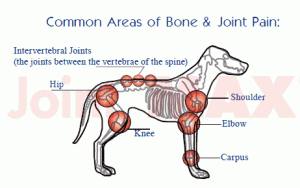
Most dog owners are familiar with joint supplement products that have glucosamine and chondroitin. The former is a connective tissue structural building unit, while the latter is specifically a cartilage structural building unit. Some have heard of MSM, a key sulfur source for the addition of sulfur to these compounds, a key component to conversion to their active “sulfated” forms. Some also have heard of the benefits of essential fatty acids for the natural increased production of joint fluid to increase joint lubrication, while naturally reducing inflammation by blocking biochemical inflammatory pathways.
Most canine owners have not, however, heard of the new and innovative powerful joint inflammation reducing properties of UC-II, boswellia serrata extract, astaxanthin, and bromelain. UC-II is a collagen extract that desensitizes the immune system and prevents immune attacks on joint, a key component to the progression of joint inflammation and osteoarthritis.
Boswellia serrata extract inhibits the pro-inflammatory enzymes COX-2 and LOX-5 that are key components to the joint inflammation cascade. Astaxanthin is a powerful antioxidant, 6000 more potent than Vitamin C and is also a COX-2 enzyme inhibitor. The potent antioxidant activity reduces oxidative stress on the body including the joints, while the inflammatory enzyme inhibition contributes to less inflammation. Finally, bromelain is an enzyme known for its anti-edema properties which effectively reduces swelling.
My animal hospital is currently working with the innovative pharmaceutical company, Ceva, to develop a joint chew product for dogs that combines the benefits of the well-established joint health supplement products discussed in the first paragraph, with these new cutting edge products to produce the most comprehensive and effective canine joint chew to date. This product will reduce doses and dependence on anti-inflammatory medications, serving to provide relief without the potential damage to the liver, kidneys, and gastrointestinal system these drugs can cause over time. We are only weeks away from product development, so stay tuned!
Dr. Roger Welton is the President of Maybeck Animal Hospital in West Melbourne, FL, Chief Editor of the Veterinary Advice and Information Website, Web-DVM, and founder/CEO of Dr. Roger’s Holistic Veterinary Care.
You Get What You Pay For Version 2
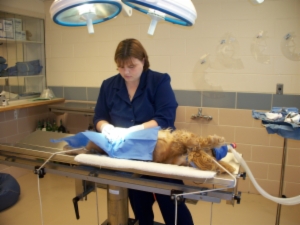
Pictured above – a state government subsidized discount spay/neuter facility actually advertising on their website one of their veterinarians exhibiting appalling sterile surgical technique with no sterile gown, cap, mask, and a surgical drape that is far too small…taken from http://www.mcohio.org/services/arc/spay_neuter_information.html
I titled this post as I did, because I have posted about this topic in the past with regard to the millennial growth of discount vaccine and spay/neuter clinics. I was confronted with the aftermath of two unbelievably troubling cases recently that from one of those types of clinics in my local area that I felt compelled to share with my national audience, as these types of places are now present just about everywhere.
The first case was a long-time client that who had traditionally always seeked out the best possible health care for her pets. Recent health issues of her own and expenses that subsequently arose from them had decreased her disposable income, and in the midst of that, she and her husband had a homeless Pit Bull puppy literally show up on their door step. Ever the compassionate couple, they took this dog in, but that last thing they needed was another household expense. Thus, rather than come my clinic for puppy wellness and spay as she normally would, she thought instead that she would give a local discount spay/neuter clinic a try.
Within two months of having been spayed, the dog was showing signs of estrus (commonly known as heat). When she returned to the clinic where she had the spay done suspicious that there still may be female parts inside her dog causing the heat cycle, the clinic charged her for an expensive hormonal test that could check for this. They told her that if the test came back conclusive that the dog still had female anatomy left inside her, they would refund the cost of the test and absorb the cost of going back in to get it right.
The test came back inconclusive from their interpretation of the test, so the owner was stuck with the bill for the test in addition to the “spay”, while her dog continued to go further into a full blown heat cycle. At this point, between the cost of the discount spay and the hormonal test, the owner had paid significantly more than she would have had she had the spay done at my hospital. What’s more, the dog was not only at this point showing the vaginal bleed and vaginal engorgement typical of heat cycle, the dog had swollen mammary glands that were secreting milk in preparation for pregnancy!
Having no further recourse with the discount clinic, the owner came to my hospital for help. Upon review of the history, examination of the dog, and interpretation of the hormonal test, both my associate doctor and I were nearly 100% convinced that the dog had female reproductive anatomy left in her abdomen, and advised exploratory surgery. Subsequent exploratory surgery revealed a full ovary present on the left side, half of an ovary present on the right side, and most of the body of the uterus left behind! It was one of the worst examples of incompetence and malpractice my associate and I had ever experienced in our careers.
In another similar case shortly thereafter, a local rescue group had used this same clinic to have a dog they were fostering spayed prior to adopting her out. One of my clients had adopted the dog well after the spay, so she had no say in where and by whom the dog would be spayed. Again, in comes the dog to see my associate showing clear signs of heat, despite showing a clear spay scar where a spay had supposedly been done. One hormonal work-up and an abdominal exploratory surgery later, the result was even more astonishing than the previous case I wrote of earlier…there dog was COMPLETELY intact! 100% of the entire female reproductive tract was intact. No one had even attempted to perform a spay on this dog.
Since clinics like this do not practice general medicine, their sole stream of revenue is cranking out as many spays and neuters as possible per day, while plugging every pet they see with every vaccine available, even if the dog or cat is not at either geographical or lifestyle risk for a given disease. They ignore American Animal Hospital Association (AAHA) and American Veterinary Medical Association (AVMA) vaccine reforms that have mandated individual protocols unique to the needs of the patient, while moving the frequency of several core vaccines to once every three years.
From a surgical perspective, they are known to perform spays and neuters on the cheap by not using endotracheal tubes to protect the airway while under anesthesia, do not use IV catheters to deliver induction agents or fluids during the procedure (not to mention delivering life-saving drugs in the event of anesthetic complications), simply put on sterile gloves rather than properly scrub their hands and gown up with cap and mask for surgery, and almost never use even rudimentary intraoperative monitoring equipment. In these aforementioned cases, they seemed to have clearly rushed through the first procedure to the extent that it was done incorrectly, the latter not having been performed at all aside from an abdominal incision.
As in most things in life, when it comes to pet surgery – including routine sterilization – and well care, you get what you pay for. Events like this notwithstanding, the clinic responsible for the cases I wrote of today, is currently breaking ground on its third location in my county…so apparently the word has not gotten out enough. With places like this spreading like a plague on veterinary medicine and the pets of the US, this lack of awareness seems to be a nationwide phenomenon. I wonder how much malpractice it will take for pet owners to finally see these places for what they really are.
Dr. Roger Welton is the President of Maybeck Animal Hospital in West Melbourne, FL, Chief Editor of the Veterinary Advice and Information Website, Web-DVM, and founder/CEO of Dr. Roger’s Holistic Veterinary Care.
Dangerous Canine Influenza Strain Plaguing Dogs In the Midwest…And Is Rapidly Spreading

An unknown respiratory virus has been plaguing dogs in the Midwest, predominantly in the greater Chicago area, but rapidly spreading. While at first it was a mystery, early data from isolated samples indicate that it is a strain of influenza, reminiscent of the Canine Influenza outbreak in 2007/2008. Early signs of illness include cough, lethargy, nasal discharge, loss of appetite, and fever. In many cases, signs progress to pneumonia, a condition that can be life threatening. Early data also indicates that this may be a mutated avian or horse flu that is particularly virulent to canines. There appears to be no risk to people at this time.
Merc k manufactures an effective vaccine against Canine Influenza, but it remains questionable as to how effective the vaccine will be with this current strain. Nonetheless, many Midwest kennels are mandating that all canine boarders be vaccinated prior to boarding.
Of particular concern, with Chicago airports being major air travel hubs, it seems almost imminent that this outbreak of canine influenza will reach every corner of the United States and even Canada and Europe. Thus, if your dog has a particularly high risk life style, such as frequent boarder, doggie daycare, bark park, regularly groomed, show dog, etc., be on the lookout for signs of disease. Early intervention with antibiotics and supportive care seem pivotal in avoiding dangerous consequences of this canine influenza outbreak.
Most of the information for this article was taken from local ABC news article and consultation with Chicago veterinarian Dr. David Gonsky, owner of West Loop Veterinary Care.
Dr. Roger Welton is the President of Maybeck Animal Hospital in West Melbourne, FL, Chief Editor of the Veterinary Advice and Information Website, Web-DVM, and founder/CEO of Dr. Roger’s Holistic Veterinary Care.
Purina Beneful Dog Food Lawsuit: Facts Versus Fiction

Much investigation needs to be done regarding the reported deaths of several dogs within weeks of being fed Beneful dog food in the last quarter of 2014, a vegetable rich diet produced by the Purina pet food company, before real conclusions can be drawn. The most common complaint is death by either kidney failure, liver failure, or a number of other varying causes of death. The question remains, are these allegations substantial, or are they more in line with the Trifexis controversy more driven by emotion and grief than by real science?
The lawsuit points toward two possible causes for disease in the food, the first being the common food additive propylene glycol, the second the presence of mycotoxins in the food (more on this below). The argument for propylene glycol being the culprit in these reported death cases is that it is chemically related to the very toxic ethylene glycol, the main ingredient in antifreeze, whose ingestion is a known cause for acute kidney failure in dogs. However, from both a chemical and medical perspective, although there are molecular similarities between ethylene glycol and propylene glycol, their chemical properties are vastly different. Propylene glycol is actually commonly food additive and even used as a nebulization agent evaporated into a mist and inhaled to deliver important medications to treat lung disease. I recall in food animal medicine in veterinary school, that we used to use propylene glycol to deliver medication to cattle and sheep via stomach tube. Thus, to implicate this FDA approved food additive as the cause for these cases of fatality, to me is more than just a stretch. I do think foresee that this assertion will hold up in court.
The report in the lawsuit of mycotoxins in the food as a cause of death, however, is worthy of consideration. Mycotoxins are toxins secreted from certain kinds of fungus, including molds. They have been implicated in many food recalls both in the human and pet food world. They are a real threat and have been historically known sources of contamination of food supplies leading to severe illness and death in some cases.
The reason I give this report credence is because of a case my veterinary clinic managed last year, of wonderfully gentle, affectionate white boxer named Dude who presented severely ill with clinical signs associated with liver disease. Through imaging, we diagnosed a mass on the liver, which at first we assumed was cancer. However, through ultrasound guided fine needle biopsy, instead of finding cancer, pathology reported chornic inflammation with strands of hyphae, structures associated with fungal organisms.
Fungal infections are historically very difficult to manage with anti-fungal therapy, some altogether unresponsive to treatment. What’s more, anti-fungal medications are potentially toxic to the liver, the very organ in Dude’s case that was infected with a fungus. Culture of another fine needle biopsy did not result in fungal growth, but this is not surprising, as fungal organisms can be notoriously difficult to grow in a laboratory setting. However, given the confirmation of fungal hyphae in the sample, combined with the fact that Dude improved on antifungal therapy for several weeks, there was no doubt among the doctors of my hospital that Dude had fungal hepatitis, something that neither my associate and I representing a combined 29 years of veterinary experience, had seen in our careers.
Dude tragically lost his battle with the disease, leaving both doctors and his grief stricken owner with big questions as to how and why Dude contracted a fungal infection of the liver, a very rare and low probability disease circumstance. It was in hind site that Dude’s owner learned of the Beneful law suit through a friend, realized she had fed Beneful to her dogs for a short period of time, beginning precisely three weeks before Dude started to show his signs of illness. Interestingly, her other dog refused to eat the food, while Dude although hesitant at first, ate it. The owner simply thought that the reluctance to eat the food may have been the fact that it was something new; but after several days of her other dog’s refusal to eat the food – something that was very unusual – she smelled the food in the bag and found it to smell rancid and off. This prompted her to return the food to the grocery store she bought it from, something she has proof of, since her debit card was credited back the amount of the cost of the food.
This particular owner is an intelligent and credible person, so I have no doubt about her assertions of the events that followed the feeding of Beneful, which she also has proof of with the return of food record and the time table associated with it and the onset of Dude’s clinical signs. It is unclear to me if she plans to join in the law suit, but it is clear that she is devastated in the knowledge that it is possible that what occurred to her dog was the result of a food she fed him.
I would not go so far as to state that this is definitive proof of Beneful’s implication in Dude’s cause of death and confirmation that all of the other claims in the law suit are accurate, but it does give me pause to consider the possibility as legitimate. The chain of events and timeline are simply too seemingly related to dismiss as coincidental.
At the same time, when a story like this breaks, there are bound to be sensational reports flooding a media that are all too ready to report them, however unfounded some may seem. I look at lady quoted in the NBC article from which I got a lot of information for this post who lost her dog to a rapid deterioration of health driven by diabetes that her veterinarian was at his wits end to successfully regulate. Although her veterinarian stated no link to pet food toxicity and diabetes, the owner maintains, “…I know in my heart the food was the cause.”
Statements like this are born more of a grief stricken owner seeking closure and a reason for why she lost her dog, than by scientific evidence provided by her veterinarian that opined differently. I would not belittle the gravity of a pet parents loss of a beloved furry family member and do not state this mockingly, but knowing in one’s heart is hardly scientific proof of a link to the food as a cause of death, and certainly not proof that will stand up in court. On the other hand, Dude’s owner seems to have a legitimate claim to a link between the feeding Beneful and what occurred to her dog. I have read of many other credible claims that deserve consideration.
At this point, it will be up to the courts and the cases presented by the plaintiff, as well as the experts presented by each side that will determine Purina’s role in the cause of death in these reported cases. While judgment remains premature, based on the available information and the experience of a pet parent and patient of my own hospital, the suspicion is justified and warrants further investigation.
Dr. Roger Welton is the President of Maybeck Animal Hospital in West Melbourne, FL, Chief Editor of the Veterinary Advice and Information Website, Web-DVM, and founder/CEO of Dr. Roger’s Holistic Veterinary Care.

Keep your pets safe this holiday season!
The holiday season is right around the corner starting with Halloween (yes, in my home, we consider Halloween a holiday!). It is both a joyous and busy time and it can be easy to overlook certain...

Help for nervous/anxious dogs
There seems to be a growing number of excessively nervous, often skittish dogs. This can range from anxieties, such as noise or storm anxiety, anxiousness about being separated from pet parents,...
Bird flu is infecting cats and cases are rising – What you need to know!
H5N1 Avian Influenza is causing far more trouble than just just high egg prices. The bird flu has successfully jumped species now able to infect cats and people. Although the ability to infect...

Read Dr. Roger’s Latest Book!
 Be Healthy & Fit With Celebrity Trainer Steve Jordan
- The New Measure of a Life Well Lived: Why Health Span Matters More Than Longevity
- The Wealth Spark: Igniting Your Path To Abundance and Success
- Bright Line Eating with New York Times best selling author Dr. Susan Peirce Thompson
- Maximizing Your Workout Time: Efficiency Tips from Westwood Private Fitness
- How to Transform Your Dad Bod: Insights from the Fit Father Project – New Podcast Episode Out Now!