The Grain Free Pet Food Dogma Continues For Many

Veterinarians have been voicing concerns about the nutritional compatibility of grain free diets for dogs since they became all the rage among pet owners. With few exceptions, none of the companies (if one can even consider some of them legitimate “companies”) had any of the criteria veterinarians look to in determining a reputable pet food company: at least one veterinary clinical nutritionist on staff, clinical feeding trials with objective, peer reviewed data, and AAFCO (Association of American Animal Feed Control Officials) certification. Nearly no one listened.
A large group of cardiologists petitioned the FDA to take a look at boutique style grain free dog foods that seemed to be the common denominator in an unusual incidence of dilated cardiomyopathy (DCM), a disease that up until recently had near iron clad genetic links seen only in a few giant breeds of dogs. The FDA looked at the cardiologists data and found it credible to launch an investigation. Still virtually no one listened.

The FDA published their data and concluded there there is indeed a link to grain free diets and the unusual incidence of DCM in all manners of breeds of dogs in which it was previously never seen. They even published a preliminary list of specific foods proven to be linked to DCM and urged pet owners to consult with their veterinarians for pet food advice because the list is imminently going to grow. At first, some listened and began asking questions, prompting my article “So NOW I am suddenly an expert on dog nutrition!.”
Refreshingly, some pet owners saw the light about grain free pet food, but surprisingly and most troubling, a good number of pet owners remain undeterred. Some, without any evidence, are convinced that the big three pet food manufacturers are in league with the FDA to damage the grain free pet food movement. Some think that the veterinary cardiologists, who despite being spets are still veterinarians after all, are in on this conspiracy.
I had a client who I have extensive history with, whose previous dog I had surgically repaired both knees in which she had torn her CCL’s and later was elbows deep in her abdomen saving her life as I surgically removed her diseased spleen; question my warning as I told her the food she had chosen for her new puppy was on the FDA warning list. I even told her that if she is bent on grain free, there are brands that fulfill the aforementioned proper research and development criteria that make grain free diets NOT on the lists.
My long time client’s answer was that everybody knows that veterinarians are simply brain washed about those brands because they spoon feed veterinarians our nutrition education and they provide us perks for pushing their diets.
Here is this long time client who has put her last dog’s life literally in my hands on numerous occasions, but in matters of pet food, I am little more than a co-conspirator engaged in a smear campaign against wonderful grain free dogs foods that came to anoint canines with perfect health.
My rebuttal to her (and to to anyone who refuses to accept the danger of the foods on the FDA grain free no-no list) is this the following. You favor diets that follow 0% of the research and development criteria that are considered basic pet food industry quality control standards, that are linked by veterinary cardiologists to a deadly cardiac disease never before seen in all but a few specific dog breeds, that are later confirmed by the FDA to be conclusively linked, but you will stay the course and feed anyway because all of that was just one big conspiracy (sorry about the run on sentence).
Please tell me again who is the one who is brain washed?
Dr. Roger Welton is a practicing veterinarian, highly regarded media personality through a number of topics and platforms, and author of The Man In The White Coat: A Veterinarian’s Tail Of Love. In addition to being passionate about integrative veterinary medicine for which he is a globally recognized expert, Dr. Welton was also an accomplished college lacrosse player and remains to this day very involved in the sport. He is president of Maybeck Animal Hospital , general partner of Grant Animal Clinic, and runs the successful veterinary/animal health blogs Web-DVM and Dr. Roger’s Holistic Veterinary Care. Dr. Welton fulfills his passion for lacrosse through his lacrosse and sport blog, The Creator’s Game.
A Veterinarian’s Tail Of Love
Becoming a veterinarian requires 8 years of school. Getting accepted to a veterinary school is 5-7 times more competitive than getting accepted to medical school. We have to master the individual physiology and medicine of 7 species and when we get out of school will earn 1/3 the income of a human medical doctor.
Why to we go through all this? For the vast majority of veterinarians, we are inspired by a far higher calling than monetary reward. Our personal experiences and innate passion for animals drive us to a special purpose. In my new book, The Man In The White Coat: A Veterinarian’s Tail Of Love, I open my heart to my readers and tell the “tails” of what drove me to begin the journey that I am still privileged to be travelling.
In this book, I write about a yearning to one day be a veterinarian that started with profound experiences that began at age 3. I take you through times that I lost my way and reasons why I came close to giving up.
Ultimately, my path was not straight or remotely conventional, but filled with twists and turns along the road not taken. I was blessed with inspirational people in my life that helped me stay the course, and learned important lessons from some that to the contrary tried to discourage my goals and hinder my progress.
Ultimately, love won out and my unique path to earning my doctor of veterinary medicine has made me savor the privilege I now live to work in a career that brings me so much joy. It has driven me not only to be a veterinarian, but to own two practices and between my blogs and podcast, have one of the most frequented animal health media platforms in the world; with a readership and listener base that numbers in the hundreds of thousands year round.
Writing my story was an absolutely inspiring experience as I reflected on all of the triumphs and failures, elation and grief I experienced that brought me to where I am today. It made me realize how truly lucky and honored I feel to have the sum total of all of those experiences result in not just achieving, but even surpassing my childhood dreams.
If you choose to purchase a copy and join me on my journey you will also be contributing to animal welfare, as I am donating 5% of my royalties to animal rescue.
Thanks for taking the time to read my blogs, take the time to comment, or listen to my podcast. My wonderful readers and listeners are one of the biggest inspirations for writing this book.
Dr. Roger Welton is a practicing veterinarian, highly regarded media personality through a number of topics and platforms, and author of The Man In The White Coat: A Veterinarian’s Tail Of Love. In addition to being passionate about integrative veterinary medicine for which he is a globally recognized expert, Dr. Welton was also an accomplished college lacrosse player and remains to this day very involved in the sport. He is president of Maybeck Animal Hospital , general partner of Grant Animal Clinic, and runs the successful veterinary/animal health blogs Web-DVM and Dr. Roger’s Holistic Veterinary Care. Dr. Welton fulfills his passion for lacrosse through his lacrosse and sport blog, The Creator’s Game.
So NOW I am suddenly an expert on dog nutrition?
I have heard all of the cynical talking points put forth about veterinarians and their expertise in making nutrition and pet food recommendations:
- Veterinarians don’t really learn about nutrition in veterinary school (we do).
- The little nutrition that veterinarians do learn about in veterinary school is spoon fed to their curriculum by pet food companies (its not a little, and it is taught by veterinary clinical nutritionists, not pet food companies).
- And of course my favorite, veterinarians get kickbacks and special perks from pet food companies to recommend their foods (still waiting for that all paid vacation to Hawaii).
Many veterinarians have simply given up talking about pet food and nutrition because increasingly, pet owners do not listen to us. There has developed a cult like dogma when it comes to pet food where breeders, groomers, pet store workers, and just peeps people they meet at the dog park know more that veterinarians do about nutrition in their view. Now in light of FDA’s initial findings being posted about their investigation into dog foods causing a deadly heart disease in breeds that it was never before seen, particularly so in the grain free varieties, people are to coming to me (and all of my colleagues) in droves asking for a dog food recommendation. They are utterly distraught they disregarded our advice and went instead with one of the many dog foods on the FDA list, which is expected to grow as the investigation continues.
(For the complete list of dog foods on the heart disease list, visit this article: https://www.nbcnews.com/health/health-news/fda-names-16-brands-dog-food-linked-canine-heart-disease-n1025466)
Just yesterday, I had a client guiltily telling me how bad she felt because she thought she was doing right by her little dog by feeding Arcana (one of the worst on the list) because “it was so highly recommended.” I told the lady that I did not doubt her love and intention do the best she could for her dog, but as gently as I could, I asked her if any one of the glowing recommendations came from an actual veterinarian or certified veterinary technician. The answer was no. In fact, in the many conversations I have had in the wake of the FDA’s preliminary findings, the answer has been 100% no.
There is a small part of me that wants to simply say to pet owners flocking to ask my advice on what to now feed their dogs that wants to say, “What do I know, I am just a veterinarian who received no nutritional training in veterinary school, gets my nutrition information spoon fed to me by pet food companies, and has my nutrition opinions tainted by the all expense paid cruises the pet food companies send my family and I on every year?” I am not alone among our colleagues in those sentiment. That is how jaded we have become about talking about pet food. It is so bad at this point that when I attend symposiums put on by spets at conferences discussing cutting edge new therapies to treat diseases, they often jokingly say things like, “And the best part is your client may actually go for it because it is grain free.”
Thankfully, the responsible veterinarian in me instead takes over but in a more guarded fashion than in the past. Rather than name any specific brands that I recommend and endure the big frown or cringe that inevitably follows because pet owners were told by some non-veterinarian “expert” how toxic these foods are, I simply state 3 criteria by which I recommend a particular brand of food:
1.) The company has at least one veterinary clinical nutritionist on staff (that is a doctor of veterinary medicine that also has a PhD in pet nutrition)
2.) The company performs feeding trials on actual pets that monitors growth, bone density, longevity, stool samples, urine, coat quality, skin health, general health, etc. The trial subjects are also monitored for development of diseases, you know, such as DEADLY HEART DISEASE.
3.) The company’s diets are certified by the Association of American Feed Control Officials (AAFCO). This is not a governmental agency, but a private pet food watch dog agency that offers voluntary participation for pet food companies that want to invite them in to inspect their operations to ensure they are meeting minimum pet food quality control standards.
And I leave it at that. The client will soon enough figure out which companies follow these guidelines. Since my article is in print and I do not have to endure the frown and cringe, I will share with you which three companies fulfill all three criteria:
- Royal Canin
- Hills
- Purina
That’s right, out of the millions of pet foods that bombard your senses as you enter the pet store, only three pet food brands that fulfill the minimum standards of pet food exist.
Dr. Roger Welton is a practicing veterinarian and highly regarded media personality through a number of topics and platforms. In addition to being passionate about integrative veterinary medicine for which he is a globally recognized expert, Dr. Welton was also an accomplished college lacrosse player and remains to this day very involved in the sport. He is president of Maybeck Animal Hospital , general partner of Grant Animal Clinic, and runs the successful veterinary/animal health blogs Web-DVM and Dr. Roger’s Holistic Veterinary Care. Dr. Welton fulfills his passion for lacrosse through his lacrosse and sport blog, The Creator’s Game.
Why To Choose MMP over TPLO for Cranial Cruciate Ligament (CCL) Tear Of The Dog Knee
The cranial cruciate ligament (CCL) is the major stabilizing ligament within the canine knee joint. Rupture of this ligament is a very common injury in the hind legs of dogs. Rupture of the CCL causes a forward thrust, also known as a sheer force, of the tibia when the dog is weight bearing. The image below illustrates the nature and consequence of rupture of the CCL.
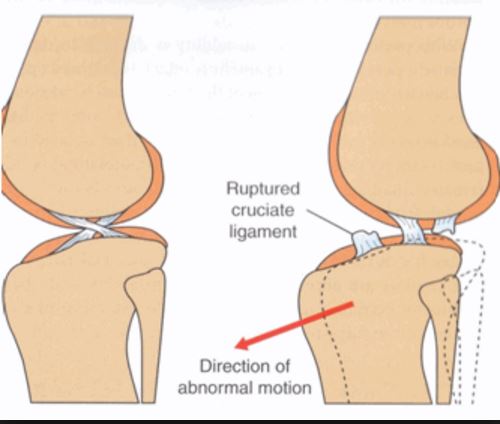
The sheer force causes inflammation and pain within the joint. CCL rupture will not heal without surgical stabilization.
There are three general methods by which dog knees with torn CCL’s are surgically stabilized. One approach involves running a suture between focal points of the femur and tibia. Suture procedures still have their place in CCL repair, but it is widely accepted that suture based CCL repair is not as effective for dogs over 35-38 pounds. Larger breed dogs will tend to place a great deal of force across the knee joint that sometimes leads to suture failure. Also, some large breed dogs are born with steep tibial head angles (called tibial slope – more on this below) that predispose the dog to the injury in the first place, that will subsequently fight against the suture for the life of the dog. Thus, procedures called osteotomies are generally the preferred method of repairing CCL injuries in large breed dogs. Osteotomy refers to procedures that require the cutting and altering of bone structures.
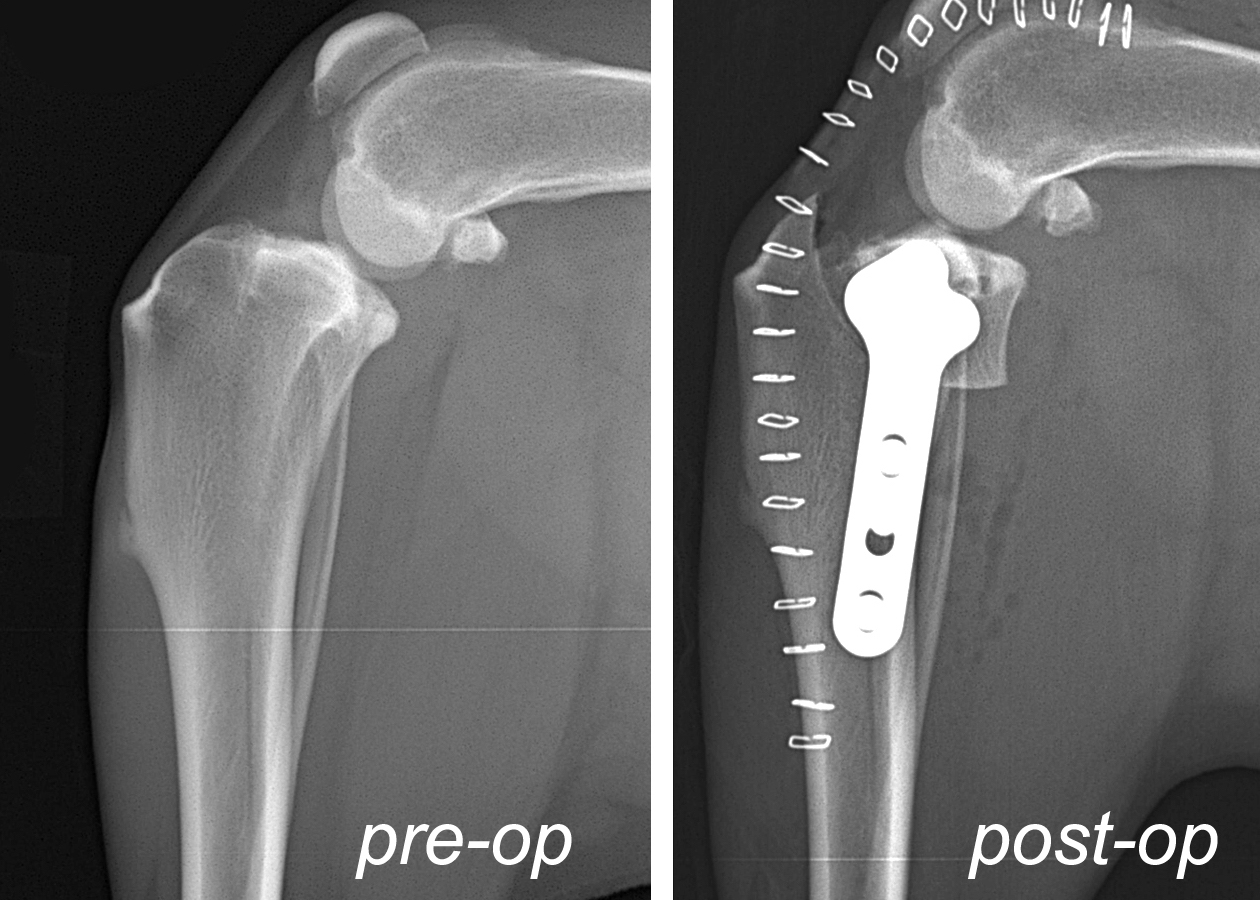
In the 1990’s, a procedure was developed by an Oregon based veterinary called the tibial plateau leveling osteotomy, aka, TPLO. The procedure involves cutting a wedge of bone out of the head of the tibia, rotating it a predetermined number of degrees, and plating in place. This changes the physics of the knee whereby the sheer force created by the injury is converted into a compressive force oriented toward the vertical axis of the femur. The resulting compressive force is not painful for the dog and successfully stabilizes the knee when the dog is weight bearing or in motion (stayed tuned for more on the compressive force). The subsequent reduction of the tibial slope accomplished by the TPLO also accounts for certain breeds that have steep tibial slope angles that predispose to CCL injury. The x-rays below show pre and post operative TPLO images.
Although it was invented in the United States, TPLO at first gained more momentum in Europe as the procedure of choice for CCL tear in medium to large breed dogs. It started to gain momentum in the US in the early 200o’s and has generally presently become the CCL repair method of choice among veterinary colleges and the majority of veterinary surgeons. But hold that thought, there is much more to come!
In 2005, a procedure known as the Tibial Tuberosity Advancement (TTA) was developed where the top part of the tibia, called the tibial tuberosity, is cut and advanced forward. The result is two fold:
1.) The advancement increases tension on the very thick and strong patellar tendon that runs over the knee cap and inserts at the head of the tibia. This increased tension on the patellar tendon stops the sheer force created by the CCL tear.
2.) The advancement of the tibial tuberosity lengthens the patellar tendon thereby decreasing its angle relative to the tibial slope. The result is that the deep tibial slope angles are functionally reduced without the necessity to change the angle by cutting such a large wedge of bone as is the case with TPLO. Overall, TTA was considered by many veterinary surgeons to be less invasive and found that patients were quicker to weight bearing and experienced less complications. What’s more, the procedure had a shorter learning curve than TPLO, so veterinarians without residency training were able to quickly gain proficiency with the procedure.
Below is the post operative TTA x-ray:
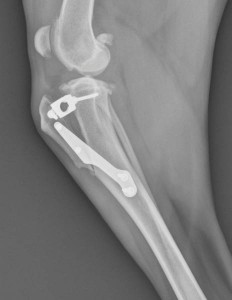
I am not really certain why veterinary colleges never really embraced the TTA as a mainstream CCL repair procedure performed at veterinary college teaching hospitals. Despite the European veterinary community making a strong transition away from TPLO to TTA after its inception in 2005, while many private US veterinary surgeons were adopting TTA as their go to procedure, US based veterinary schools stuck with TPLO.
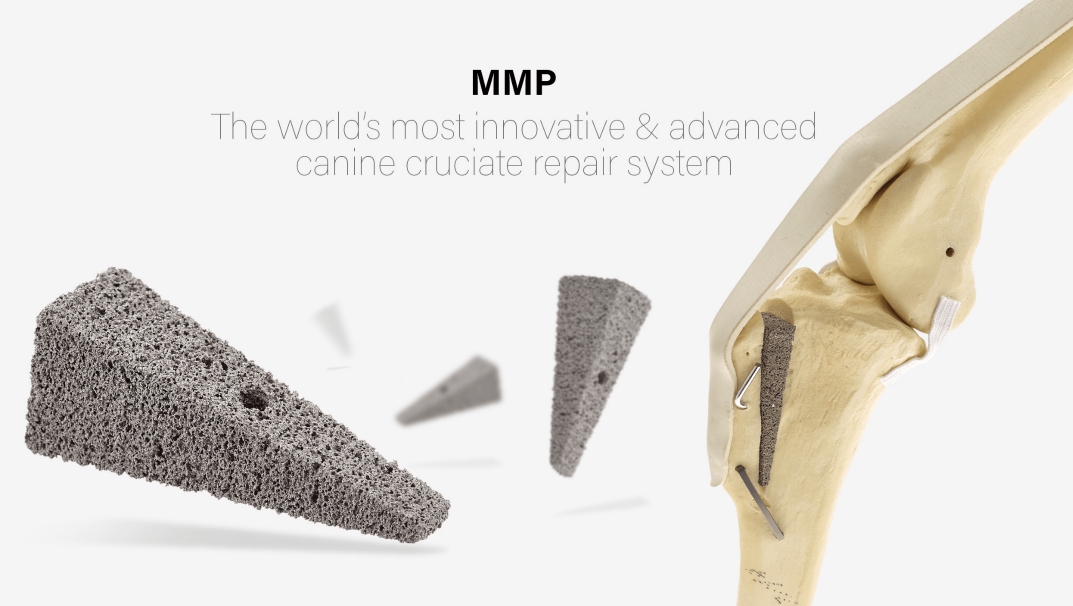
Enter the Modified Maquet Preocedure, aka, MMP, developed in England and first introduced in the US in 2014. The MMP procedure utilizes the same principles as the TTA, however, with less cumbersome hardware, smaller incision, and shorter surgical time. The wedge that is placed within the bone does not require multiple screws to be placed into the bone as the TTA and TPLO hardware does. Once placed, it simply requires the placement of one single pin and and staple that effectively hold the hardware in place. What’s more, the MMP wedge is made of a porous titanium alloy that allows bone to grow through it. This results in much faster recovery times of 4-6 weeks (as opposed to TPLO and TTA that are 10-12 weeks). See the images below for a post operative MMP x-ray and an image of the actual hardware used in the procedure:
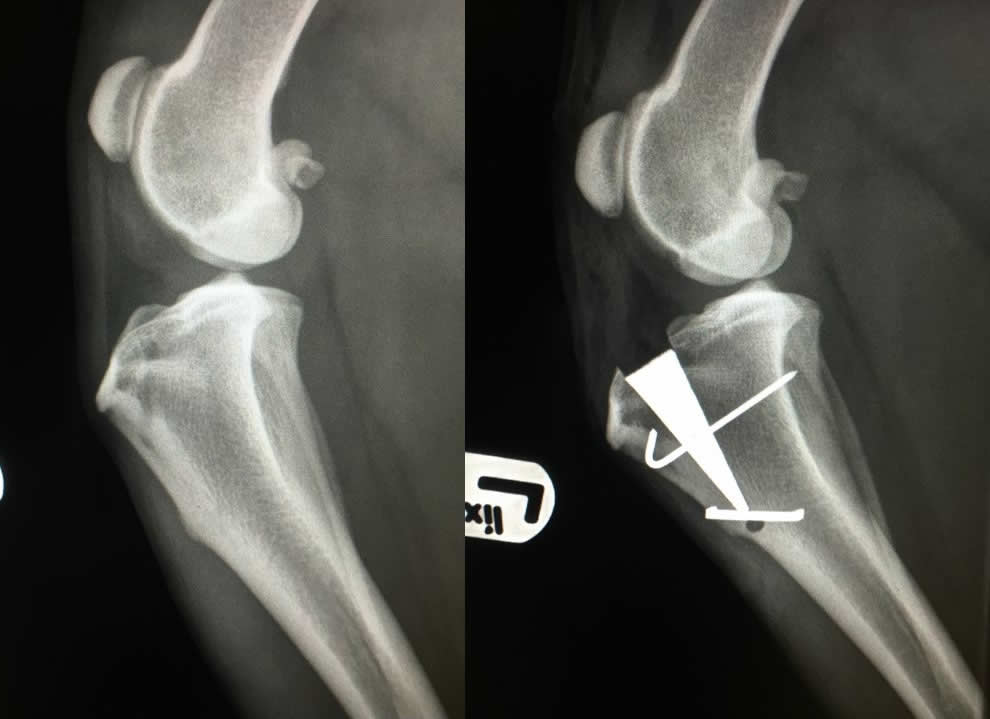
Let’s go back to TPLO for one moment before I close. Remember I wrote about converting the sheer force into a compressive force? Yes, it is not painful, yes, it stabilizes the knee, but it is not without consequence. Over time that compressive force leads to earlier stage degenerative joint disease of knees surgically repaired via TPLO as compered to TTA and MMP. Also, look back at the TPLO x-ray and look at the metal structures across the surface of the leg….those are skin staples necessary to close the skin and give you an idea of the size of the incision. That represents an 8-12 inch incision versus MMP that requires typically no more than a 3-4 inch incision.
I am enjoying quicker return to function, by far faster recovery times, and excellent results with the MMP procedure for repair of the CCL in dogs that I have been performing the surgery for since completing the training. The standard TTA and TPLO remain good procedures especially in the hands of an experienced veterinary surgeon, but in my view, MMP is currently the best CCL repair procedure for dogs over 38 pounds that have suffered CCL tears.
Dr. Roger Welton is a practicing veterinarian and highly regarded media personality through a number of topics and platforms. In addition to being passionate about integrative veterinary medicine for which he is a globally recognized expert, Dr. Welton was also an accomplished college lacrosse player and remains to this day very involved in the sport. He is president of Maybeck Animal Hospital , general partner of Grant Animal Clinic, and runs the successful veterinary/animal health blogs Web-DVM and Dr. Roger’s Holistic Veterinary Care. Dr. Welton fulfills his passion for lacrosse through his lacrosse and sport blog, The Creator’s Game.
A Simple Screening Test That Can Save Your Doberman Pinscher’s Life
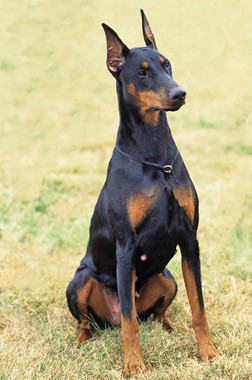
Dilated Cardiomyopathy is a deadly disease of the heart that has strong genetic roots in certain large and giant dog breeds, among them, Doberman Pinschers. Dilated cardiomyopathy (aka., DCM) is a disease of the heart muscle that is characterized by an enlarged heart that does not function properly. With DCM, both the upper and lower chambers of the heart become enlarged, with one side being more severely affected than the other. When the ventricle, or lower chamber, becomes enlarged, its ability to pump blood out into the lungs and body diminishes. When the heart’s ventricle does not pump enough blood into the lungs, fluid begins to accumulate within the lungs. An enlarged heart soon becomes overloaded, and this leads to congestive heart failure.
In the past all we had to combat DCM was to carefully examine a puppy’s parents for having been properly been heart certified prior to breeding. Even then, while the parents may not be showing signs of disease, they could still be genetic carriers that combine by chance to genetically manifest the disease in their offspring. Thankfully, a new genetic test for DCM exists at Norther Carolina State College of Veterinary Medicine that successfully genetically screens Doberman Pinscher dogs for having inherited the genetic predisposition for the development of DCM.
The genes responsible for DCM are DCM1 and DCM2. If positive for both, the dog has an 80% chance of developing DCM as early as 3 years of age. If a dog tests positive for DCM1 only, he/she has a 40% chance of developing the disease by age 5.
Testing should therefore begin as the dog approaches his/her third birthday. Here are the recommended guidelines:
Dog positive for DCM1 & DCM2:
- Begin exclusive feeding of a heart healthy prescription diet such as Hills H/D or Royal Canine Early Cardiac immediately. Diets like this are restricted in sodium and are fortified with high doses of heart healthy nutrients such as taurine, L-carnitine, vitamin D, potassium, and folic acid.
- Start yearly ECG (electrical pulse wave measurement) and cardiac ultrasound screening at 3 years of age.
- If early abnormalities are detected with these tests, early intervention with cardiac medications will be pivotal in staving off full blown disease.
- It would be considered unethical to breed these dogs.
Dog positive for DCM1 only:
- All of the same guidelines as DCM1 & DCM2 positive, but yearly ECG and cardiac testing to begin at 5 years of age.
Beyond early intervention to save and prolong lives, DCM genetic testing also has far reaching implications whereby, if prospective dog owners hold breeders accountable to doing their due diligence in proving that neither parents is a carrier for DCM1 and DCM2, within only a few generations, the disease could be eradicated from whole lines of Doberman Pinschers.
What’s more, NC State is currently working on expanding their genetic testing for DCM into other breeds genetically prone to the disease, such as Great Danes and Irish Wolfhounds.
Dr. Roger Welton is a practicing veterinarian and highly regarded media personality through a number of topics and platforms. In addition to being passionate about integrative veterinary medicine for which he is a globally recognized expert, Dr. Welton was also an accomplished college lacrosse player and remains to this day very involved in the sport. He is president of Maybeck Animal Hospital , general partner of Grant Animal Clinic, and runs the successful veterinary/animal health blogs Web-DVM and Dr. Roger’s Holistic Veterinary Care. Dr. Welton fulfills his passion for lacrosse through his lacrosse and sport blog, The Creator’s Game.
Innovative And Safe Early Intervention For Arthritis In Young Dogs

Veterinary medicine is very unique in that we commonly see onset of arthritis in young dog patients due to inherited incongruities in joints, such as hip dysplasia, elbow dysplasia, or conformational orthopedic breed characteristics that lend themselves to stress on soft tissue supporting structures (such as Dachshund, English Bulldog, Welsh Corgi to name a few). As a result, many of these dogs are showing signs of pain and inflammation within joints as early as two years of age. What’s more, arthritis is a process that leads to biochemical inflammatory reactions on joint surfaces that lead to damage that in turn triggers more inflammatory reactions. In essence, arthritis is a process that feeds itself over time.
Until recently, our only options were general management: keep the dog lean, engage in natural joint care (Adequan injections, joint supplements, acupuncture), laser therapy, and periodic use of non-steroidal anti-inflammatory drugs (NSAID’s) to manage pain when natural management did not keep up. Over time, NSAID therapy tends to become necessary more often. This becomes problematic because NSAID treatment is not without potential negative side effects, and the potential for these side effects increase significantly when a canine patient is increasingly dependent on them from a young age.
NSAID’s work by inhibiting a type of enzyme called COX-2, which produces a class of physiologically active compounds called prostaglandins that play a key role in the inflammatory response within joints. This is not to be confused with the COX-1 anzyme that actually has a protective effect, producing prostaglandins that protect the kidneys, liver, and lining of the bowel. While modern NSAID’s so a much better job selectively inhibiting the COX-2 enzyme while sparing the protective COX-1 (as opposed to older generation COX inhibitors like aspirin that were not selective in their inhibition), none are perfect in their selective inhibition. Thus, collateral damage from NSAID therapy to kidneys, liver and gastrointestinal systems are possible.
A relatively new treatment for arthritis, Galliprant, works very differently than conventional NSAIDs in that there is no inhibition of the COX enzymes at all. Instead, Galliprant blocks EP4, a key receptor for COX-2 generated prostaglandins within joints that are primarily responsible inflammation and pain within joints. Thus inflammatory reactions within dog’s joints are blocked further down the road so to speak. Without any COX enzyme inhibition, there is far less risk to patients for long term use.
This is extremely important because, with Galliprant, we are not potentially making the “quality over quantity” that is possible when we are consigned to treating our early onset arthritic dog with a conventional NSAID. What’s more, Galliprant offers us a proactive early intervention tool for these dogs. Not only do we control pain and maintain quality of life by treating with Galliprant and controlling pain, we also slow the progression of disease because we are consistently blocking the inflammatory response that would otherwise feed itself in a vicious cycle.
Dr. Roger Welton is a practicing veterinarian and highly regarded media personality through a number of topics and platforms. In addition to being passionate about integrative veterinary medicine for which he is a globally recognized expert, Dr. Welton was also an accomplished college lacrosse player and remains to this day very involved in the sport. He is president of Maybeck Animal Hospital , general partner of Grant Animal Clinic, and runs the successful veterinary/animal health blogs Web-DVM and Dr. Roger’s Holistic Veterinary Care. Dr. Welton fulfills his passion for lacrosse through his lacrosse and sport blog, The Creator’s Game.
Why Stem Cell Therapy In Pets Is So Effective

Recall when you were a child or even in your teenage years. After massive amounts of activity you were not sore and if you did get sore, the soreness did not last very long. Trauma to the body did not hurt as much and when legitimate injuries occurred, they healed very quickly. Fast forward to your present age and soreness following activity is a foregone conclusion, the soreness lingers longer. Injuries are more common, more, painful and take longer to heal. Have you ever wondered why?
As children and young adults, our bodies teaming with regenerative cells called stem cells. Stem cells are what are known as progenitor cells that are capable of differentiating into any tissue cell type for the purpose of regeneration and healing of tissues and organ systems. As we age, our stem cells are less numerous and less active and thus we become more prone to inflammation, soreness, injuries, and delayed injury recovery. The same stem cell aging process applies to kittens and puppies where stems cells are very active in the young but become less numerous and active as they age into adulthood and their senior years. The science of veterinary stem cell therapy for dogs and cats repairs injured areas of the body by harnessing the power of stems cells by essentially giving them back the stem cell benefit they had as younger pets.
By harvesting the patients’ own stem cells, activating them, and injecting them into injured areas, we are able to repair tissues at the cellular level. In the past, the harvesting of stem cells has required a minor surgical procedure with general anesthesia where fat from the body is sampled and sent off to a lab to have the stem cells extracted and processed into an injectable media. Since injection of joints, one of the most common uses of stem cell therapy in veterinary medicine, almost always requires sedation, the costs and client perceived invasiveness associated with anesthesia, minor surgery followed by sedation, clients have often been reluctant to consider it for their pet. As a result, although most veterinarians are strong advocates of this branch of veterinary medicine, we have traditionally found it a tough sell for pet owners.
With new stem cell technology, the general anesthesia and surgical portion of stem cell therapy has been taken out of the process altogether. This new technology does not require tissue harvest for collection of stem cells, but instead is able to extract and activate stem cells from a simple blood draw. The blood is sent off to the lab and within 2 business days arrives to the clinic ready for injection. Thus, your pet can now enjoy the benefits of stem cell therapy for any number of conditions with a simple blood draw, gentle sedation, and injection into damaged areas of the body; all within a 3 day turn around and two outpatient visits.
The regenerative medicine process can also offer your pet the benefit of platelet rich plasma, also known as PRP which is extracted via the same blood sample. Isolated from the same original whole blood sample, these components of the blood are powerful healing components of the blood that can be directly injected into injured joints, ligaments, and tendons can facilitate expedient and rapid healing.
Stems cell and platelet rich plasma solutions harvested from your pet’s own blood are directly injected into damaged joints and acupuncture points to seek out, differentiate into the given tissue cell type, and repair it. In addition to direct injection, the patient is given an additional intravenous bolus of stem cells to provide systemic regenerative benefits throughout the entire body, in essence, sending a large population of stem cells throughout the entire body via the circulatory system on a seek and repair mission
The applications of this type of treatment goes far beyond orthopedic repair. There are currently numerous studies in process to assess the benefits of this treatment for chronic degenerative disease such as kidney failure, cirrhosis of the liver, and several degenerative neurological conditions that traditional veterinary medicine previously had little answer for. I have already begun treating cats with chronic kidney failure (the number one cause of death in cats) by advocating for early screening and intervention with stems cell therapy and proper dietary and nutritional strategies. Conclusions are still pending as the data continues to be collected, but initial results are very promising.
Dr. Roger Welton is a practicing veterinarian and highly regarded media personality through a number of topics and platforms. In addition to being passionate about integrative veterinary medicine for which he is a globally recognized expert, Dr. Welton was also an accomplished college lacrosse player and remains to this day very involved in the sport. He is president of Maybeck Animal Hospital , general partner of Grant Animal Clinic, and runs the successful veterinary/animal health blogs Web-DVM and Dr. Roger’s Holistic Veterinary Care. Dr. Welton fulfills his passion for lacrosse through his lacrosse and sport blog, The Creator’s Game.
Don’t Blame Me For Your Fractious Pet!
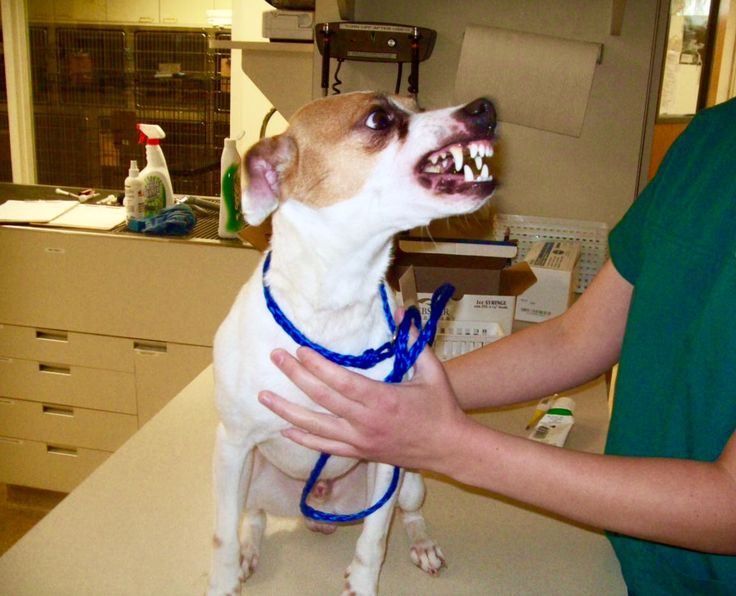
I had a client last week that is perhaps the worst example of owner denial about the aggressive behavior of a pet that I have experienced in my 17 years of practice. While it was the worst example, it most certainly was not an isolated experience where owners not only live in denial about their fractious, even dangerous pet, but somehow insinuate that it is somehow the fault of our handling of the pet that instigated the behavior.
In this particular instance, the patient was a Siberian Husky that the owner clearly had no control of as I watched her being literally dragged into the building by the dog (lucky for me, it was my first patient of the day and they were walking in just as I pulled up to work). Once inside, the dog was so agitated and the owner lacked the ability to control the dog, that the techs ushered the client and patient right into an exam room to check her in there.
The dog was extremely sketchy the moment I entered the room, darting around and clearly not wanting to be anywhere near us. Before even attempting anything with the dog, I suggested that the confined space of the exam room may feel threatening to the dog, so I advised that we go back into the more spacious treatment area. Still, we could not get near the dog and any attempt resulted in him snapping and lunging at my techs. We asked the owner if he would let her get a muzzle on the dog given his and she could not even come close to getting it on.
At this point, she stated to us, “I don’t understand, he has never acted like this before. I don’t know what y’all are doing, but he has never been like this.” Her tone was accusatory, clearly insinuating that somehow whatever it was that we were doing was provoking her normally precious angle into acting this way. I asked her (still calmly) what it was specifically that led to believe that somehow we brought out this behavior in her dog. Her reply was, “I don’t know, it’s your job.” At this point, I started to feel my blood pressure but still held my composure.
One of my very brave techs managed to restrain the patient and put him in a textbook restraint hold that maintains control while keeping the dog’s muzzle away from biting him and others, while another tech quickly applied a muzzle. The tech who applied the muzzle also performed the blood draw for the heart worm screening that is part of the yearly visit. Although he was neutralized, the dog still fought the restraining tech and carried on making the owner become even more agitated, at one point yelling at my tech drawing the blood, “Hurry up already!”
Unable to give a proper examination, I simply administered the immunizations the patient was due for and gave him back to his owner to remove the muzzle. Although her behavior was unacceptable, especially her treatment of my techs risking their appendages to treat her dog, I still remained calm and suggested that for future visits, she call us ahead of time for sedation so that her dog will be calmer, the visit go smoother, and I can perhaps even administer an examination. Her answer was, “I ain’t giving my dog no drugs because y’all can’t do your jobs.”
At this stage, my patience has run its course and I told her that it is not my job nor that of my techs to risk potentially disfiguring, even life threatening injury from her dog. I showed her a large dog bite scar on my arm as an example of what happens when we do not take proper precautions with a fractious animal. I further explained to her that the wound was so deep (the dog ripped had an area of skin off my forearm the size of a silver dollar) that when I wiggled my fingers I could see my tendons moving. I told her that as unpleasant and painful as that injury was, I still considered myself lucky, as it is not uncommon for people to suffer life threatening bleeding, permanent nerve damage, and ears, lips and noses ripped off, even from dogs much smaller than hers.
I ended our conversation by letting this client know in no uncertain terms that her dog would be permitted in our building without sedation administered ahead of time. I am a strong believer in courteous and patient customer service, especially when a pet is lashing out out of fear, stress, lack of proper training, or all of the above. This can be very upsetting to the owner to see their pet in that kind of state.
Many clients may not have experience in dealing with situations like this and we should give them the benefit of the doubt to calmly explain what needs to be done to best work through the visit. Most clients are understanding and work with us to make the best of a situation rather than blame us for it or expect us to have some kind of magical dog whisperer ability to calm the pet.
Every now and then, however, it is simply best to release a client to the competition.
Dr. Roger Welton is a practicing veterinarian and highly regarded media personality through a number of topics and platforms. In addition to being passionate about integrative veterinary medicine for which he is a globally recognized expert, Dr. Welton was also an accomplished college lacrosse player and remains to this day very involved in the sport. He is president of Maybeck Animal Hospital , general partner of Grant Animal Clinic, and runs the successful veterinary/animal health blogs Web-DVM and Dr. Roger’s Holistic Veterinary Care. Dr. Welton fulfills his passion for lacrosse through his lacrosse and sport blog, The Creator’s Game.
The Number One Factor That Determines Successful Veterinary Medical Outcomes

This post’s featured image kind of gives away the suspense of this article, but it could not be more relevant to veterinarians. We may have your pet in our exam room for perhaps 30 minutes, in the operating room for perhaps 90 minutes, or in the hospital perhaps for a few days. However, the treatment and rehabilitation that must occur for a pet for make a full recovery could be weeks or months…meaning, that the pet owner has perhaps as big an influence on the success of treatment than the veterinarian making the treatment recommendations.
Owner compliance deficiencies can stem from patients that may be particularly difficult to treat. Sometimes it may be the result of forgetting to treat the pet because a pet owner may be particularly busy with work, raising children, or personal emergencies.

That stated, please observe the picture above and take a guess which species poses the biggest challenge to compliance with the veterinarian’s treatment recommendations. If you picked the human, you are absolutely correct.
I may have outlined some legit challenges an owner may face to proper treatment compliance, however, very often failure to comply is the result of a conscious decision to not comply or an inexplicable failure to follow clear instructions.
Here are a few common examples of compliance failures leading to bad outcomes that I experience on a regular basis:
- A dog has such severe chronic recurring skin allergies that I finally level with the owner that there is no other effective option other than to maintain the dog on a daily maintenance dosing of a skin allergy medication called Apoquel. Luckily, however, it is a very safe drug for long term use. I dispense a month’s worth and tell the owner to call us for refills, as the dog will require life long dosing with the medication. 2-3 months later, the owner returns and tells me that Apoquel did not work. I notice in the record that the owner had not purchased any additional Apoquel since the last visit. I then ask, “If it did not work, why didn’t you call me sooner?” The answer is usually something like this: “Well it worked while he was on it but after I ran out his skin gradually got worse” Right, so what part of “..the dog will require life long dosing with the medication,” was I not clear about?
- This one is a real doozy of a compliance failure and happens at least twice a year. A dog or cat comes in with severe lower urinary tract signs and on x-rays I discover that there are urinary bladder stones. I surgically remove the bladder stones and once I get their identity, recommend a prescription urine pH neutralizing diet that will effectively prevent the stones from recurring as long as the pet is fed the diet exclusively long term. The dog or cat comes back in one year later with the exact same signs and low and behold there are stones in the bladder again. I ask, have you been feeding the food I recommended? The answer is usually something like this: “No because that food has grains in it and I do not believe in feeding animals grains.” Right, so in light of your pet needing surgery for the second time in a year, how do you think the grain free approach is working out for you?
- And last but not least, pet just had a surgery and the owner is advised to keep the e-collar on until suture removal 2 weeks from discharge. The pet comes back in some time before the 2 week post-operative appointment with its incision opened and infected. It appears somebody did not follow our advice to leave the e-collar on.
I could go on here, but you get the idea. I am so commonly bombarded with compliance failures that it makes me want to bring out my inner Jerry McGuire (Tom Cruise), pleading with his high maintenance wide receiver client Rod Tidwell (Cuba Gooding Jr.) and say, “Help me, help you; help me, help you; help me, help you.”
Dr. Roger Welton is a practicing veterinarian and highly regarded media personality through a number of topics and platforms. In addition to being passionate about integrative veterinary medicine for which he is a globally recognized expert, Dr. Welton was also an accomplished college lacrosse player and remains to this day very involved in the sport. He is president of Maybeck Animal Hospital , general partner of Grant Animal Clinic, and runs the successful veterinary/animal health blogs Web-DVM and Dr. Roger’s Holistic Veterinary Care. Dr. Welton fulfills his passion for lacrosse through his lacrosse and sport blog, The Creator’s Game.
Is CBD Oil Really The Magical Elixir Of Health For Dogs & Cats It Is Purported To Be?
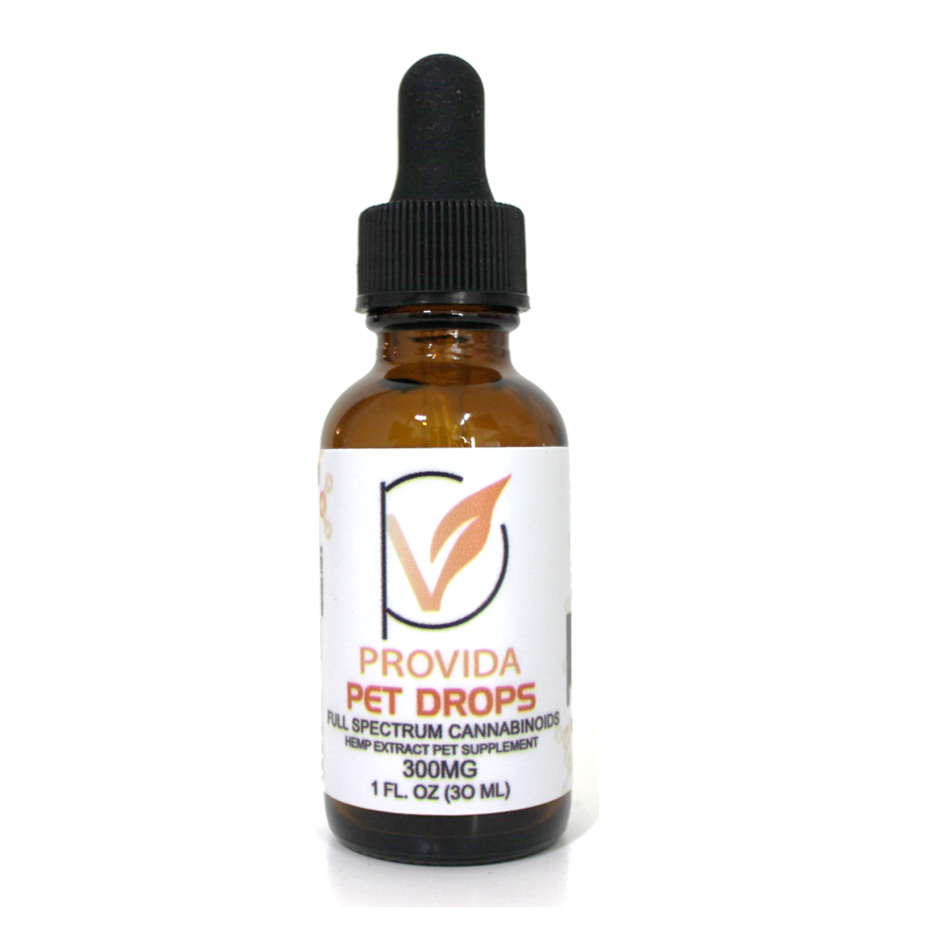
A recent poll determined that just under 70% of dog and cat owners hit the internet searches – usually Google – prior to bringing their pet to the veterinarian when he/she is experiencing signs of illness or injury. They are instantly bombarded with massive amounts of information as to what condition may be affecting the pet and how it should be treated. I am finding that a significant percentage of the time when pet owners have consulted Dr. Google before bringing the dog or cat patient to see me, cannabidiol, aka, CBD oil is the path a pet owner has already chosen to self treat. In addition to this recent phenomenon, one cannot look anywhere without seeing signs or banners that read, “CBD Sold Here.”
So, is there validity to the new rage of CBD oil treatment for all manners of illness? Does it have clinical relevancy in veterinary medicine? I am writing to you today to give pet owners that real story on CBD for pets.
Let us start my explaining what cannabidiol, aka, CBD oil is. CBD is the essential oil and medicinal component of the hemp plant. It has been linked to effectively treating chronic pain, seizure disorders, as ancillary treatment for cancer, nausea, and anxiety. It is not to be confused with the psychotropic component of the hemp plant, tetrahydrocannabinol, aka, THC; which is the mind altering component of the hemp plant that people seek as a recreation drug.
Success in the use of CBD oil will depend on 3 factors: integrity of the product, using it for the appropriate conditions, and proper application of the entourage effect.
CBD Product Integrity
In any industry where FDA regulation is not mandatory, there is a lot of bogus product. Thus, any CBD oil product can make all manner of claims about its purity and integrity, but there is no regulatory oversight that requires a product back these claims. A CBD oil manufacturer could therefore be filling their bottles with olive oil and no one would be the wiser. This makes product selection very important in choosing to treat a given conditions in dogs and cats with CBD oil very important.
Using CBD Oil for Appropriate Conditions
CBD oil is not always indicated for given conditions. It may not be effective in management of certain illnesses or injuries or may even be deleterious and potentially make a patient worse. Consequently, without at least a tentative diagnosis, it is not advisable to just start a pet on CBD oil blindly.
Entourage Effect
The Entourage Effect is a phenomenon that has long been discovered in medical marijuana therapy clinical trials, whereby the effectiveness of CBD oil is significantly enhanced be adding back in THC. The necessary percentages will very per condition, however, the relatively small percentage of THC needed to enhance the medicinal effect of CBD oil is not sufficient to have a psychotropic effect on most pets.
Bottom Line on CBD Use in Dogs and Cats
As cliche as this may sound, it is best to refrain from choosing CBD oil therapy without first having an examination or at least a consultation with your veterinarian. A veterinarian who is well versed in cannabis medicine for dogs and cats will help guide you through all of the above concerns that will affect the appropriateness and effectiveness of CBD oil therapy for your pet.
Dr. Roger Welton is a practicing veterinarian and highly regarded media personality through a number of topics and platforms. In addition to being passionate about integrative veterinary medicine for which he is a globally recognized expert, Dr. Welton was also an accomplished college lacrosse player and remains to this day very involved in the sport. He is president of Maybeck Animal Hospital , general partner of Grant Animal Clinic, and runs the successful veterinary/animal health blogs Web-DVM and Dr. Roger’s Holistic Veterinary Care. Dr. Welton fulfills his passion for lacrosse through his lacrosse and sport blog, The Creator’s Game.

Keep your pets safe this holiday season!
The holiday season is right around the corner starting with Halloween (yes, in my home, we consider Halloween a holiday!). It is both a joyous and busy time and it can be easy to overlook certain...

Help for nervous/anxious dogs
There seems to be a growing number of excessively nervous, often skittish dogs. This can range from anxieties, such as noise or storm anxiety, anxiousness about being separated from pet parents,...
Bird flu is infecting cats and cases are rising – What you need to know!
H5N1 Avian Influenza is causing far more trouble than just just high egg prices. The bird flu has successfully jumped species now able to infect cats and people. Although the ability to infect...

Read Dr. Roger’s Latest Book!

 Be Healthy & Fit With Celebrity Trainer Steve Jordan
- The New Measure of a Life Well Lived: Why Health Span Matters More Than Longevity
- The Wealth Spark: Igniting Your Path To Abundance and Success
- Bright Line Eating with New York Times best selling author Dr. Susan Peirce Thompson
- Maximizing Your Workout Time: Efficiency Tips from Westwood Private Fitness
- How to Transform Your Dad Bod: Insights from the Fit Father Project – New Podcast Episode Out Now!